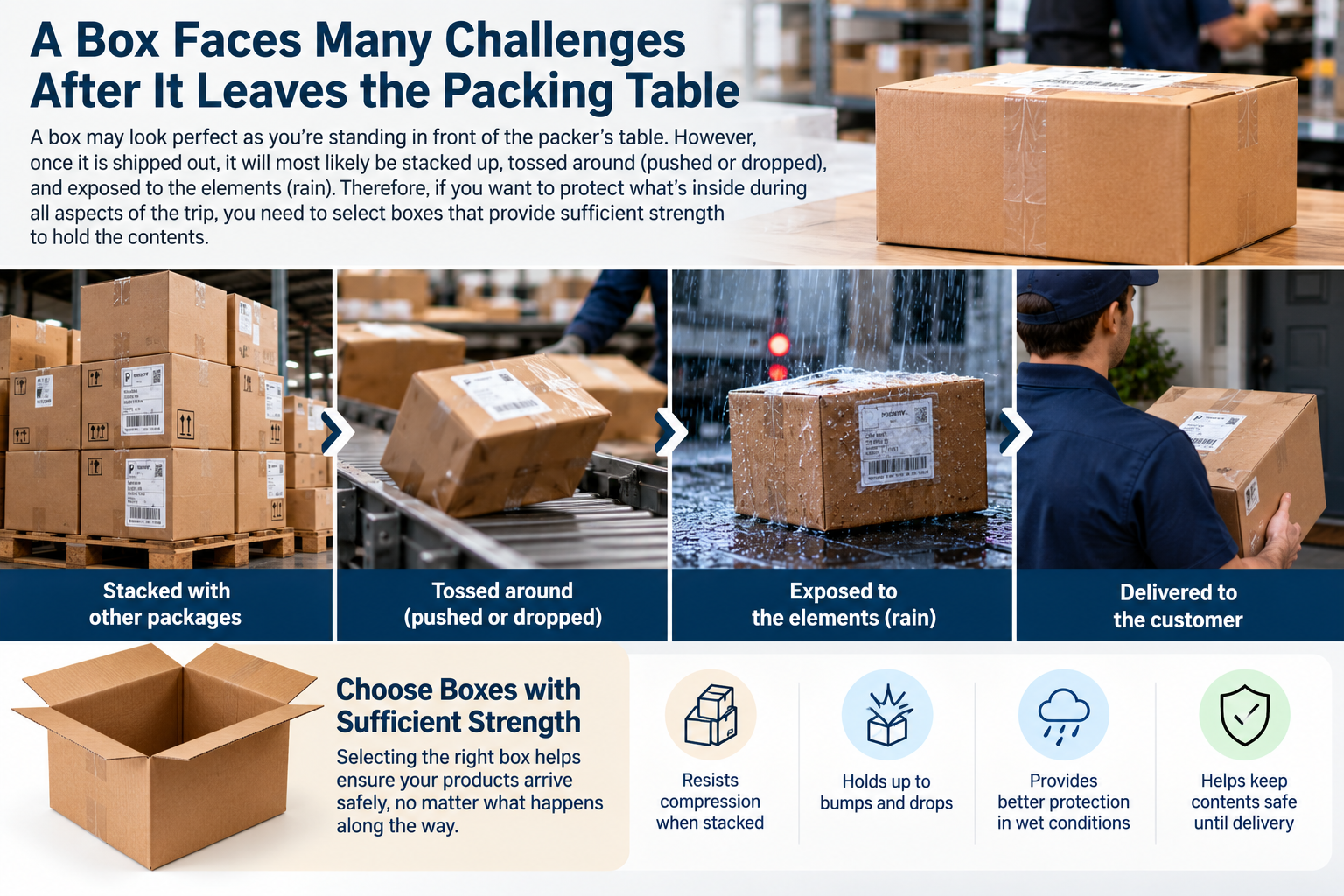
You could say that a box looks perfect as you’re standing in front of the packer’s table. However, once it is shipped out, it will most likely be stacked up, tossed around (pushed or dropped), and exposed to the elements (rain). Therefore, if you want to protect what’s inside during all aspects of the trip; you need to select boxes that provide sufficient strength to hold the contents.
The best way to do this is by assessing the weight of the entire shipment. Don’t evaluate the packaging based solely upon how well it looks while it is empty. Consider the item you are sending along with any additional items such as foam inserts, papers, and anything else that goes into the box. For example, an empty box that fits a lightweight shirt perfectly might not be suitable to support a set of heavy metal parts.
Next, inspect the bottom of the box prior to packing. Place the folded flaps over one another, then push them down firmly using your hand. In addition, they should remain flat and firm. However, if the bottom of the box is easily bent using minimal force, it is possible that it may collapse upon adding the item. Similarly, a weak bottom of the box could cause it to crack or open while lifting.
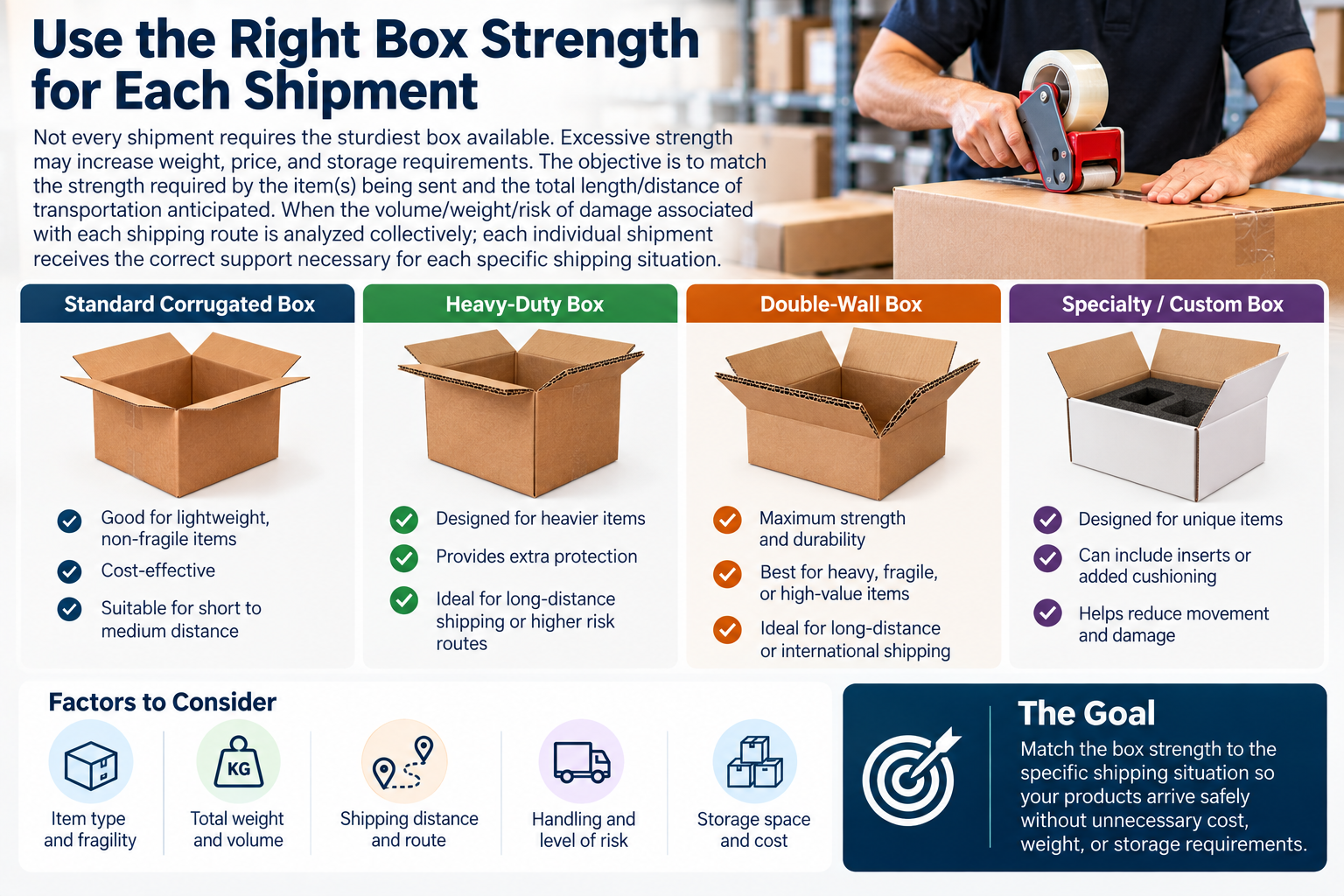
Inspect the sides of the box next. There are several types of packaging available including some that include a single layer of wavey corrugation between two outside panels, while others have multiple layers for extra protection. A single panel box may work for numerous lighter shipments; however, heavier items, fragile items, or items that are very valuable may require double panel packaging.
In addition to considering the type of packaging you select; consider where you intend to ship the package. Packages that are going to be transported locally within a city may experience fewer touches/handling issues compared to packages that are traveling long distances across the country. Long distance trips typically involve multiple truck stops, conveyor systems, and/or various sorting facilities. Each stop increases the number of potential points for impact/pressure.
Consider also, where you plan to stack the boxes. When carriers pick up your package and load it onto their vehicles; they will usually stack packages on top of one another. Press gently on top of an empty box to assess how sturdy the walls/corners are. If the walls collapse easily or the top “sinks” immediately; the box may not be able to withstand a significant amount of weight. Sturdy corners are essential to keeping the overall form of the box intact when stacked.
Finally, moisture is detrimental to cardboard packaging. Avoid purchasing/using boxes that appear wet/damp/soft/wavy. Store unused packaging materials in a dry location and avoid placing them near leaks (doors, pipes) so moisture does not accumulate under them. Although damaged cardboard packaging can sometimes recover after drying; once damage occurs to cardboard packaging; it will never regain 100% of its original strength.
Boxes that have been previously used must be thoroughly inspected. Check for signs of previous use such as; old creases, holes, crushed edges, or torn flaps. Remove any weak adhesive/tape and verify that the seams still align properly. Although a reusable box may be an economical option if it is firm; do not rely upon a used box simply because it has made it through one shipment.
When testing a new box; send one sample via mail or shipping carrier. Once sealed and packed; lift and move it throughout your workspace. On top of it, add another package (for a brief time) to simulate stacking conditions. Then remove the second package and examine both packages for any evidence of pressure/bending on either package. Testing a few samples initially will determine if a particular box design is ready for regular shipments.
Not every shipment requires the sturdiest box available. Excessive strength may increase weight, price, and storage requirements. The objective is to match the strength required by the item(s) being sent and the total length/distance of transportation anticipated. When the volume/weight/risk of damage associated with each shipping route is analyzed collectively; each individual shipment receives the correct support necessary for each specific shipping situation.