Monthly Archives: August 2026

Don’t Guess When Choosing Poly Bags

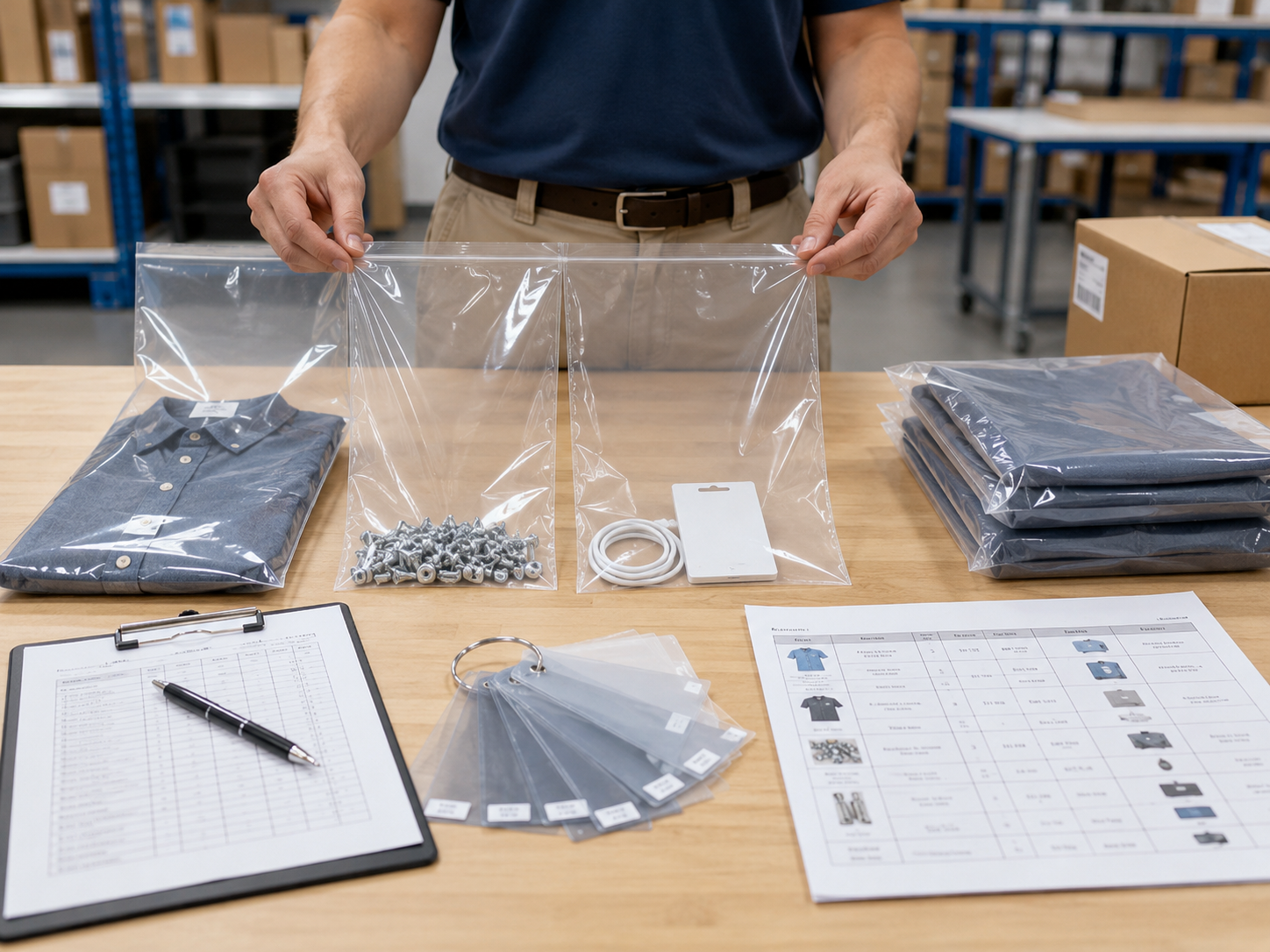
If you pack orders into poly bags that are too small, they could split apart before they even leave your table. On the other hand, if you over-size the bag then you’ve wasted valuable space and your item is probably going to slide all over the place inside the bag. To avoid these issues, begin by determining the correct poly bag for an item by measuring it rather than guessing. 
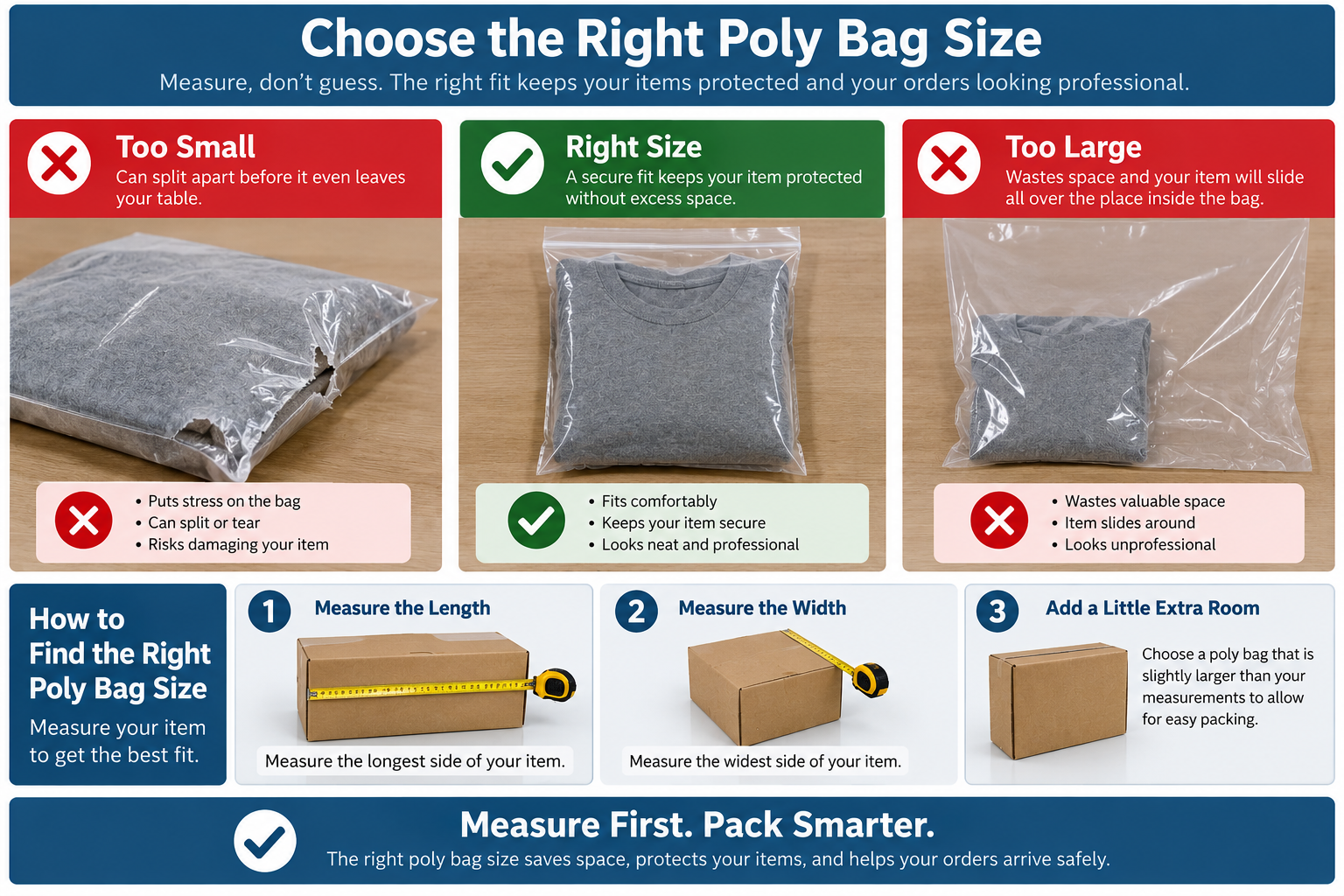
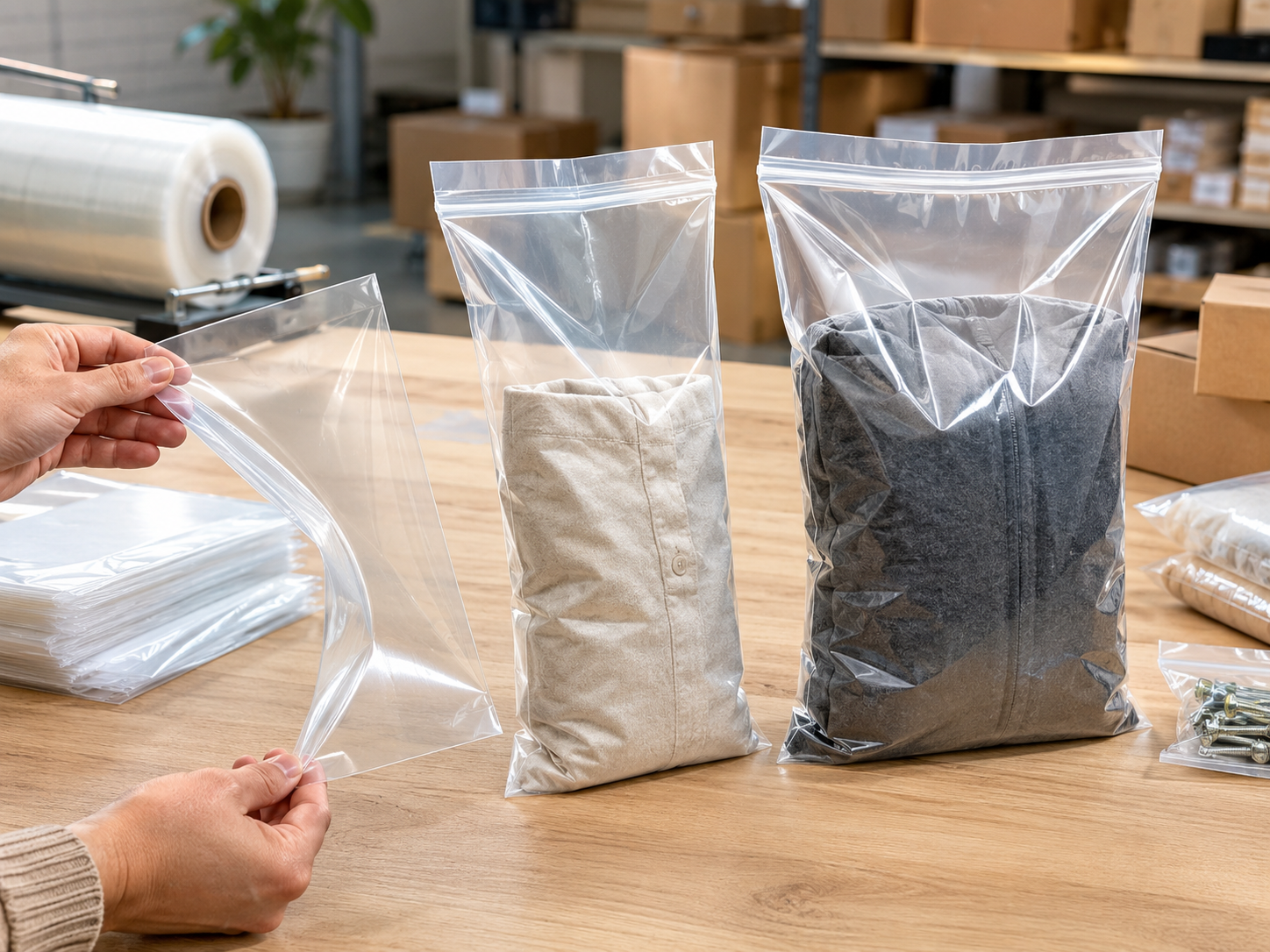
By doing a couple of quick measurements, you’ll likely be able to solve most of your common packaging problem issues. First take note of the length and the width of your item. Take the measurement across the widest point of your item. Be sure to give yourself some additional space so that you’re able to slip the product inside without forcing it. For example, a folded t-shirt would require enough space so that it does not stretch out the bag nor cause the edges of the bag to appear pulled together.

The same is true concerning the weight of your product. While the size of your product certainly affects your ability to determine the correct poly bag, it’s equally important to consider the weight of your product. In this case, you want to select a poly bag based upon its thickness (measured in mils). A smaller number indicates a thinner poly bag. Conversely, a larger number indicates a thicker poly bag. For lighter products such as greeting cards or fabrics, there may be no need for added support; however heavier objects such as tool or part with sharp edges may need increased support to ensure safe shipping practices.

As noted previously, the shape of your product will also affect which type of poly bag will work best for you. If you have a flat product, it’s probable that a basic open-ended poly bag will work perfectly. However, if you have a thicker product or one with extreme angles/edges, you may find that a poly bag that is wider and has additional side room is needed. To confirm that your product will fit properly within a new bag before purchasing a quantity of them, try fitting your product into a single sample. This will allow you to verify that your product does not pull against the seams of the new bag.

When selecting the type of closure for your poly bag, there are two main types available. There are those with a sealing tape or strip which will completely seal the bag closed and those that have a zipper that will allow you to open and close the bag multiple times. Once you have selected the type of closure you prefer, you must now think about how many times the person receiving the package may need to open and/or access the contents of the poly bag. For instance, if a customer receives a shirt packaged in a sealed poly bag but later needs to inspect the shirt prior to returning it back to you, then he/she will need to remove the entire contents of the poly bag including the shirt in order to do so.
If visibility is necessary to allow warehouse employees to easily count their inventory, then clear plastic is your answer. Additionally, since clear plastic allows for viewing, it eliminates the possibility of packing incorrect items and labeling errors. Adding a label containing the product description/name and/or order # provides further identification without obstructing employee views.

There are specific requirements when dealing with food items. Those poly bags designed for clothing/hardware are not created to come into direct contact with food. Therefore, anyone who plans on packing snacks, baked goods or other consumable items should first verify that the poly bag(s) they plan on utilizing meet the required food-grade specifications prior to use.

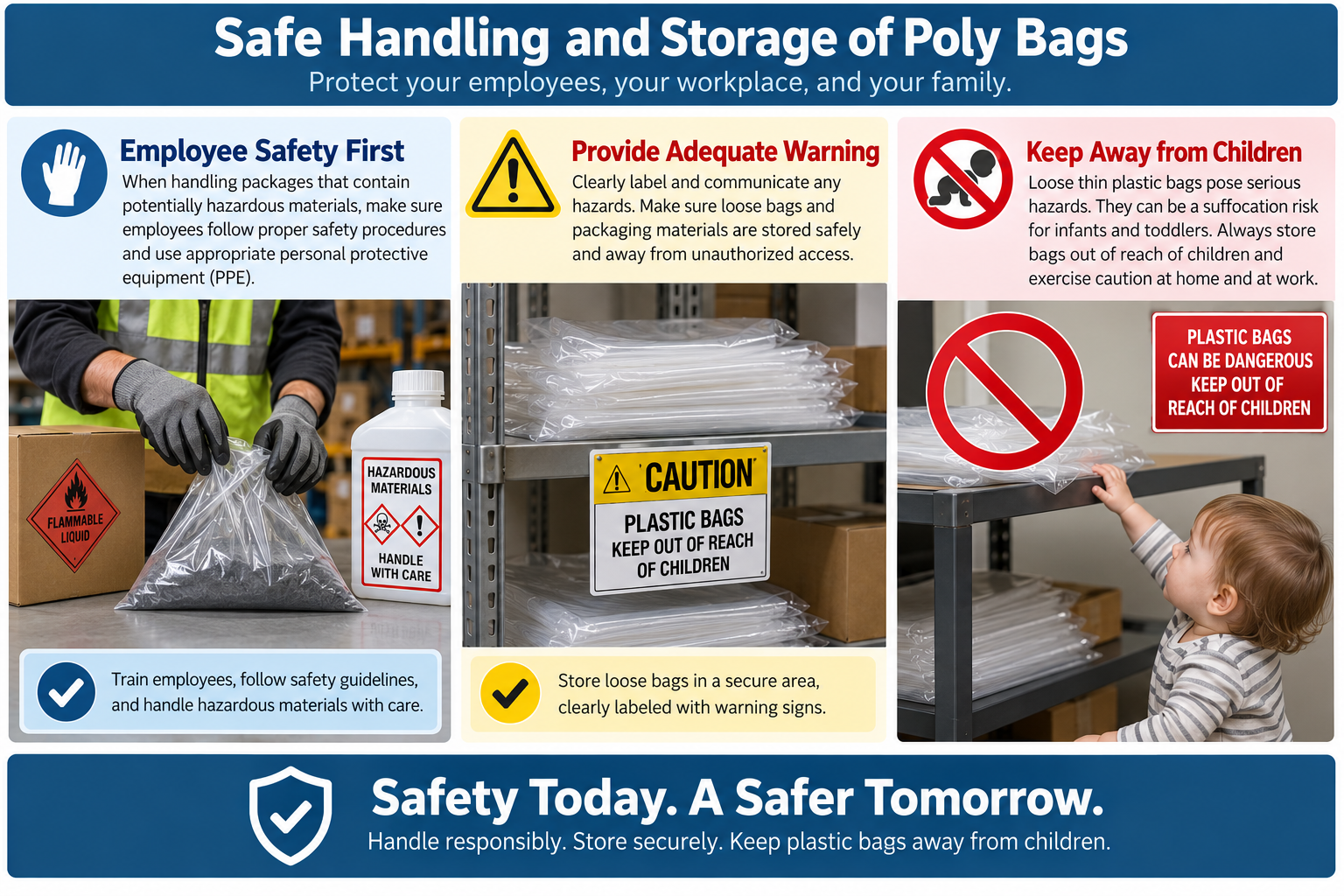
In addition to ensuring safety for employees handling packages with potentially hazardous materials contained therein, it is also very important to provide adequate warning and store loose bags safely where children cannot reach them. Loose thin plastic bags pose serious hazards and adults should exercise caution to keep them away from infants/toddlers.

Once you have taken these three key elements into consideration: measure first, match thickness to product and select a suitable closure method, choosing the right poly bags will become much simpler. Taking these three simple actions can reduce waste, improve efficiency during packaging processes and ultimately result in each item arriving at its destination in perfect condition.
Never Run Out Again

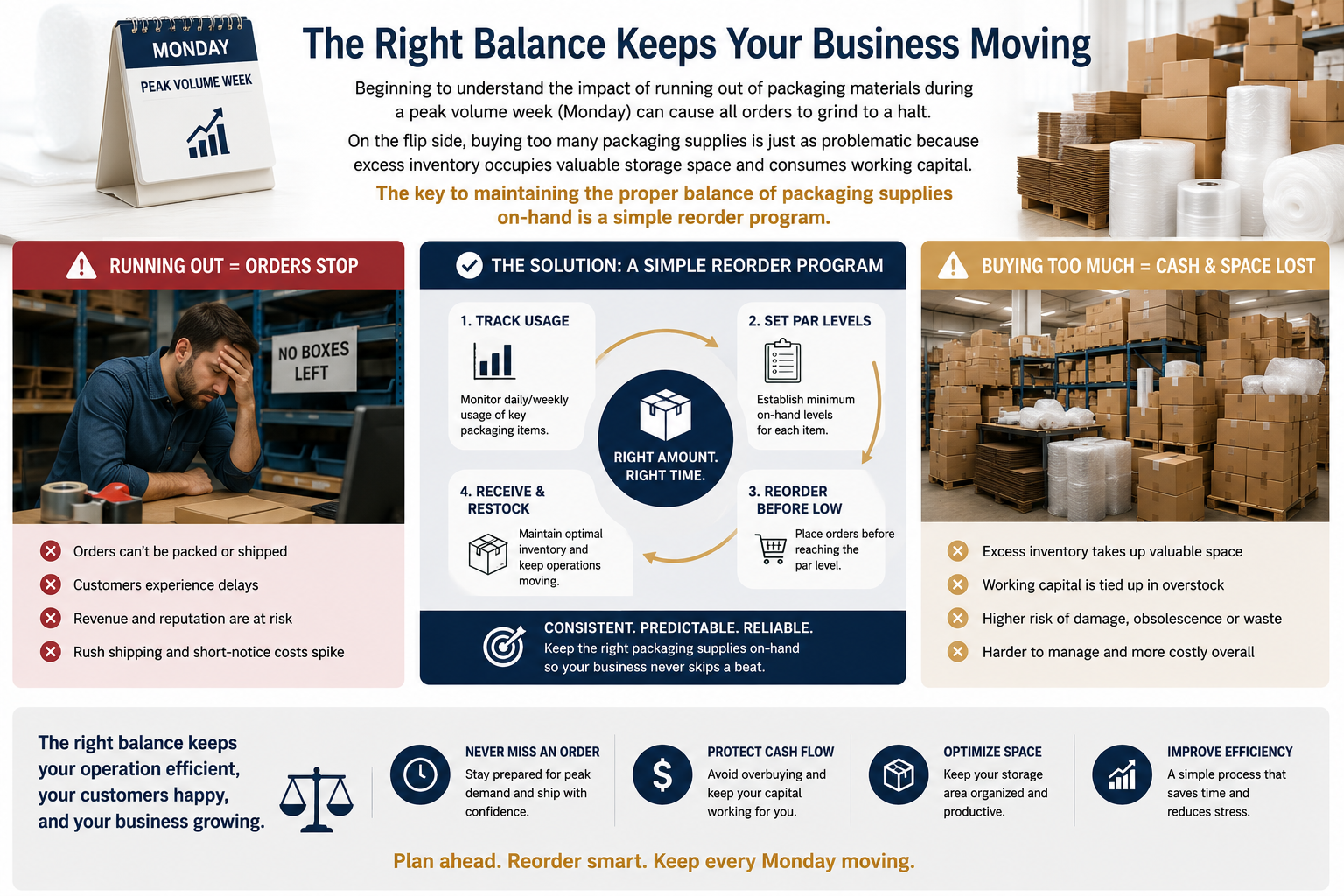
Beginning to understand the impact of running out of packaging materials during a peak volume week (Monday) can cause all orders to grind to a halt. On the flip side, buying too many packaging supplies is just as problematic because excess inventory occupies valuable storage space and consumes working capital. The key to maintaining the proper balance of packaging supplies on-hand is a simple reorder program.

Firstly, watch how your team uses packaging supplies for approximately 28 days. Document the quantity of each type of packaging material (boxes, tape rolls, labels, mailers, and packing paper) at both the beginning and ending of each week. Tracking usage like this provides insight into which packaging materials are being consumed rapidly and those that tend to linger on shelves. There is no reason to assume a high consumption rate based solely on your highest-volume day.

Secondly, determine your average daily consumption. If your team consumed 100 mailers during a 20-day period, your average consumption would be 5 mailers per day. Record this average along with the product name. Continue this process for each packaging supply whose depletion would severely impede operations.

Thirdly, calculate the lead-time for receiving new orders. In most cases, reviewing past deliveries is a good indicator of the typical lead-time associated with purchasing through a particular vendor. For example, if most recent orders have taken an average of 4 days to arrive, consider using this value as part of your reorder program.

Fourthly, multiply the daily usage value by the number of delivery days (lead-time). Using our previous examples, if a company has an average daily usage of 5 mailers and experiences a 4-day lead-time for ordering new supplies, they would require a minimum of 20 additional mailers until their next shipment arrives. As an added measure of protection against unexpected increases in demand due to unusual events such as inclement weather, last-minute promotions or delayed shipments, add a small buffer to the total.

The resulting number represents the maximum allowable quantity on-hand prior to placing another order. Labeling the exact level with a brightly colored marker placed directly on the shelving unit where the packaging supplies are stored is an effective way to visually communicate when to restock. Alternatively, documenting the required reorder point on a clipboard is a low-cost alternative solution to utilizing expensive software programs.

Lastly, give consideration to the few packaging supplies that are utilized in virtually every order. These include but are not limited to; standard size shipping boxes, roll tape and shipping labels. Due to the frequency of use and critical nature of these packaging supplies, it is recommended that you maintain higher levels of inventory stockpiled for immediate availability. Maintaining sufficient backup stock of frequently used packaging supplies will help ensure uninterrupted production and minimize costs spent on unnecessary purchases for products and services that provide greater economic benefits.

When evaluating your current inventory management strategy, also take into account factors related to available storage space. Shipping boxes flat require adequate ventilation to prevent moisture buildup, roll tape requires storage in areas protected from excessive heat exposure and shipping labels must remain clean and unsoiled.

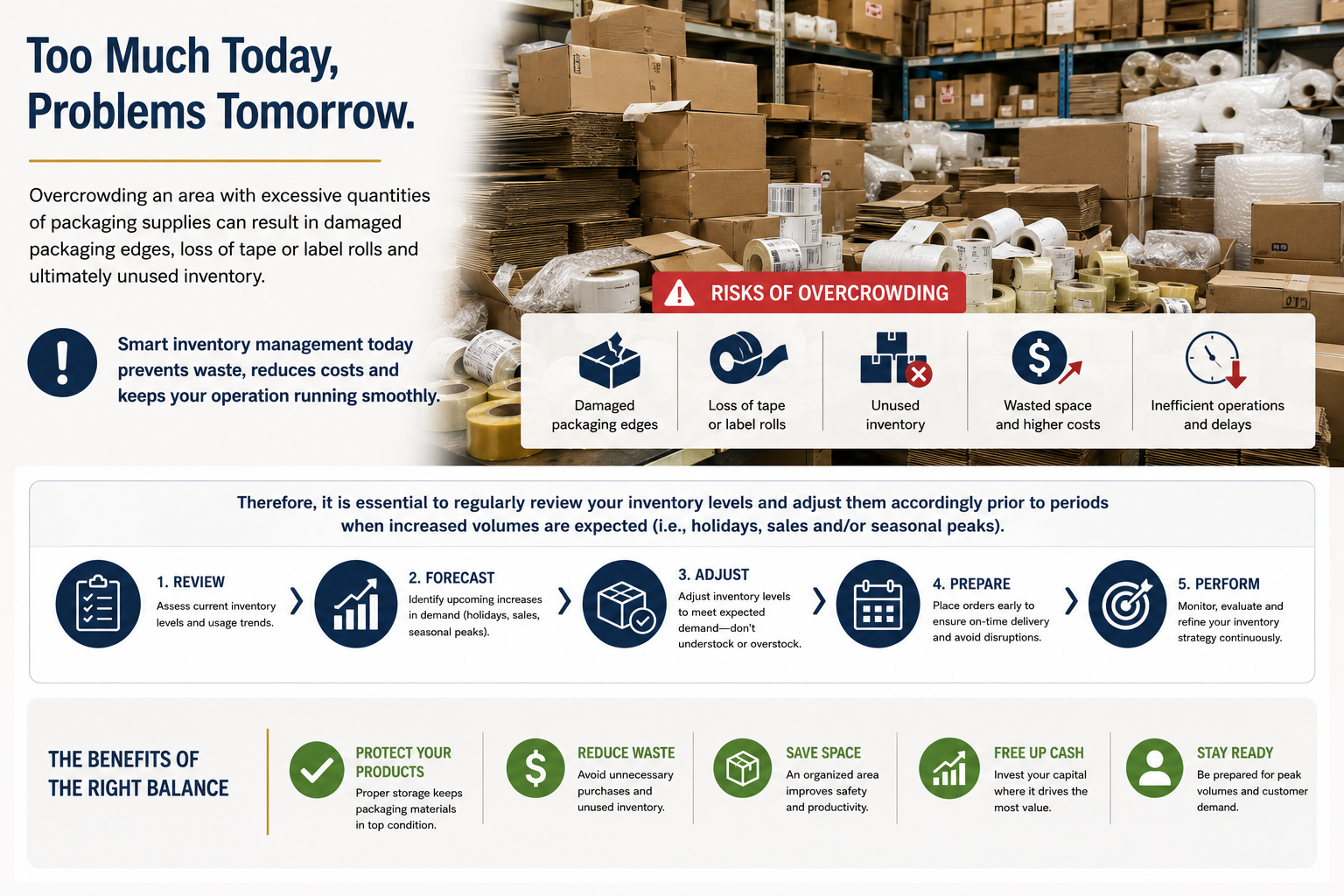
Overcrowding an area with excessive quantities of packaging supplies can result in damaged packaging edges, loss of tape or label rolls and ultimately unused inventory. Therefore, it is essential to regularly review your inventory levels and adjust them accordingly prior to periods when increased volumes are expected (i.e., holidays, sales and/or seasonal peaks).

A simple weekly inventory check allows you to make adjustments prior to potential problems turning into operational disruptions.

Can Poly Bags Hold Electronics?

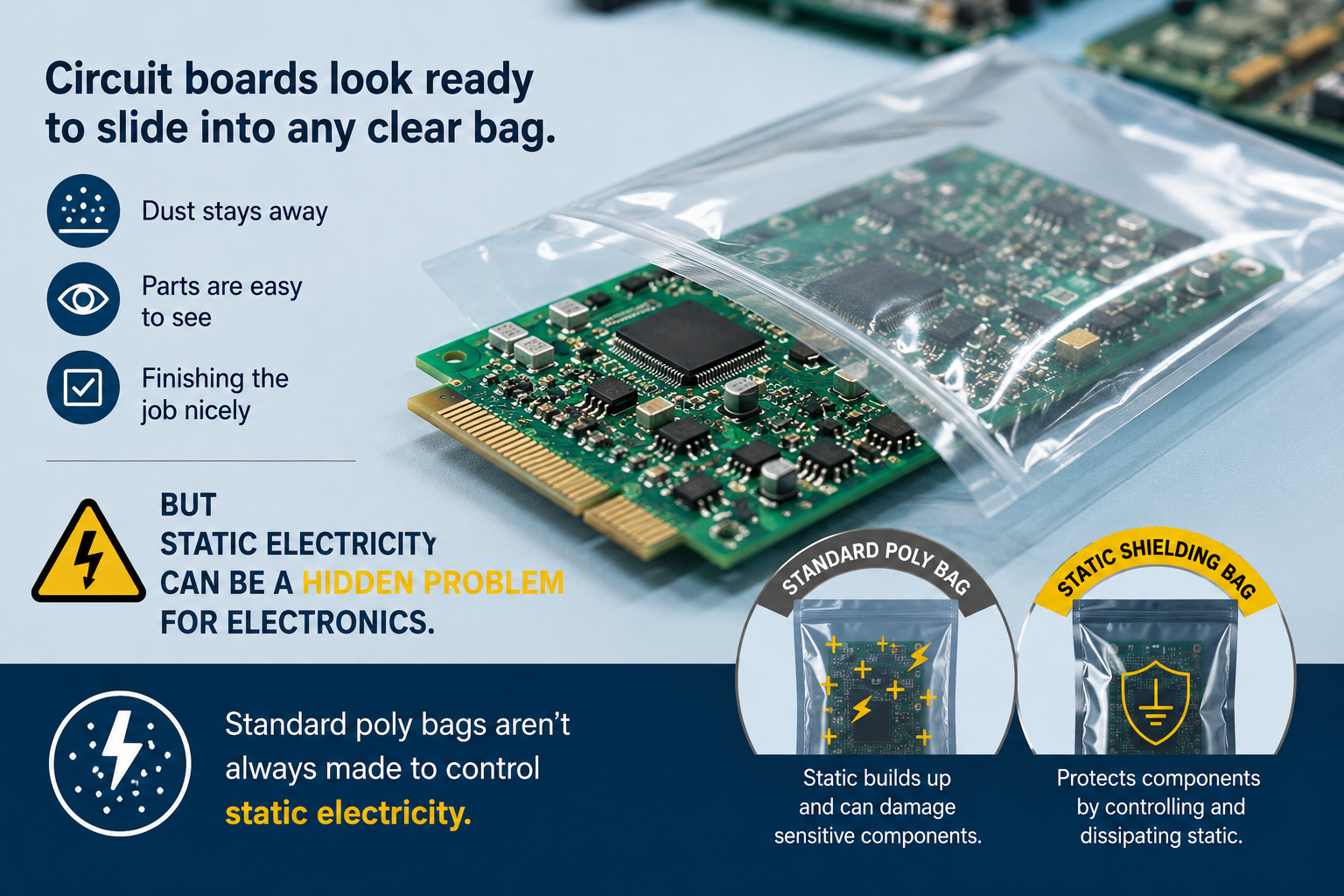
Circuit boards look ready to slide into any clear bag. Dust stays away and parts are easy to see, finishing the job nicely. But static electricity can be a hidden problem for electronics. Standard poly bags aren’t always made to control static electricity. 

So neat appearance doesn’t mean they are safe for every electronic part. Static electricity is an electric charge that builds when materials separate and touch. We know it as that snap after walking on carpets. Sensitive chips might react to very small events and damage might not leave burn marks or broken parts. Sometimes the part fails right away; other times the damage shows up after use.

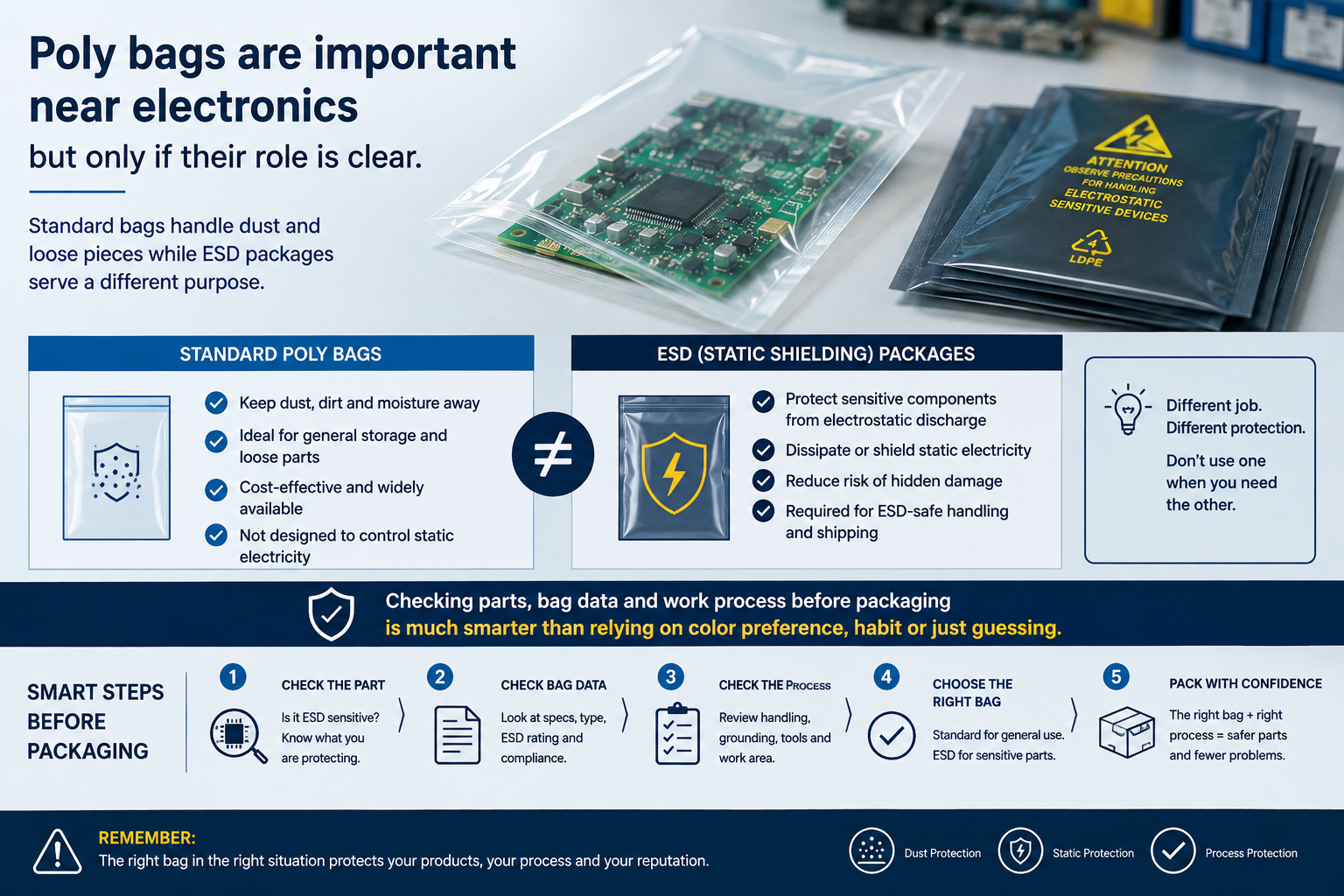
Start out by checking if an item is marked sensitive to electrostatic discharge (ESD). Don’t judge packaging quality by price or size. Cheap items can require special care too. If unsure, consult the lead person at the company who deals with ESD or a packaging supplier before selecting bags. 

Ordinary clear poly bags work well for cords, cases and manuals and many other items. But they should not be considered ESD packaging unless results of tests and intended use match job. Color alone is not sufficient proof; a pink, gray or silver bag might serve a different purpose from another bag that has the same shade.

ESD bags serve different purposes. Some bags limit charge that results from contact and movement. Other bags add shielding that protects items from external electric fields. Tasks are different. Plastic bags can reduce charge but lack shielding so you need to name ahead what level of protection you need. 

Packaging matters along with the bag. Parts that are sensitive should enter the package inside approved work areas following company ESD plans. Workers need steps, grounded tools, right surfaces and approved clothing. Putting a special bag on a table that is unsafe does not turn that station into a secure space.

Inspect bags before use. Things like holes, broken seals, worn folds, or damage to metal layers can affect how they perform. Follow rules for closing, labeling storage and reuse set by bag makers. If contents cannot be seen mark outside so workers can identify parts without opening and exposing them. 

Poly bags are important near electronics but only if their role is clear. Standard bags handle dust and loose pieces while ESD packages serve a different purpose. Checking parts, bag data and work process before packaging is much smarter than relying on color preference, habit or just guessing.

What happens when the buyer opens your package?

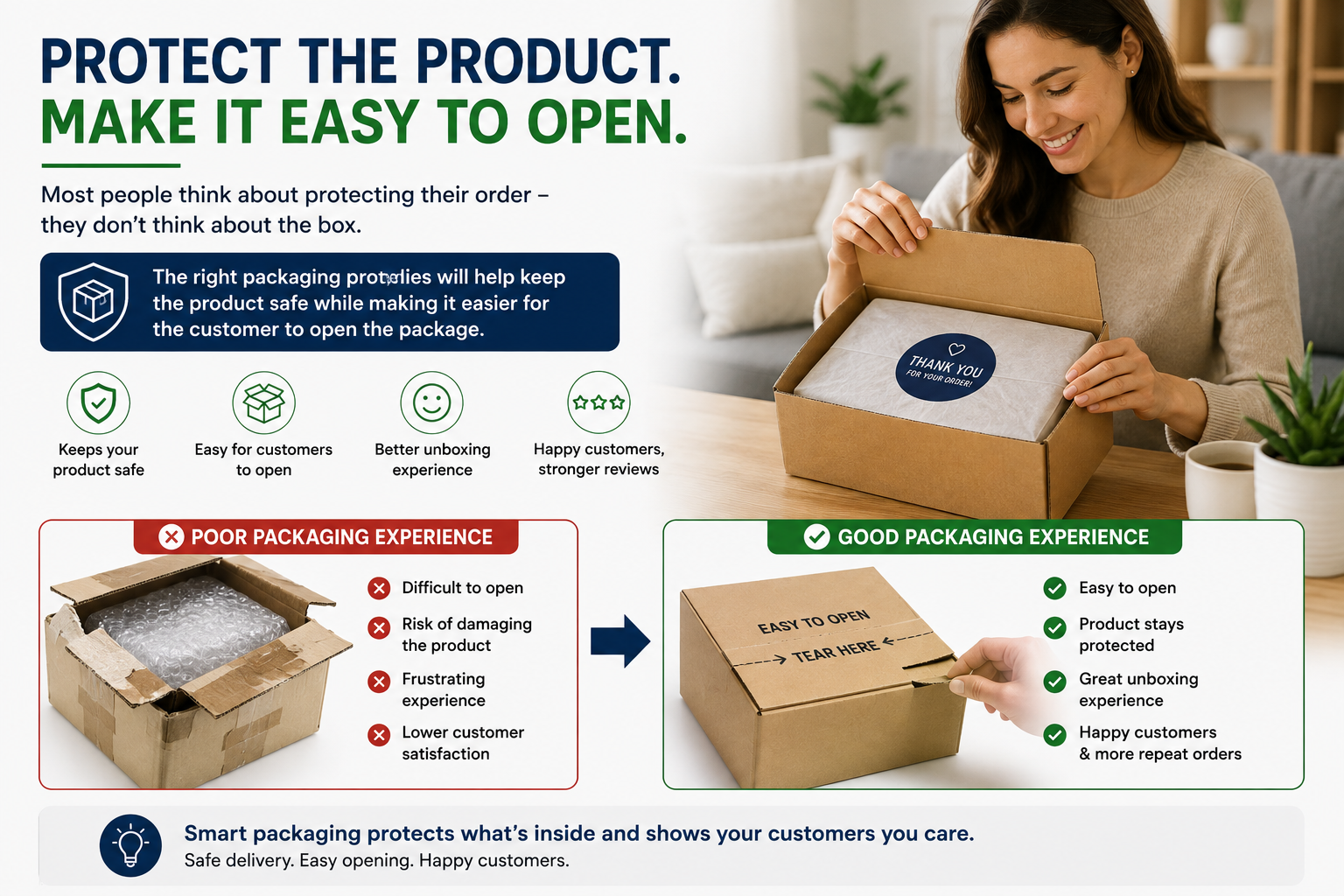
Most people think about protecting their order – they don’t think about the box. Most people expect to be able to open their box at home. The right packaging supplies will help keep the product safe while making it easier for the customer to open the package.

The first step is to start with the outside of the box or mailer. Consider using a large flap that can be easily picked up and used to open the box. Or use a pull tab on top. Or use a tear strip that is easy to see and pick up. A small tab may be difficult for some buyers (i.e. older adults) or those who have sore hands to hold onto. Thick plastic wrap is very hard to cut. If there are other options available, a paper mailing box or mailer which has a clear opening point would be better choices for products.

When talking about tape, many people don’t realize how important it really is. A single clean strip over the seam in a box may provide more strength than several loose strips placed all around. Too much tape may make a box into a locked chest. Just enough to keep the item closed — leave room for the buyer to begin opening the box. Labels such as “open here” or arrows to guide them through this process, save the buyer from guessing.

Also consider the items inside the package. Avoid hiding anything under layers of filler. Fold any paper wrapping so the end where opening can take place does not rip everything apart. Bags should also have either a flap or edge that can be found by fingers. Instead of putting many pieces of small parts in tight layers, put them in one clear pouch. These choices will also help prevent losing parts during opening.

Labels on packages must also be clear. Use large print, plain terms & strong contrast between label color/color and background color. If the package needs to remain upright during shipping, let the buyer know where they will find this information. Bills, return papers & care notes should always go near the top of each package. A person should never need to empty out the entire box before learning how to open it.

Do a test run on each type of package before shipping orders. Simply set a box on a table and try to open it using only one hand. Do another test wearing gloves. Determine whether you can easily find the tab and if you needed sharp tools to complete any part of the process. If safety rules require certain packaging (such as child-safe packaging, sealed medical packaging), follow those rules first.

Using easy-opening packaging helps many more people than most may understand. It could help someone with arthritis, a parent holding a child, or a worker who has to open hundreds of boxes daily. Using easy-opening packaging could also lower the chance of an order being damaged because it had to be cut open with a knife. Good packaging supplies should protect what’s inside without making the buyer fight to get to it.

The small number which stops tears

How a poly bag bends, feels & performs depends on how much force it can withstand. The amount of pressure a poly bag can withstand is determined by its mil thickness (the thickness of the plastic). This measurement does not represent the size of the bag (length or width), nor is it a measurement of inches; rather, one mil represents One-thousandth of an inch. Therefore, a higher mil number represents a thicker plastic film. A small increase in mil thickness can be critical when you are producing thousands of bags per year.

Greater thickness is not always better. While a thicker bag may provide greater durability when folded over a heavy product, a bag which is too thick may be difficult to fold over a lightweight product. Similarly, while a thinner bag may tear easily when holding a rough metal product, a slightly thicker bag would perform better. The correct level of thickness ultimately depends upon what is being packaged and the method of packaging.

Purchasing the thickest poly bags available for every application will result in excess material use.

To determine the required mil thickness, begin by evaluating the weight and shape of the product. For example, a flat piece of fabric will exert significantly less pressure on a plastic bag compared to a product with sharp points. Next evaluate if there are any potential “hot” areas such as a corner, thread, or metal edge that could potentially concentrate force on a single point. Although light products may appear to present no risk, they also have the capability to create holes due to concentrated force applied to a small area.

In addition to product characteristics, consider the Handling requirements of your operation. A bag that is used only once at a quiet desk presents a different set of demands than a bag that is lifted multiple times throughout the course of an eight-hour shift, and subjected to various forms of abrasion. Consider whether the users will need to repeatedly open and close the package, and thus subject it to repeated forces. Increased handling may require increased mil thickness or a different type of bag design.

It is unwise to judge strength by feeling alone. Two bags may look identical and even feel identical but their mil thickness values may vary dramatically. Always read the case label and store this information with your supplies. Labeling the shelf in large print is helpful in preventing employees from using the wrong thickness of bag based on appearance. Testing provides an accurate measure of performance rather than relying on guesswork. Test pack samples in conjunction with your actual products and simulate the normal usage conditions. Handle them normally (e.g., pick them up from the top) and then store them as you would in the storage containers. Inspect the areas where the product makes contact with the film for signs of wear including Stretch marks, cloudiness and minor cuts. These types of damage indicate that additional reinforcement may be necessary.

Selecting the proper mil value will allow you to complete your packaging tasks efficiently without creating unnecessary difficulties or waste. Store the selected thickness value with each product code so future orders utilize consistent specifications. Whenever introducing new products test each individual item prior to assigning a specific mil thickness. Recognizing mil thickness allows you to transform poly bags from an enigma into an informed decision-making process based on your products, processes and personnel.