If you pack orders into poly bags that are too small, they could split apart before they even leave your table. On the other hand, if you over-size the bag then you’ve wasted valuable space and your item is probably going to slide all over the place inside the bag. To avoid these issues, begin by determining the correct poly bag for an item by measuring it rather than guessing.
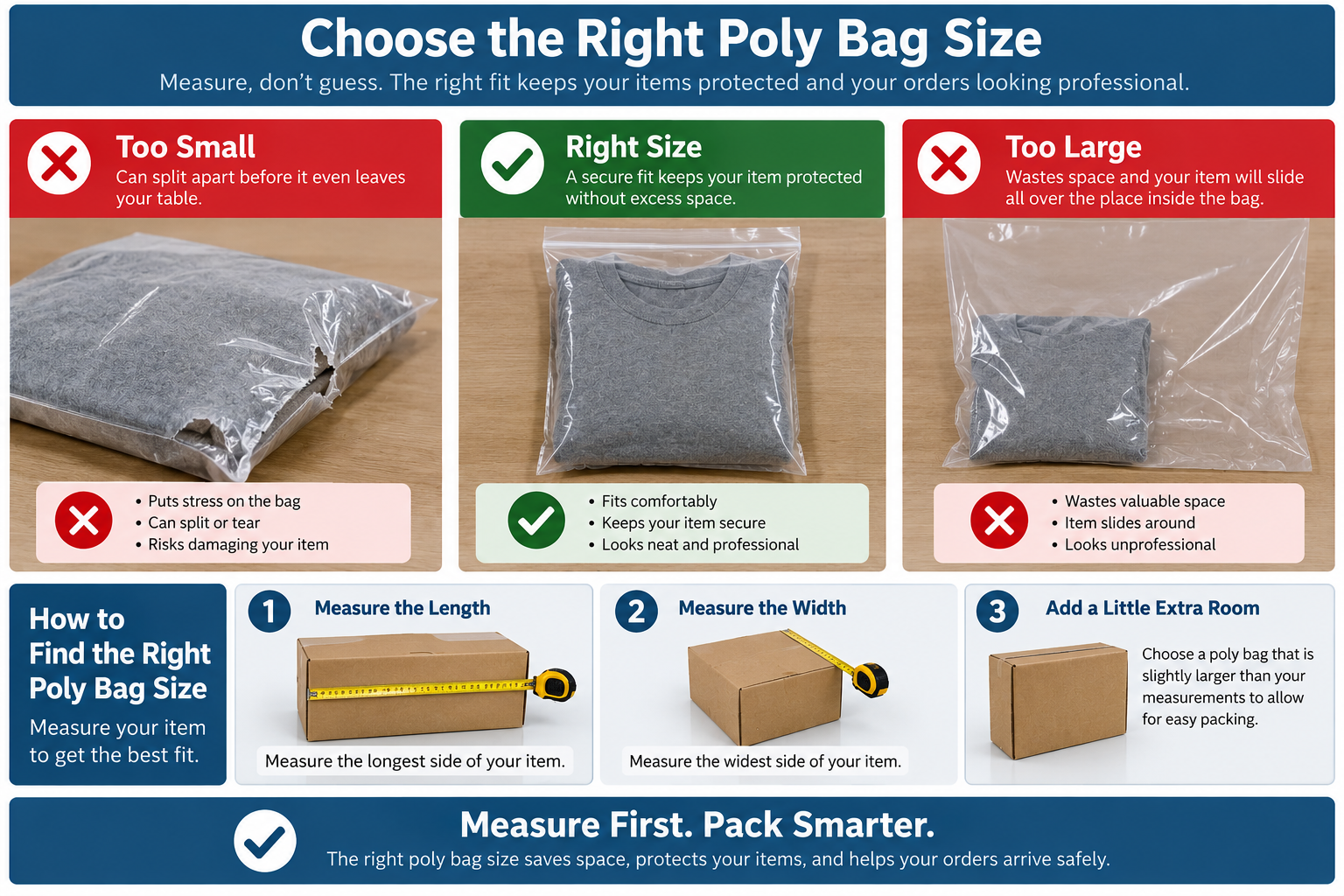
By doing a couple of quick measurements, you’ll likely be able to solve most of your common packaging problem issues. First take note of the length and the width of your item. Take the measurement across the widest point of your item. Be sure to give yourself some additional space so that you’re able to slip the product inside without forcing it. For example, a folded t-shirt would require enough space so that it does not stretch out the bag nor cause the edges of the bag to appear pulled together.
The same is true concerning the weight of your product. While the size of your product certainly affects your ability to determine the correct poly bag, it’s equally important to consider the weight of your product. In this case, you want to select a poly bag based upon its thickness (measured in mils). A smaller number indicates a thinner poly bag. Conversely, a larger number indicates a thicker poly bag. For lighter products such as greeting cards or fabrics, there may be no need for added support; however heavier objects such as tool or part with sharp edges may need increased support to ensure safe shipping practices.
As noted previously, the shape of your product will also affect which type of poly bag will work best for you. If you have a flat product, it’s probable that a basic open-ended poly bag will work perfectly. However, if you have a thicker product or one with extreme angles/edges, you may find that a poly bag that is wider and has additional side room is needed. To confirm that your product will fit properly within a new bag before purchasing a quantity of them, try fitting your product into a single sample. This will allow you to verify that your product does not pull against the seams of the new bag.
When selecting the type of closure for your poly bag, there are two main types available. There are those with a sealing tape or strip which will completely seal the bag closed and those that have a zipper that will allow you to open and close the bag multiple times. Once you have selected the type of closure you prefer, you must now think about how many times the person receiving the package may need to open and/or access the contents of the poly bag. For instance, if a customer receives a shirt packaged in a sealed poly bag but later needs to inspect the shirt prior to returning it back to you, then he/she will need to remove the entire contents of the poly bag including the shirt in order to do so.
If visibility is necessary to allow warehouse employees to easily count their inventory, then clear plastic is your answer. Additionally, since clear plastic allows for viewing, it eliminates the possibility of packing incorrect items and labeling errors. Adding a label containing the product description/name and/or order # provides further identification without obstructing employee views.
There are specific requirements when dealing with food items. Those poly bags designed for clothing/hardware are not created to come into direct contact with food. Therefore, anyone who plans on packing snacks, baked goods or other consumable items should first verify that the poly bag(s) they plan on utilizing meet the required food-grade specifications prior to use.
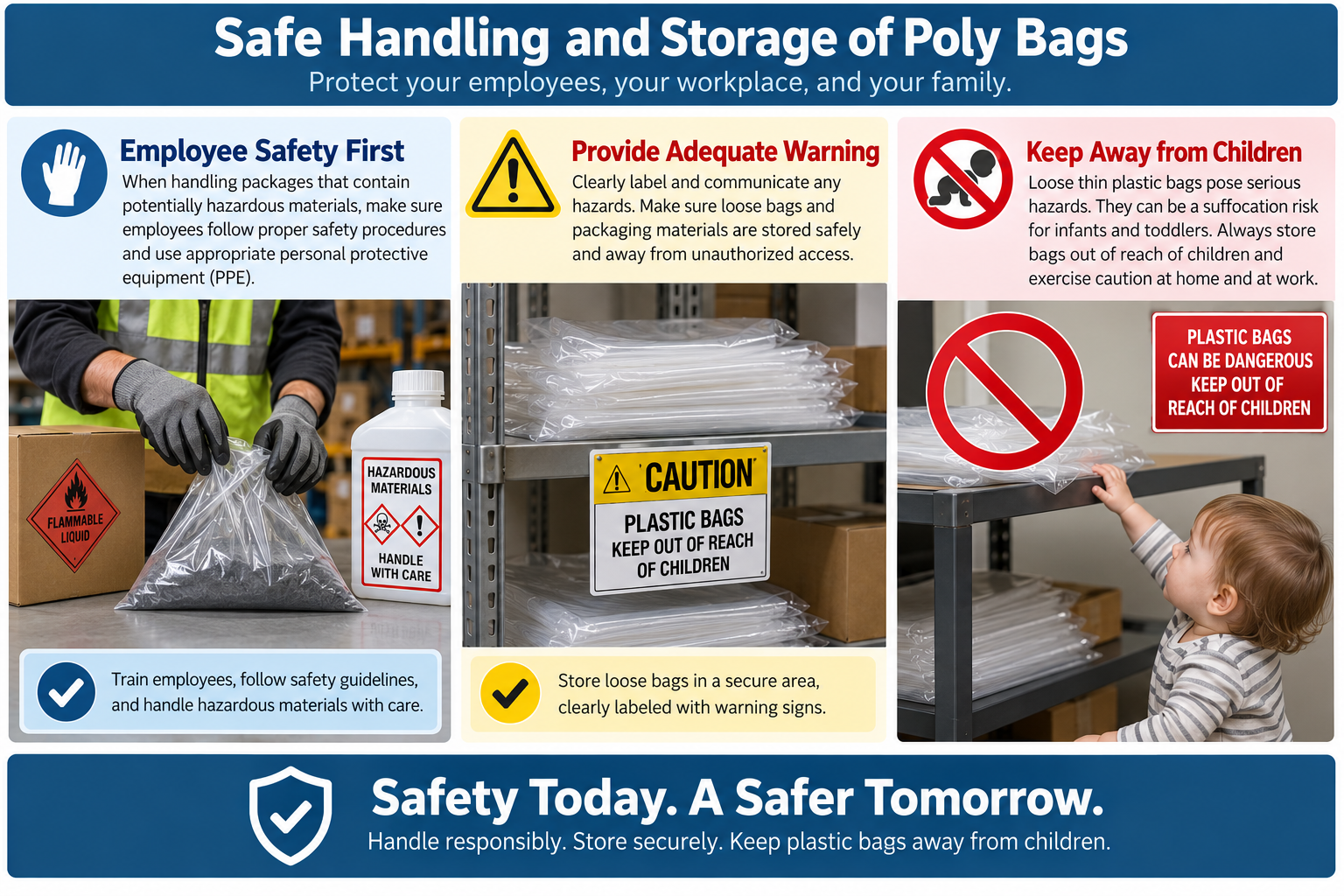
In addition to ensuring safety for employees handling packages with potentially hazardous materials contained therein, it is also very important to provide adequate warning and store loose bags safely where children cannot reach them. Loose thin plastic bags pose serious hazards and adults should exercise caution to keep them away from infants/toddlers.
Once you have taken these three key elements into consideration: measure first, match thickness to product and select a suitable closure method, choosing the right poly bags will become much simpler. Taking these three simple actions can reduce waste, improve efficiency during packaging processes and ultimately result in each item arriving at its destination in perfect condition.