Monthly Archives: May 2026

Your Candy Deserves Better

There is something funny about spending hours making great candy, only to toss it into a weak little box that bends like an old pizza carton on a rainy day. A lot of people focus on the candy itself and forget the first thing customers actually touch is the packaging. Before someone tastes one piece of chocolate or caramel, they see the box sitting in front of them.

That small moment matters more than many business owners think.

Candy boxes do more than hold sweets. They help protect candy from getting crushed, melted, or broken during shipping and handling. They also help organize products so stores, bakeries, and candy shops can display everything neatly. When boxes are sturdy and clean, candy instantly looks more valuable.

One common question many people ask is how to choose the right candy box size. The answer depends on the type of candy being packed. Small chocolates usually work better in compact boxes because they keep the candy from sliding around. Bigger treats like chocolate-covered pretzels, popcorn, or candy apples need deeper boxes with more room inside.
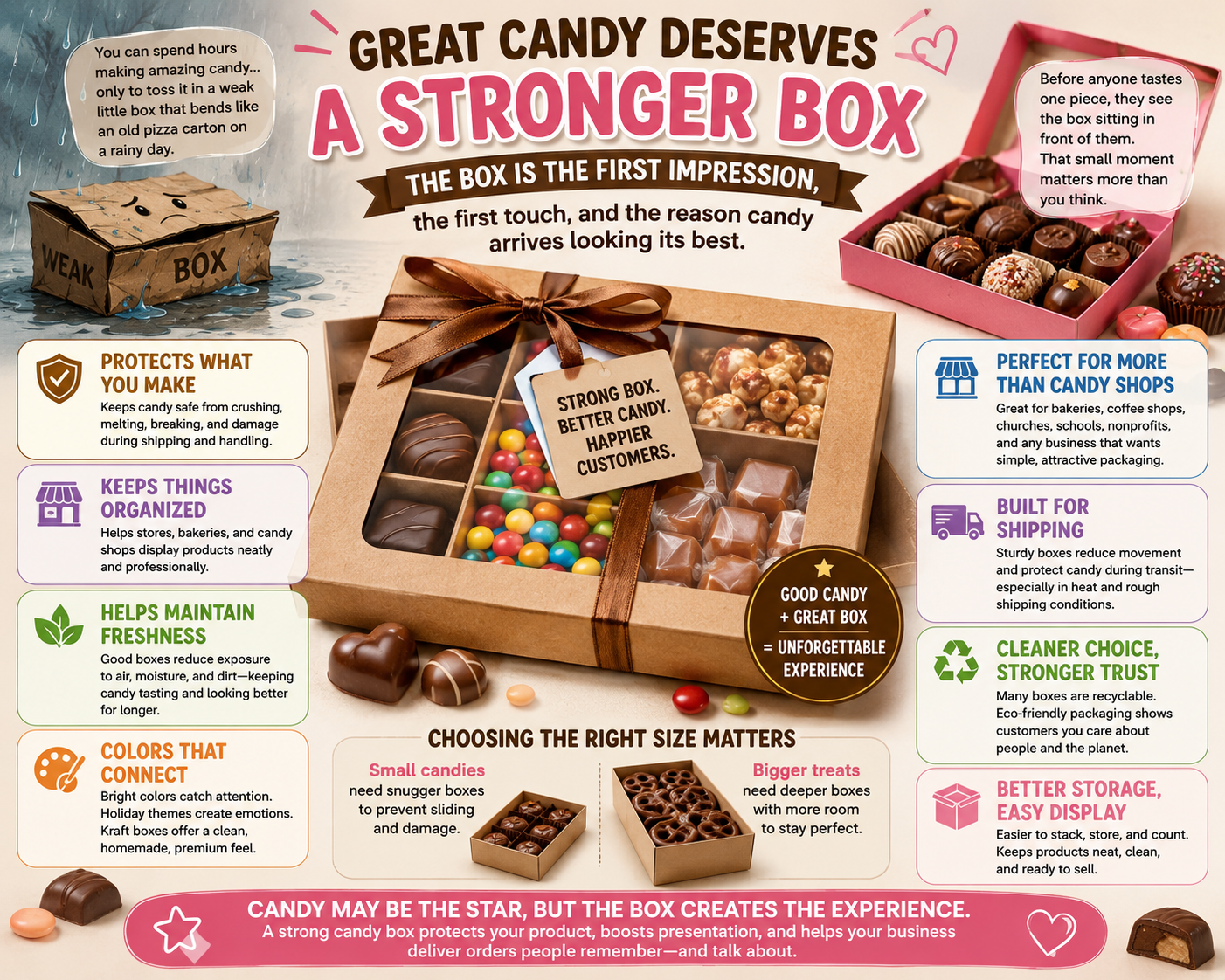
Another thing people often wonder is whether candy boxes help with freshness. In many cases, they do. A good box can help reduce exposure to air, moisture, and outside dirt. This is important because candy can change texture fast when it sits in poor conditions. Nobody wants soft peppermints, sticky gummies, or chocolate that looks cloudy and old.

Color also plays a bigger role than people realize. Bright packaging often catches attention faster in stores or at events. During holidays, many companies use themed candy boxes for Valentine’s Day, Easter, Christmas, or Halloween because people naturally connect colors with seasons and emotions. Even simple kraft-style boxes have become popular because they give candy a homemade and premium look at the same time.

Some people ask if candy boxes are useful for businesses outside candy shops. They absolutely are. Bakeries use them for cookies and fudge. Coffee shops use them for snack packs. Churches, schools, and nonprofits often use them during fundraising events because candy is easy to sell and easy to hand out in organized packaging.

Shipping is another reason strong candy boxes matter. Weak packaging can turn a beautiful order into a melted mess before it even reaches the customer. This becomes even more important during warmer months when heat and rough shipping conditions can damage products quickly. A sturdy box helps reduce movement and keeps candy looking presentable after delivery.
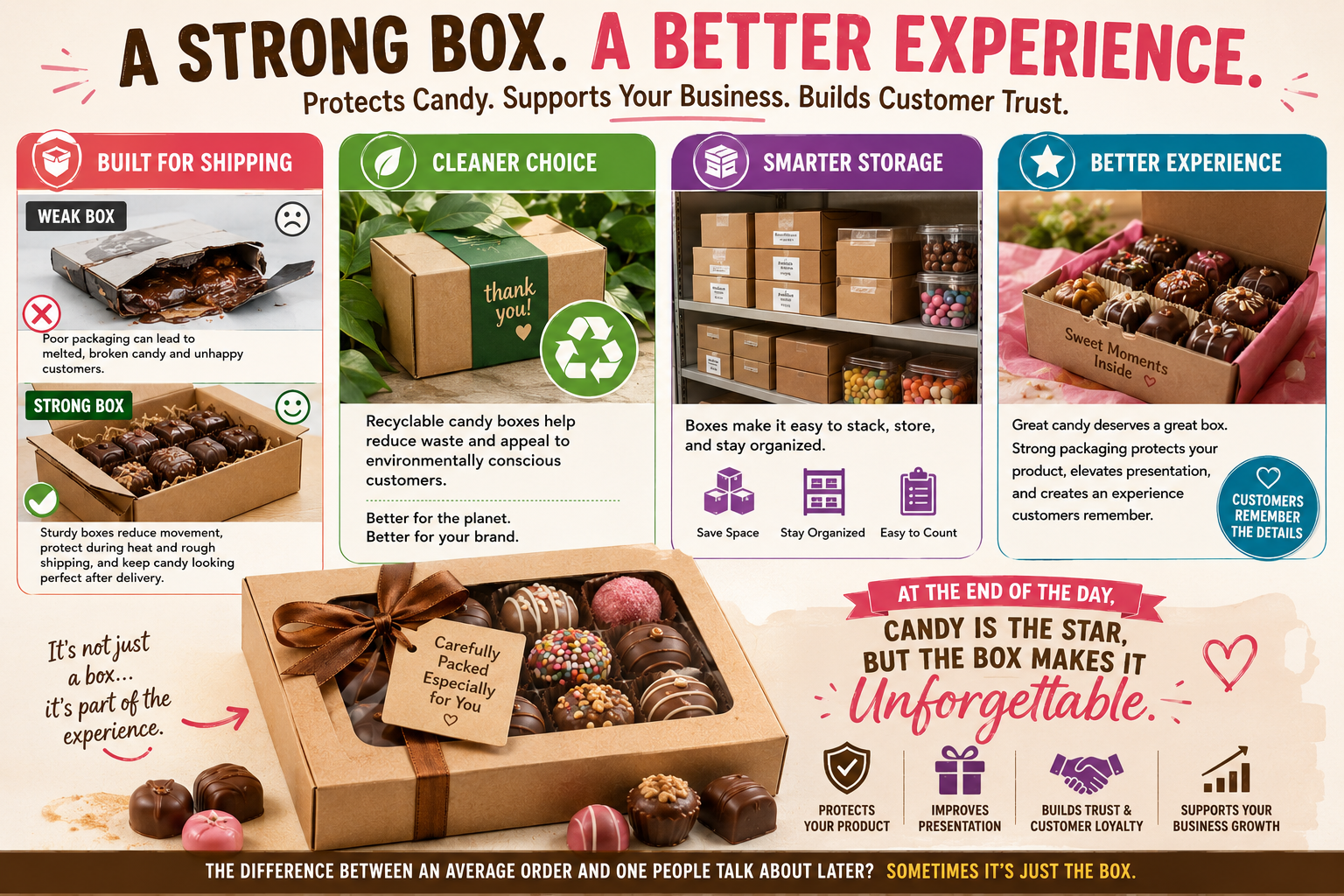
Many shoppers today also care about cleaner packaging materials. Some candy boxes are recyclable, which makes them appealing to people trying to reduce waste. Businesses that use recyclable packaging often build stronger trust with customers who appreciate simple ways to help the environment.

Storage is another hidden benefit people rarely think about. Candy boxes make it easier to stack products neatly without crushing them. This helps stores save space and keep displays organized. Instead of loose products sliding everywhere, boxes help everything stay cleaner and easier to count.

At the end of the day, candy may be the star of the show, but the box helps create the experience people remember. A strong candy box protects the product, improves presentation, and helps businesses avoid problems that come from damaged or messy packaging. Sometimes the difference between an average candy order and one people talk about later comes down to something as simple as the box holding it together.
Packing Mistakes Cost More

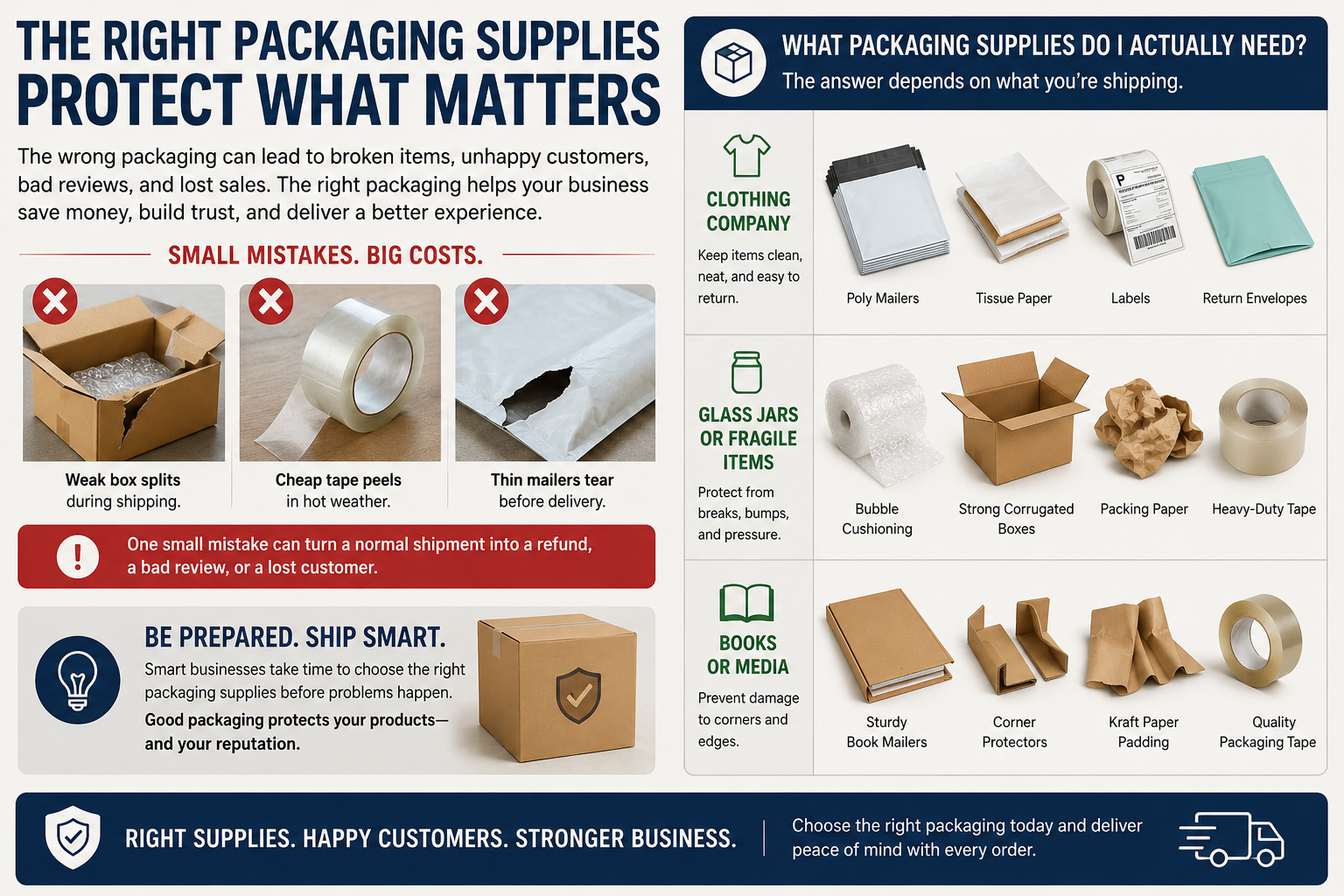
A lot of people think packaging supplies are only important for giant warehouses or companies that ship thousands of boxes every day. That sounds true at first, but it really is not. Even a small business can run into expensive problems when the wrong packaging supplies are used. A weak box can split open during shipping. Cheap tape can peel apart in hot weather. Thin mailers can tear before they ever reach the customer’s porch. One small mistake can turn a normal shipment into a refund, a bad review, or a lost customer.

That is why smart businesses spend time learning how to choose the right packaging supplies before problems happen.

One of the biggest questions people ask is simple. What packaging supplies do I actually need? The answer depends on what is being shipped. A clothing company may need poly mailers, tissue paper, labels, and return envelopes. A business selling glass jars may need bubble cushioning, strong corrugated boxes, packing paper, and heavy-duty tape. Someone shipping books may need sturdy mailers that stop corners from bending during travel.

The mistake many beginners make is trying to buy the cheapest supplies they can find. That usually works for about five minutes until the problems start rolling in. Thin boxes crush easier. Weak tape loses its grip. Poor cushioning lets products bounce around inside the package like shoes in a dryer. Customers notice those things quickly.

People also ask how to save money on packaging supplies without lowering quality. One helpful trick is using the correct box size. Oversized boxes waste space and often require extra filler material. That means higher shipping costs and more supplies used per order. Smaller packaging that still protects the item usually lowers shipping expenses while helping packages look cleaner and more professional.

Another common question is whether eco-friendly packaging supplies are worth using. In many cases, they are. Recyclable boxes, paper tape, and biodegradable mailers are becoming more popular because many customers care about waste and recycling. Businesses that use environmentally friendly packaging can sometimes improve customer trust while also cutting down on unnecessary plastic use.

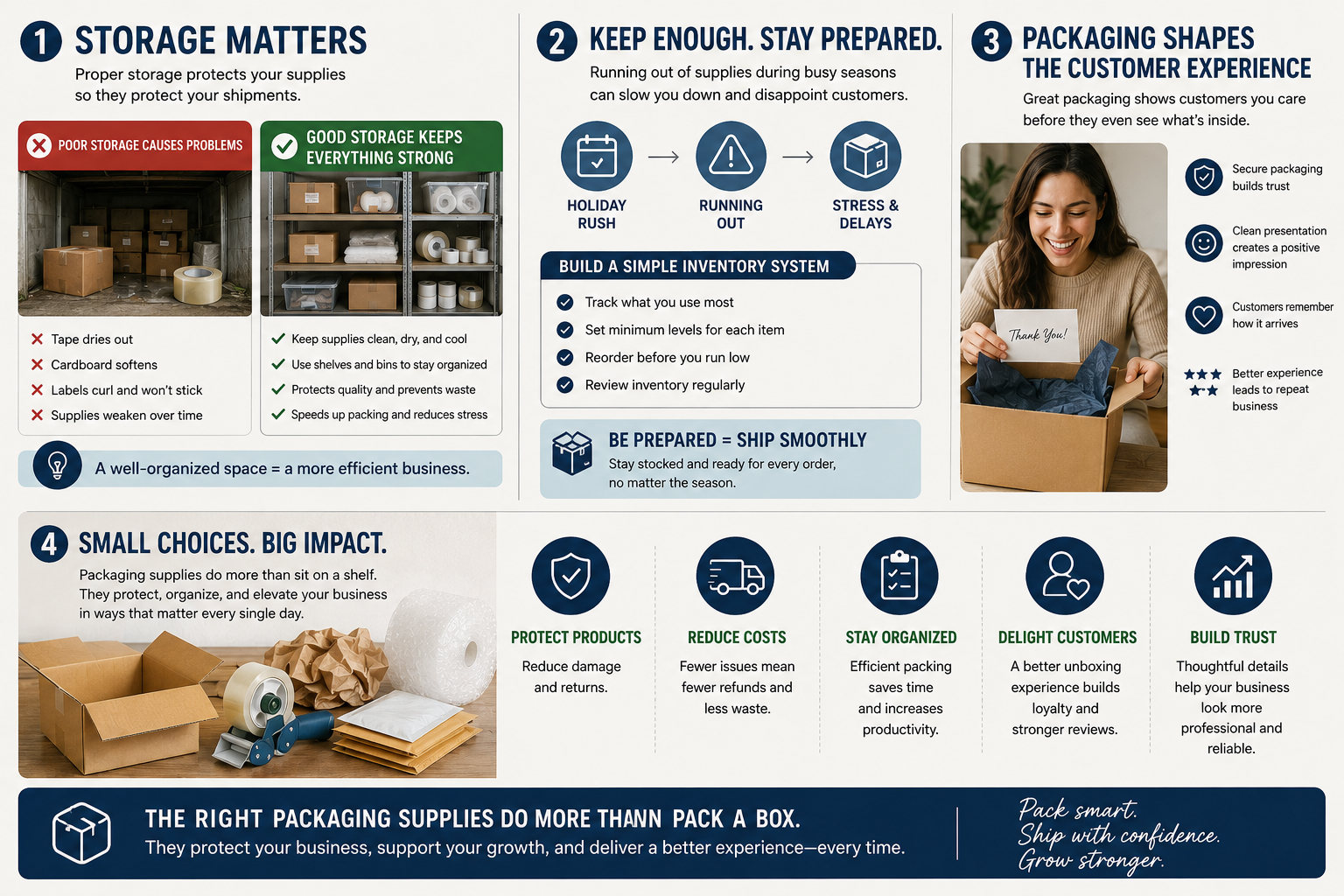
Storage matters too, even though many people ignore it. Packaging supplies stored in damp garages or hot back rooms can weaken over time. Tape may dry out. Cardboard can soften from moisture. Labels may curl and stop sticking properly. Keeping supplies clean, dry, and organized helps prevent waste and keeps packing stations moving faster.

Another thing business owners often wonder is how many supplies they should keep on hand. Running out during busy seasons creates stress fast. Imagine getting a flood of holiday orders only to realize there are no shipping labels left or the last roll of tape is nearly empty. A simple inventory system helps avoid those last-minute disasters.

Good packaging also changes how customers feel when they open an order. A clean box with secure packing materials tells people the business cares about details. That matters more than some companies realize. Customers often remember how an order arrived almost as much as the product itself.

At the end of the day, packaging supplies are not just cardboard, tape, or bubble wrap sitting on a shelf. They protect products, reduce damaged shipments, help businesses stay organized, and create a smoother experience for customers. Small improvements in packaging can quietly save money, prevent headaches, and help a company look more trustworthy every single day.

Keep Candy Fresh Longer

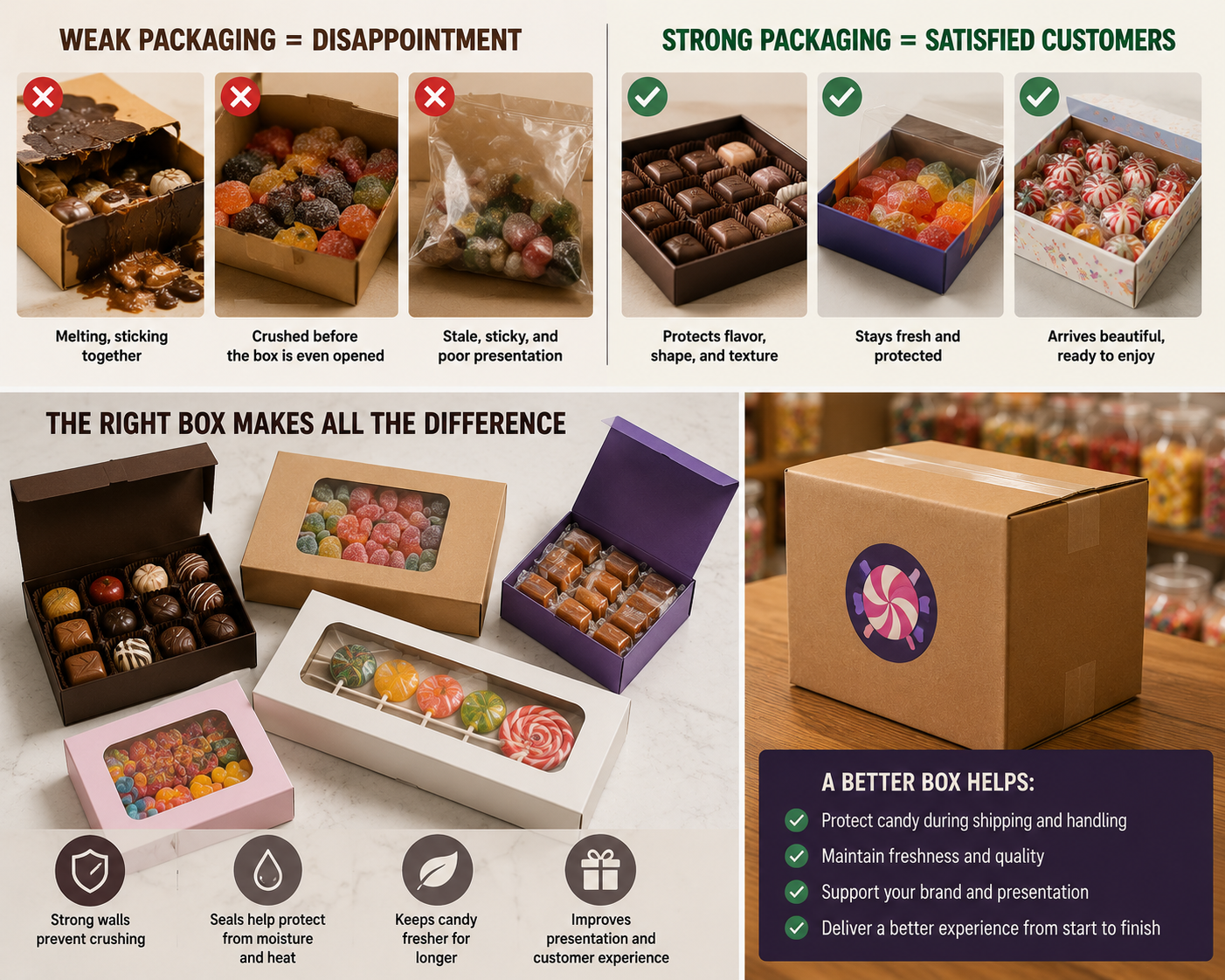
Candy looks simple until it starts melting, sticking together, or arriving crushed before someone even opens the package. That is usually when people realize the box matters just as much as the candy inside it. A weak package can turn a good product into a disappointing one in only a few days. A better candy box helps protect flavor, shape, freshness, and presentation all at the same time.

One common question candy makers ask is how to stop candy from getting damaged during shipping. The answer often starts with choosing the right style of candy box. Soft chocolates, caramel treats, gummies, and hard candies all react differently during travel and storage. Some need stronger walls to stop crushing. Others need tighter seals to help keep out moisture or heat. A good box creates a safer space around the candy so it stays in better condition longer.

Many small businesses also wonder if candy boxes really help sales. They do more than most people think. When someone walks into a store or opens an online order, the package becomes part of the experience. A neat box with clean edges and a sturdy feel gives people confidence before they even taste what is inside. It sends a message that care went into the product. People often remember packaging long after the candy is gone.

Another important thing people ask is whether candy boxes are only for expensive chocolate shops. The truth is they help businesses of every size. A school fundraiser, church bake sale, holiday market, or family candy shop can all benefit from using proper packaging. Even simple candy looks more appealing when it is packed neatly instead of tossed into thin containers that bend or tear. Better presentation can help products stand out on crowded shelves or busy event tables.

Storage is another problem many people overlook. Candy can absorb smells from nearby products if it is not packed correctly. Peppermint candy sitting beside strong scented items may end up tasting strange. Cardboard candy boxes help create separation so flavors stay more stable. Some candy businesses even use inserts or dividers to keep different items from rubbing together during transport.

There is also a practical side to packaging that many people do not think about until something goes wrong. Candy boxes help workers stack products more safely inside warehouses or delivery trucks. Boxes that hold their shape well reduce messes and lower the chance of crushed items. That matters during busy holidays when large candy orders move quickly through shipping centers.

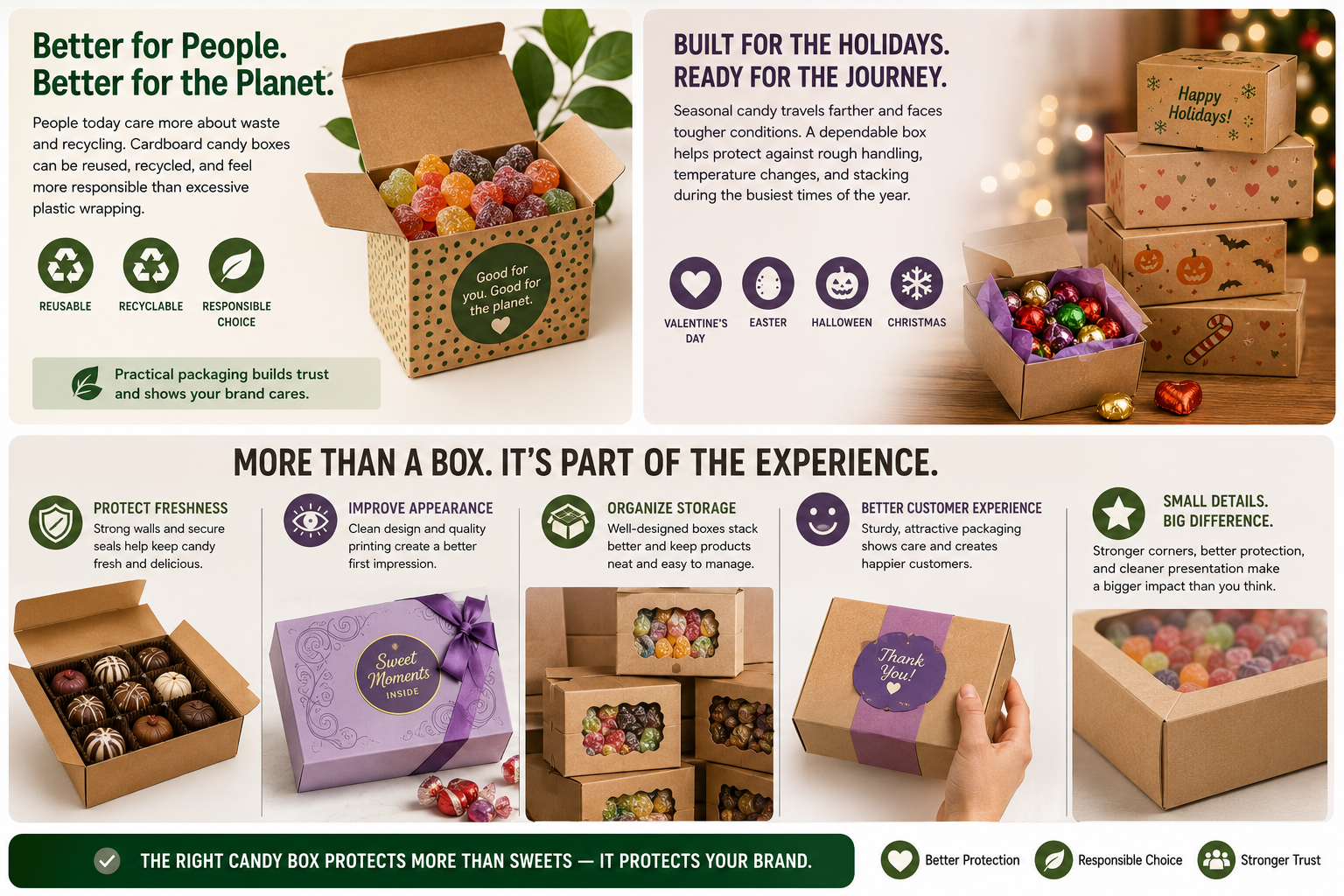
People today also care more about waste and recycling. Many buyers prefer packaging that can be reused or recycled instead of thrown away immediately. Cardboard candy boxes often appeal to shoppers because they feel more responsible than excessive plastic wrapping. Businesses that use practical packaging choices may build stronger trust with customers over time.

Holiday candy creates another challenge because seasonal products often travel farther than normal. Valentine’s Day chocolate, Easter candy, Halloween treats, and Christmas sweets all need protection while moving through shipping systems. A dependable candy box helps products survive rough handling, temperature changes, and stacking pressure during busy seasons.

At the end of the day, candy packaging is not only about holding products. It helps protect freshness, improve appearance, organize storage, and create a better customer experience from start to finish. Small details like sturdy corners, cleaner presentation, and stronger protection can make a bigger difference than many businesses expect.

Fix Your Shipping Problems

Shipping supplies don’t seem like the problem. At first, you look at damaged orders or late deliveries and think something else went wrong. Maybe the carrier. Maybe the handling. But a lot of the time, the issue starts before the package ever leaves your hands.

It starts with what you use to pack it. Shipping supplies cover more than just boxes. Tape, fillers, labels, wraps. All of it works together. If one part is weak, the whole system can fail. That’s why some packages arrive perfectly while others don’t, even when they’re sent the same way.

A common question is how to stop damage during shipping. Most people think the answer is adding more material. More paper, more wrap, more of everything. 

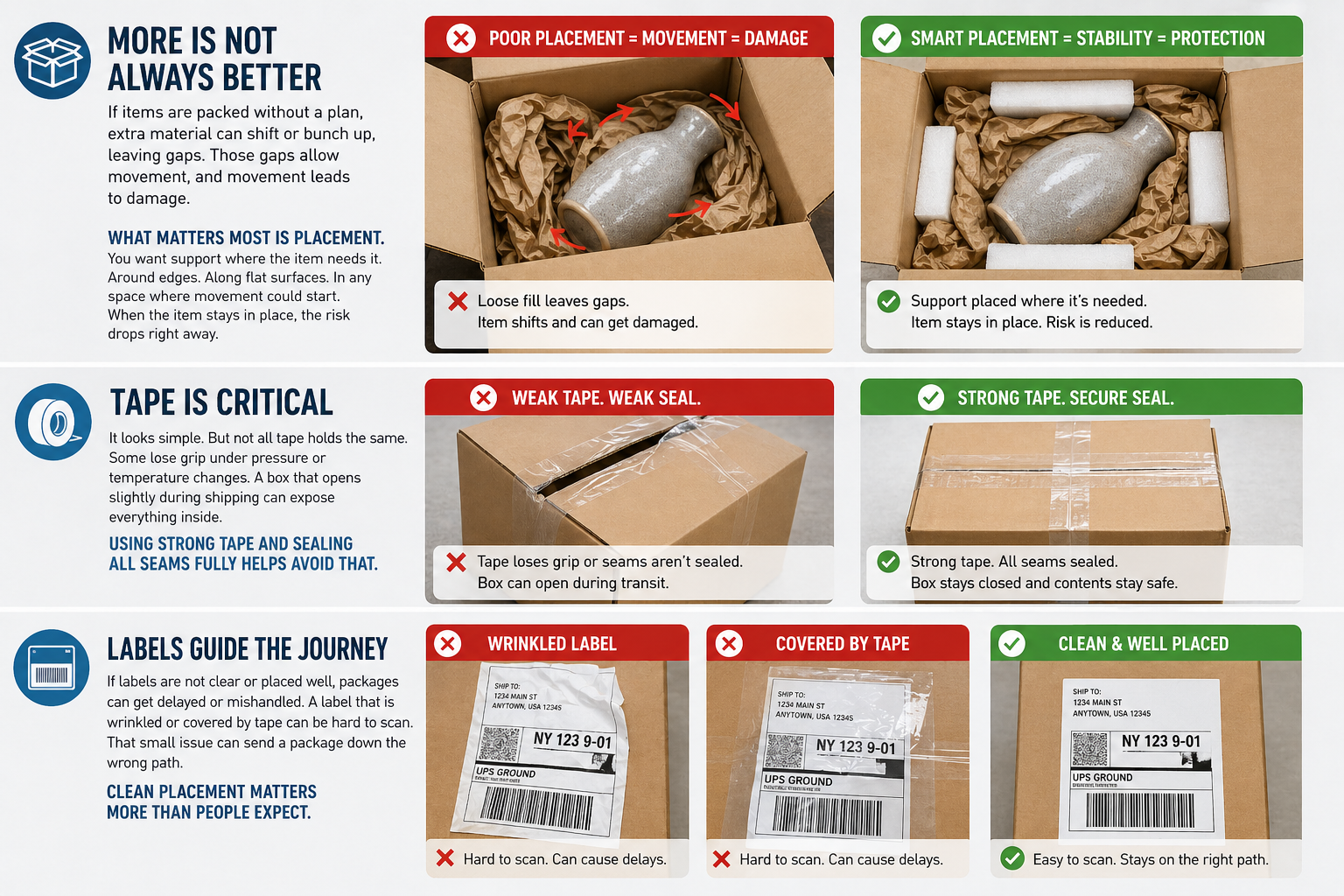
But more is not always better. If items are packed without a plan, extra material can shift or bunch up, leaving gaps. Those gaps allow movement, and movement leads to damage.

What matters more is placement. You want support where the item needs it. Around edges. Along flat surfaces. In any space where movement could start. When the item stays in place, the risk drops right away.

Tape is another piece people underestimate. It looks simple. But not all tape holds the same. Some lose grip under pressure or temperature changes. A box that opens slightly during shipping can expose everything inside. Using strong tape and sealing all seams fully helps avoid that.

Then there are labels. If labels are not clear or placed well, packages can get delayed or mishandled. A label that is wrinkled or covered by tape can be hard to scan. That small issue can send a package down the wrong path. Clean placement matters more than people expect.

People also ask how to make shipping faster without causing more mistakes. The answer is consistency. When you use the same supplies in the same way each time, packing becomes smoother. You don’t stop to think about each step. You follow a simple process that works. This reduces errors and keeps things moving.

There is also the question of cost. Cheaper shipping supplies can look like a quick win. But if they fail, the cost shows up later. Replacing items, handling returns, dealing with complaints. It all adds up. Choosing supplies that perform well helps avoid those hidden costs.

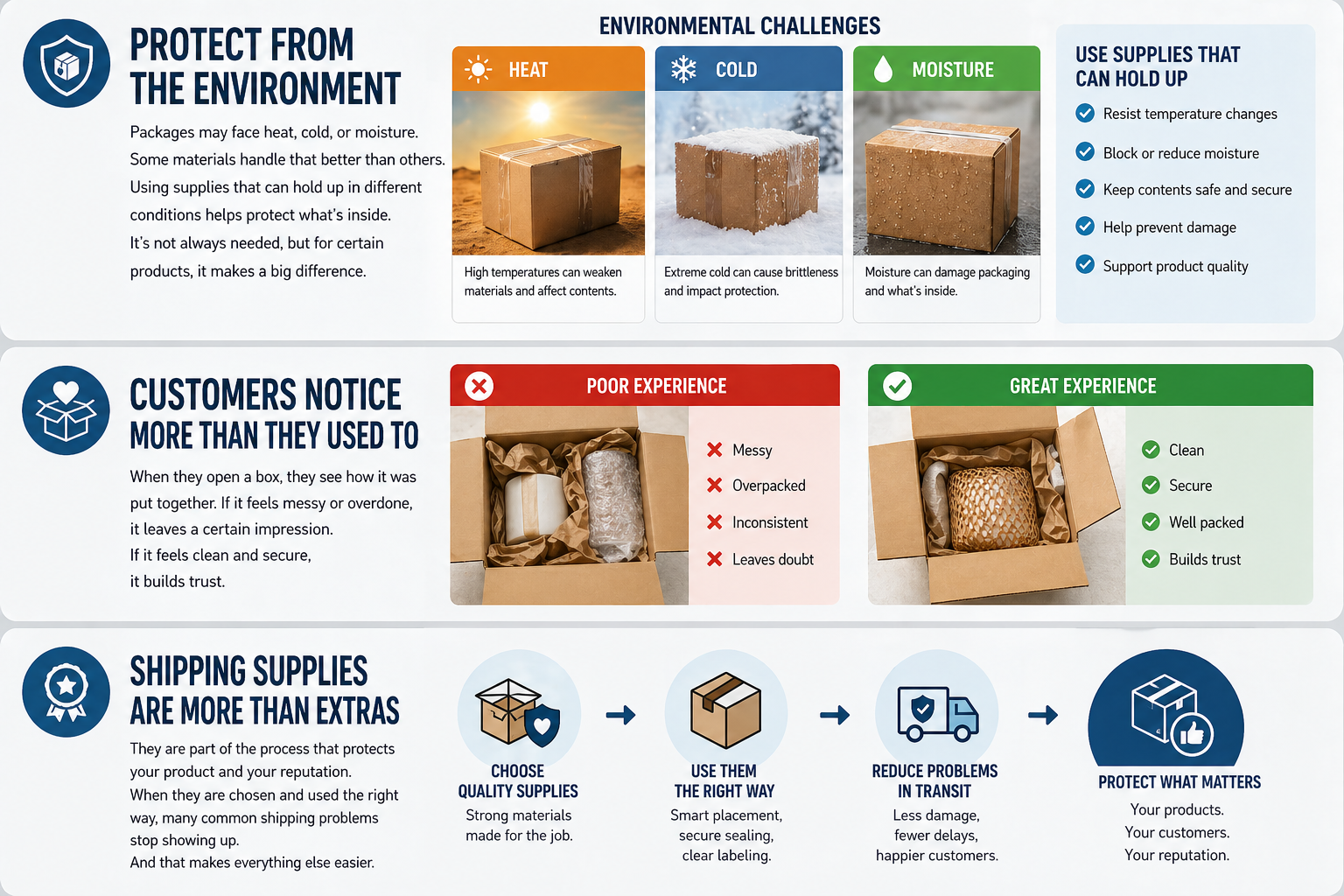
Another area to think about is protection from the environment. Packages may face heat, cold, or moisture. Some materials handle that better than others. Using supplies that can hold up in different conditions helps protect what’s inside. It’s not always needed, but for certain products, it makes a big difference.

Customers notice packaging more than they used to. When they open a box, they see how it was put together. If it feels messy or overdone, it leaves a certain impression. If it feels clean and secure, it builds trust. Simple choices in shipping supplies can shape that experience.

In the end, shipping supplies are not just extras. They are part of the process that protects your product and your reputation. When they are chosen and used the right way, many common shipping problems stop showing up. And that makes everything else easier.