Monthly Archives: September 2026

Make Every Package Less Tempting

Plain cartons provide less information about what is contained within than cartons with printing or pictures of products. In addition, branded tape often provides additional clues regarding the contents of the package. Therefore, plain tape would likely be preferable for packages containing expensive or personal items. The aim is not to have the package appear suspicious; rather, it should appear similar to one of many other deliveries.
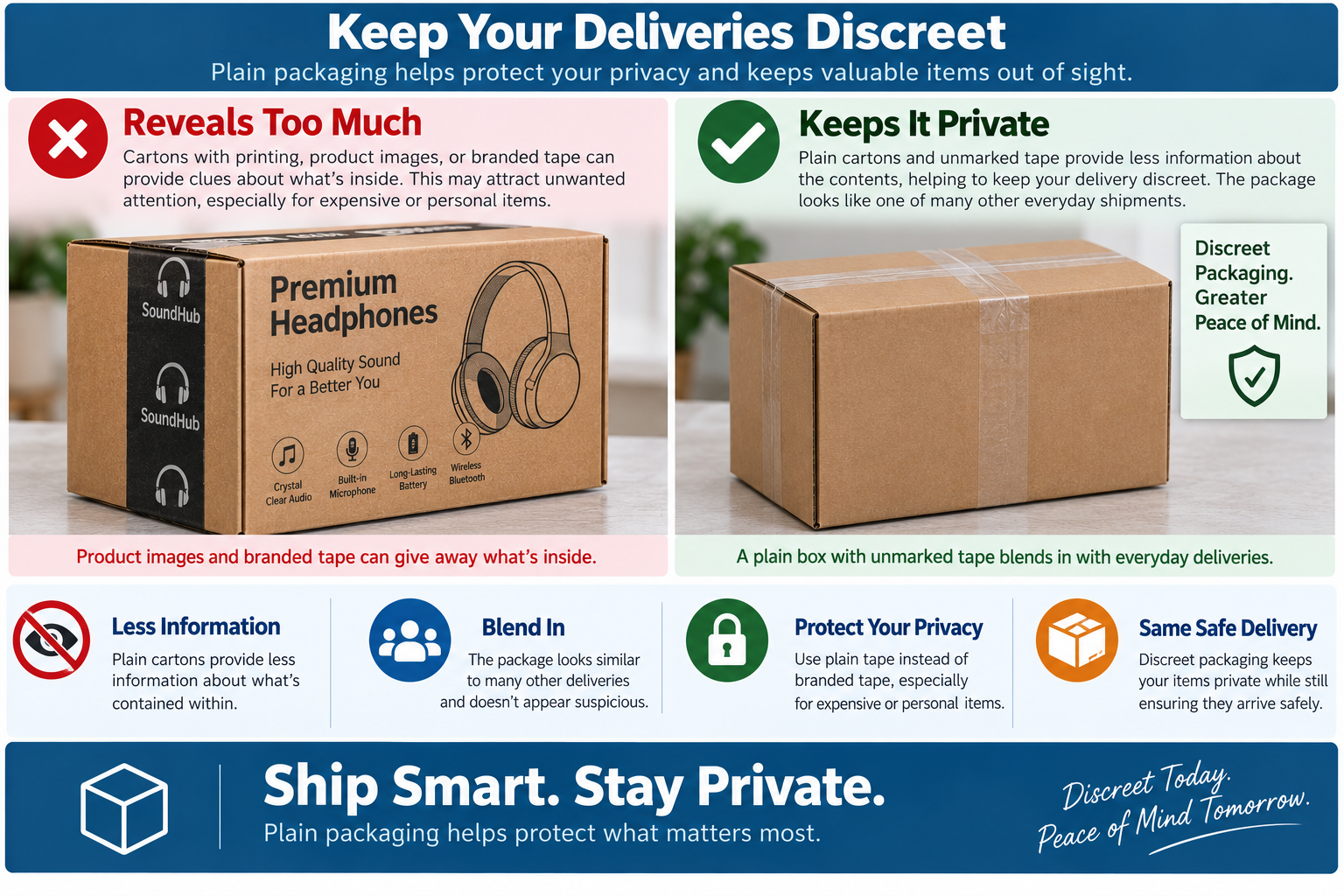
Care should be used when creating return labels
The return label must contain enough information to allow carriers to successfully deliver the package. However, there is no requirement that the label identify the product. A clear return label should lie flat and remain easily readable by scanners. Do not obscure your return labels with comments, stickers, etc. Or large print which may indicate what is contained within. Additionally, using a generic sender name may protect against privacy violations if a company delivers sensitive material, while adhering to all applicable carrier requirements.

Preventing opening
Secured shipping containers may also indicate that a thief attempted to open the container. Securely attach strong tape across both the center seam and both edge seams on both sides of the top and bottom. While securing a container may not prevent theft, torn or removed strips of tape may alert the recipient to potential tampering. Also, use strong tape to close any openings in the container instead of loose strips of tape which may become dislodged during typical transit and handling.

Continuing discretion inside the container
While a discreet exterior box does little to deter a determined thief, the discretion continues when selecting materials used inside the container. Include any inserts such as gift wrapping, notes, paper, or cards intended solely for the recipient’s benefit. Including these types of inserts maintain an atmosphere of discretion while allowing the recipient to still receive a personalized greeting from you.
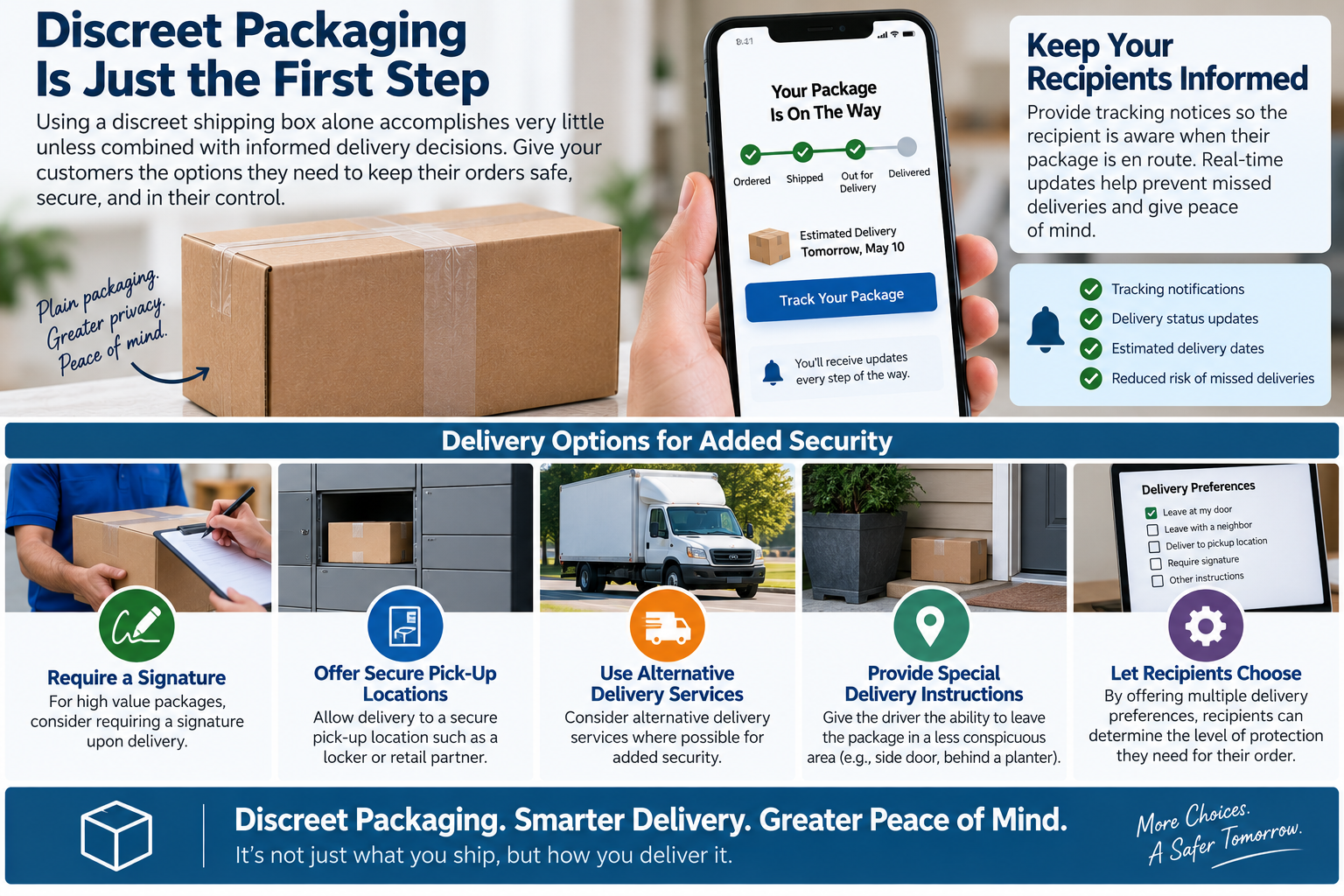
The box is only one part of a complete delivery solution
Using a discreet shipping box alone accomplishes very little unless combined with informed delivery decisions. Provide tracking notices so the recipient is aware when their package is en route. For high value packages, consider requiring a signature upon delivery, offering secure pick-up locations, or utilize alternative delivery services where possible. Consider providing the driver with the ability to leave the package in a less conspicuous area. By giving recipients multiple options related to their delivery preferences, they are able to determine what level of protection they require for their order.

Protecting privacy and preventing theft are two different problems but both can be solved with simple shipping options.
Simple shipping solutions can address issues related to protecting consumer privacy and preventing loss due to theft. Simple shipping solutions conceal information about the contents of a shipment reducing unwanted exposure. Providing simple shipping solutions allows consumers to receive shipments privately and quietly.
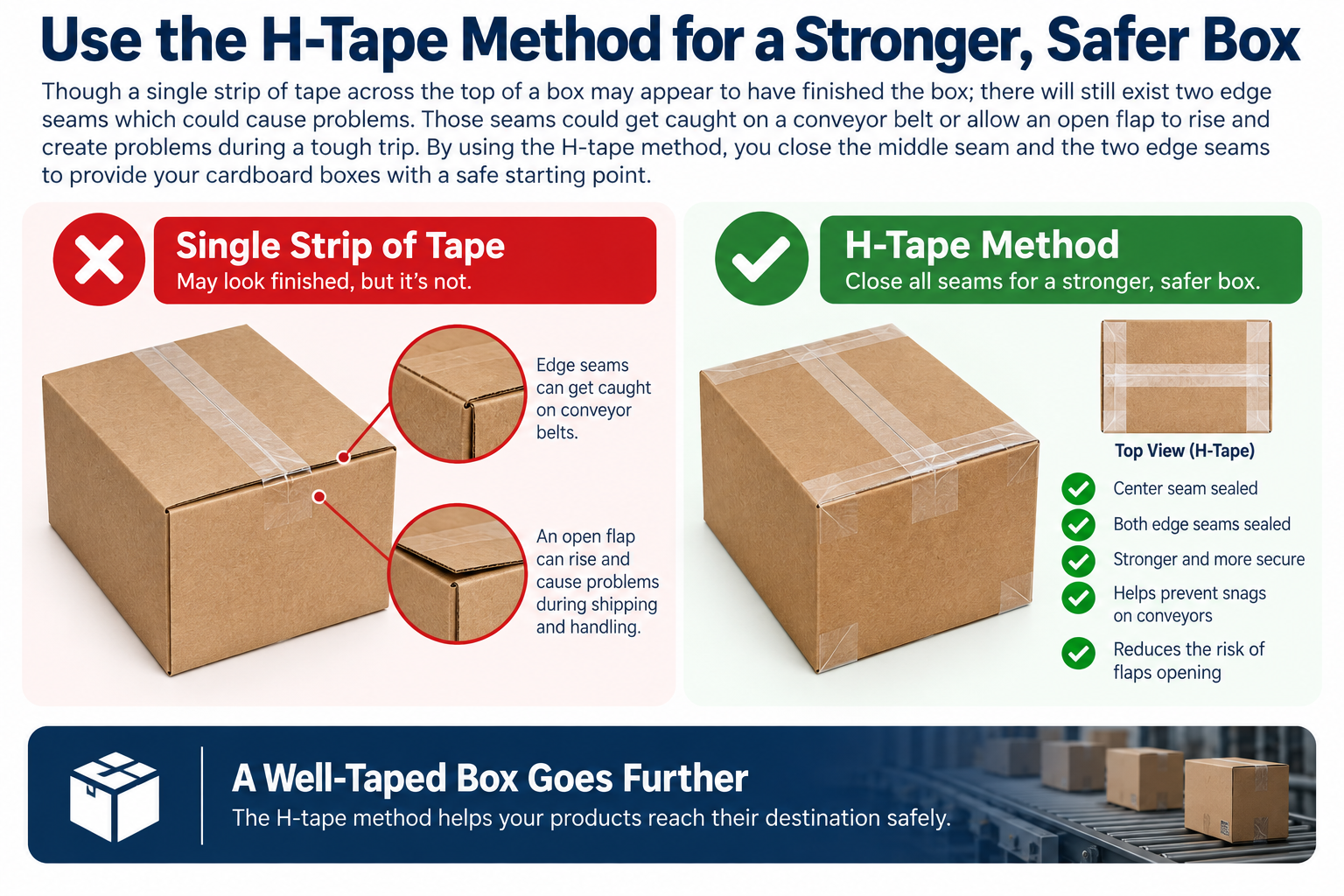
Only One strips of tape across top may not be sufficient

Though a single strip of tape across the top of a box may appear to have finished the box; there will still exist two edge seams which could cause problems. Specifically, those seams could get caught on a conveyor belt or allow an open flap to rise and create problems during a tough trip. By using the h-tape method, you close the middle seam and the two edge seams to provide your cardboard boxes with a safe starting point.

You want to use shipping tapes (clear packing tape, reinforced tape, etc.) not masking tape, thin office tape, string or twine. All of these types of tape can get caught in sorting machines by postal guidelines.

Your tape needs to be large enough to support both sides of a seam. Most major carriers require tape to be at least 2-inches wide. If you use a tape that is too small, it has less surface area to “grip” and therefore will most likely peel off soon. Additionally, if you put a lightweight carton with a heavyweight item inside, it creates added pressure on the closure.

first, fold the smaller flaps inward. Then bring the larger flaps together without weaving them together. Now run One strip of tape along the center seam of the flaps. Press the tape down onto the seam and continue running it over the ends until it covers the sides of the box.

Then take another piece of tape and cover the edge seams where the flaps meet the box. This second piece of tape runs perpendicular to the first strip of tape and forms an “h”. When you rub along the tape, it allows the adhesive to come into contact with all parts of the cardboard from end to end. Follow the same three-strip procedure once again after you close the top of the box.

Moisture, dust and cold temperatures can weaken the adhesive properties of the tape. Always keep your cardboard boxes dry and wipe any debris off of them prior to taping. Also avoid putting new tape on top of existing tape that is beginning to peel or is dirty. New tape sticks much better to clean cardboard than it does to older layers of tape that may lift off.

Using a tape gun makes application easier and quicker. However, you must always handle the blade and roller with extreme care. Make sure you set up enough pull on the gun so that the tape lays flat without being stretched excessively. Overpulling tape may eventually lift due to its own elasticity attempting to return back to its original state. Wrinkling can also leave some parts of the seam uncovered.

In many cases heavier items will require reinforced tape or additional strips according to the carrier’s instructions. Simply adding extra layers randomly is not an acceptable fix for crushed, wet or broken-down boxes. While tape can seal flaps, it cannot repair damaged cardboard that has lost its integrity. It would be best to replace weak boxes before relying on even more tape to try and salvage them.

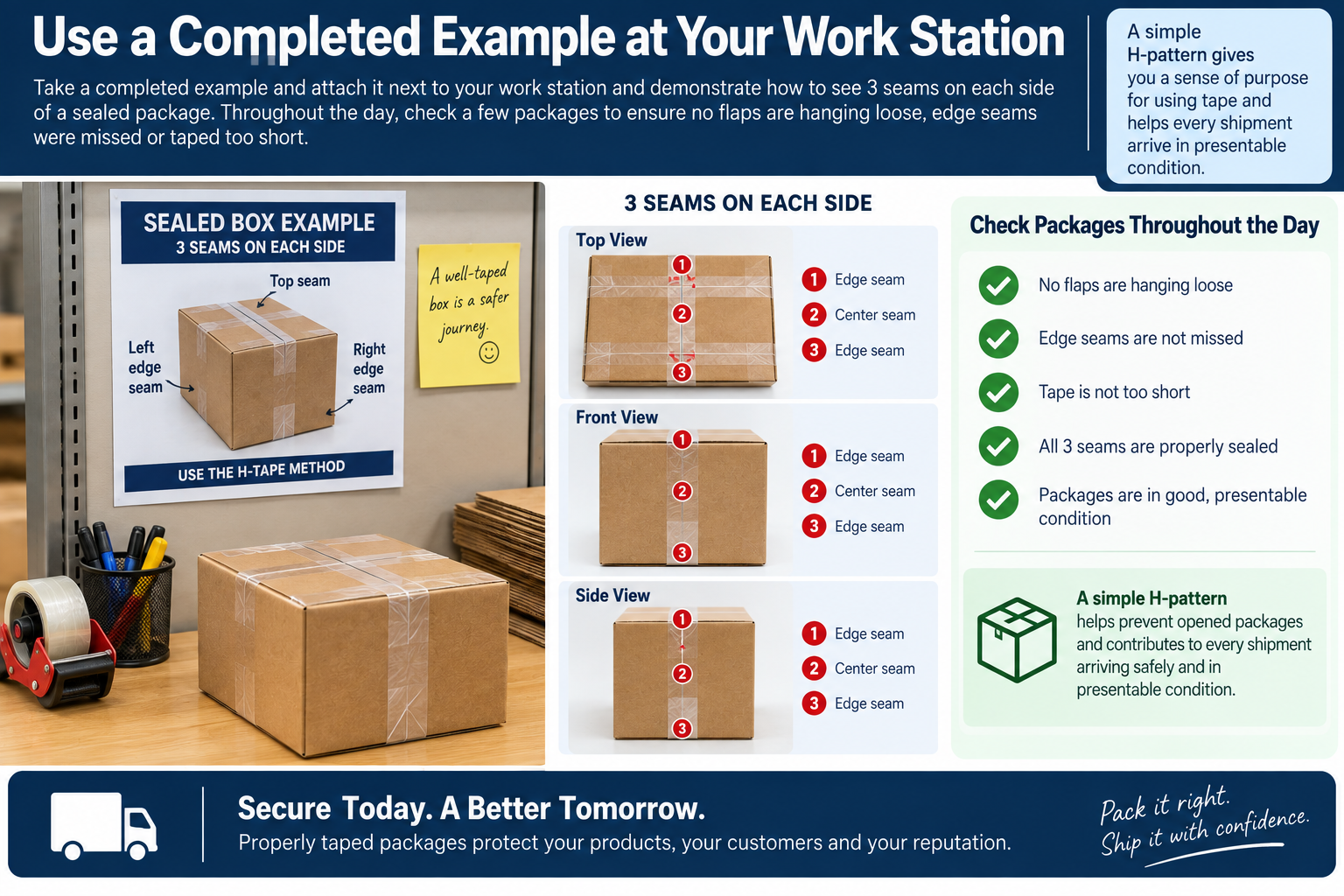
Take a completed example and attach it next to your work station and demonstrate how to see 3 seams on each side of a sealed package. As well, throughout the day check a few packages to ensure no flaps are hanging loose, edge seams were missed or was taped too short. Using a simple h-pattern gives you a sense of purpose for using tape, decreases opened packages and contributes to every shipment arriving in presentable condition.