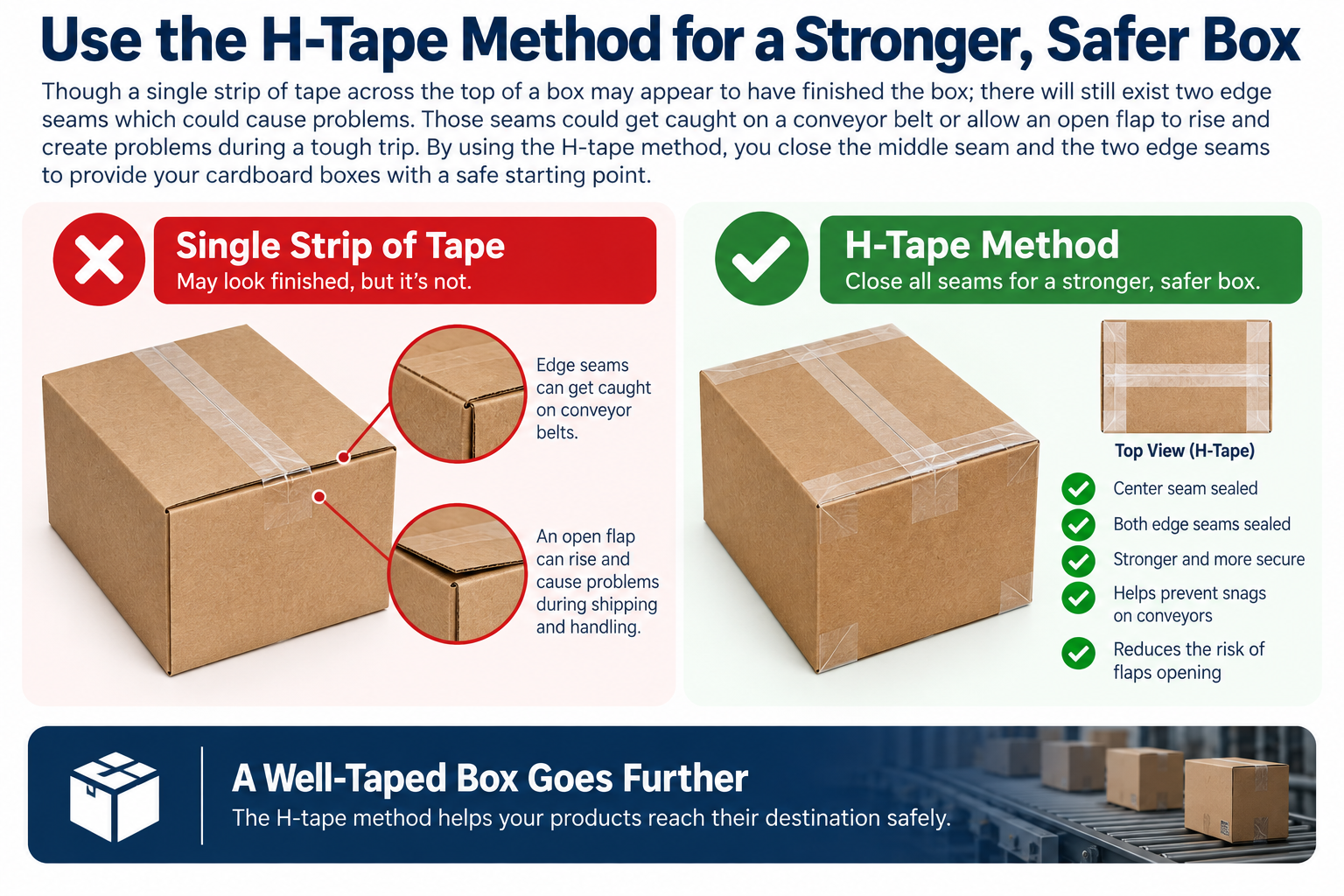
Though a single strip of tape across the top of a box may appear to have finished the box; there will still exist two edge seams which could cause problems. Specifically, those seams could get caught on a conveyor belt or allow an open flap to rise and create problems during a tough trip. By using the h-tape method, you close the middle seam and the two edge seams to provide your cardboard boxes with a safe starting point.
You want to use shipping tapes (clear packing tape, reinforced tape, etc.) not masking tape, thin office tape, string or twine. All of these types of tape can get caught in sorting machines by postal guidelines.
Your tape needs to be large enough to support both sides of a seam. Most major carriers require tape to be at least 2-inches wide. If you use a tape that is too small, it has less surface area to “grip” and therefore will most likely peel off soon. Additionally, if you put a lightweight carton with a heavyweight item inside, it creates added pressure on the closure.
first, fold the smaller flaps inward. Then bring the larger flaps together without weaving them together. Now run One strip of tape along the center seam of the flaps. Press the tape down onto the seam and continue running it over the ends until it covers the sides of the box.
Then take another piece of tape and cover the edge seams where the flaps meet the box. This second piece of tape runs perpendicular to the first strip of tape and forms an “h”. When you rub along the tape, it allows the adhesive to come into contact with all parts of the cardboard from end to end. Follow the same three-strip procedure once again after you close the top of the box.
Moisture, dust and cold temperatures can weaken the adhesive properties of the tape. Always keep your cardboard boxes dry and wipe any debris off of them prior to taping. Also avoid putting new tape on top of existing tape that is beginning to peel or is dirty. New tape sticks much better to clean cardboard than it does to older layers of tape that may lift off.
Using a tape gun makes application easier and quicker. However, you must always handle the blade and roller with extreme care. Make sure you set up enough pull on the gun so that the tape lays flat without being stretched excessively. Overpulling tape may eventually lift due to its own elasticity attempting to return back to its original state. Wrinkling can also leave some parts of the seam uncovered.
In many cases heavier items will require reinforced tape or additional strips according to the carrier’s instructions. Simply adding extra layers randomly is not an acceptable fix for crushed, wet or broken-down boxes. While tape can seal flaps, it cannot repair damaged cardboard that has lost its integrity. It would be best to replace weak boxes before relying on even more tape to try and salvage them.
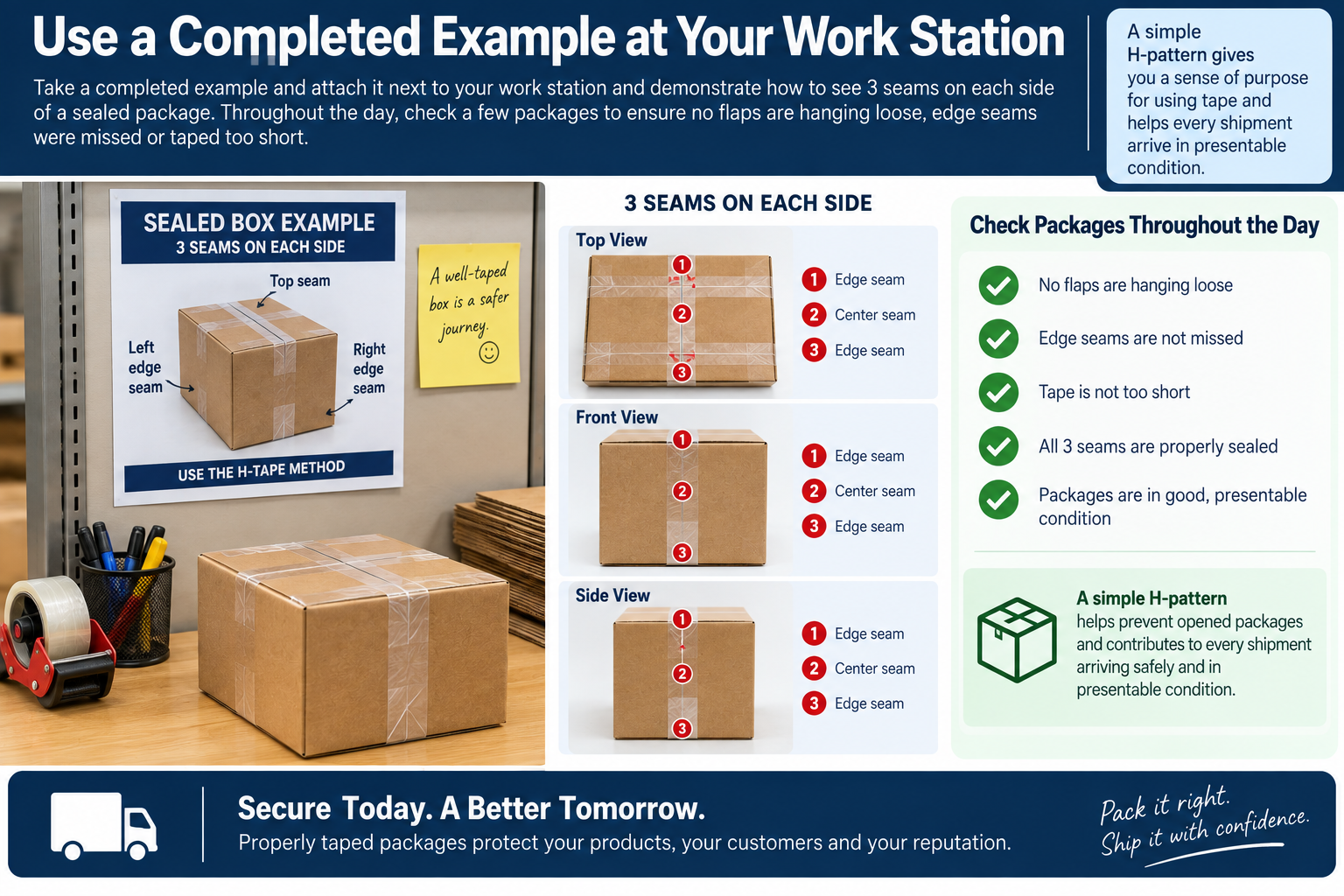
Take a completed example and attach it next to your work station and demonstrate how to see 3 seams on each side of a sealed package. As well, throughout the day check a few packages to ensure no flaps are hanging loose, edge seams were missed or was taped too short. Using a simple h-pattern gives you a sense of purpose for using tape, decreases opened packages and contributes to every shipment arriving in presentable condition.