Returns are sometimes difficult to ship because the customer has discarded the packaging material, or ripped apart the bubble wrap. Products will arrive back from the customer with insufficient cushioning or improperly sealed. Packaging for potential returns (at time of selecting shipping materials) provides customers with a clear path of how to properly return an item and ensure its safe return.
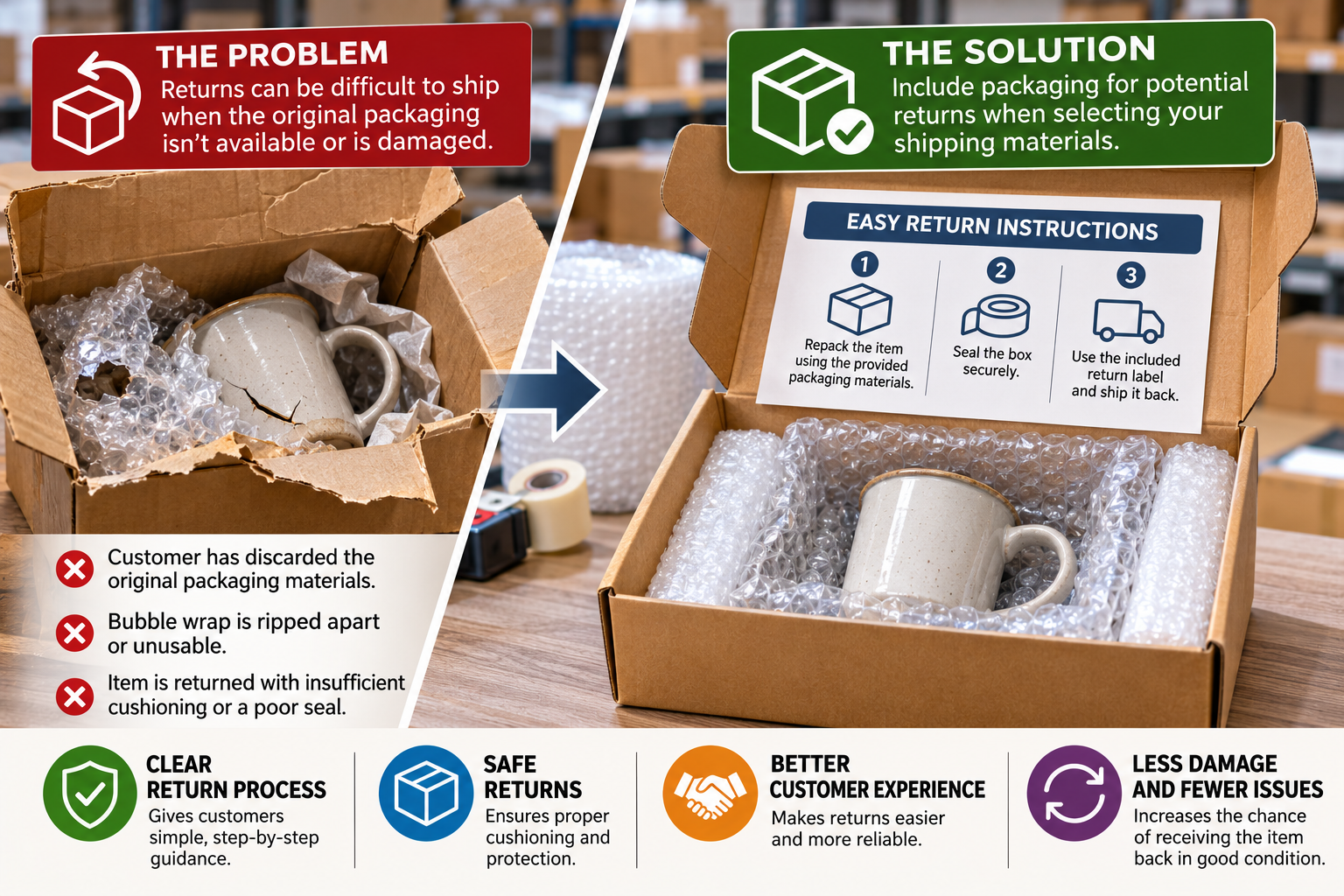
First begin identifying which products customers usually return. Then determine the dimension, weight, and weaknesses of these products. For example, clothing is packaged differently than lamps or sets of mugs. Develop your return procedure based on the type of product being shipped so that customers understand how to adequately protect the product for shipping without having to rely on guessing the correct materials.
When returning soft products consider using a mailer with two seal strips. This will allow the customer to open one seal and then store the second seal strip to be used when they need to return this same product. Ensure the mailer allows sufficient space for the product to fit within once again. Although a mailer was adequate for shipping a bag full of soft products tightly wrapped on the first shipment; it is likely that after removing some items from the bag that it will not stretch as well upon return.
When shipping boxed products, use boxes that are designed to open gently. Label clearly where to cut the tape so the customer does not inadvertently damage either the product itself or the wrapping. Provide a written reminder to the customer to hold onto the box if you would like them to resuse it when returning a product.
Ensure that the inner packaging is also designed to make it easy for the customer to place back into position. Utilize inserts that are specifically made to accommodate the individual components of your product. Use separate bags to retain all small parts such as screws, wires, etc., together. Using loose fill materials could cause difficulty in retaining the ability to reuse those materials due to spilling out when the box is opened.
Provide instructions for how to correctly prepare a product for return. Instruct customers to individually wrap fragile items, retain all parts of multi-piece products, and fill all empty spaces within the box with packing materials to prevent movement during shipping. Include a brief explanation of how to close and seal the box. Use very concise language and define technical terms. Providing pictures that illustrate where each component goes can assist with understanding.
Consider labeling as an integral part of planning your shipping supplies. If you are providing a return label explain where on the outside of the product box or mailing envelope it should be placed. Inform customers to completely remove or black-out previous shipping labels and bar-code stickers. The return label should be applied directly to a clean area where it can be viewed clearly.
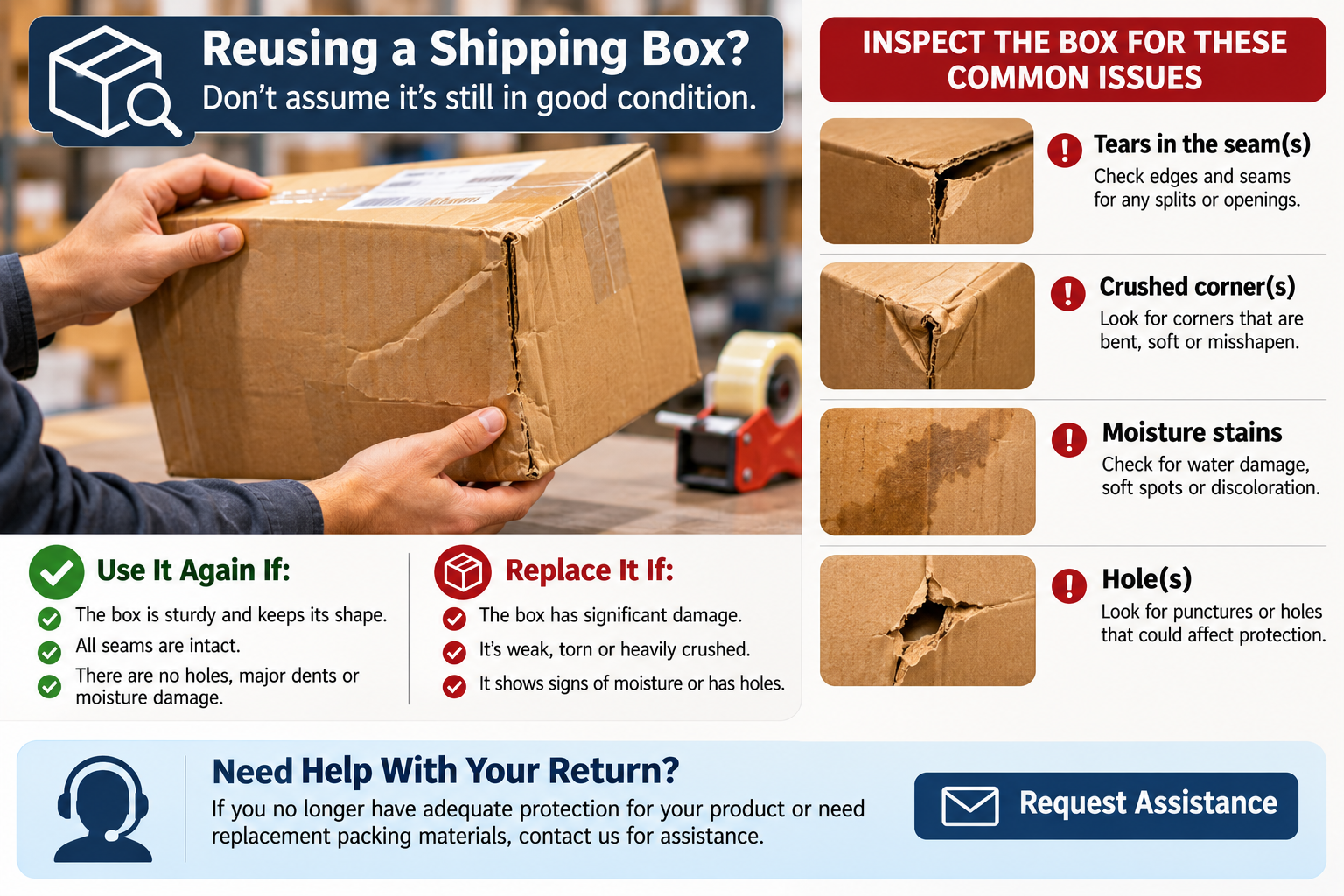
Do not assume that a previously used shipping container is still suitable for reuse. Encourage customers to inspect the condition of the box before attempting to repack it. Identify areas of concern such as tears in the seam(s), crushed corner(s), moisture stains, and hole(s). If there is significant damage, suggest replacing the shipping container with a new one. Allow customers a means to request assistance if they no longer have adequate protection for their product using their originally provided packing materials.
After receiving all packages back from customers review each package for missing padding, dislodged parts, and exterior damage to the packaging. Document common issues and update your instructional documents and/or materials accordingly. Selecting shipping supplies while considering future returns can benefit both your customers by making it easier for them to properly protect products for return, and reduce the amount of damaged products received by your team.