Even though your package appears unscathed upon arrival, a mug may well arrive with its handle broken. This is because the handle protrudes outward of the main part of the mug; therefore, it will be subjected to impact if the mug were to crash against a wall. Make sure that you select mailing packages which allow you to add protective padding to the entire mug. Next, make sure to provide additional protection for the handle of the mug as well.
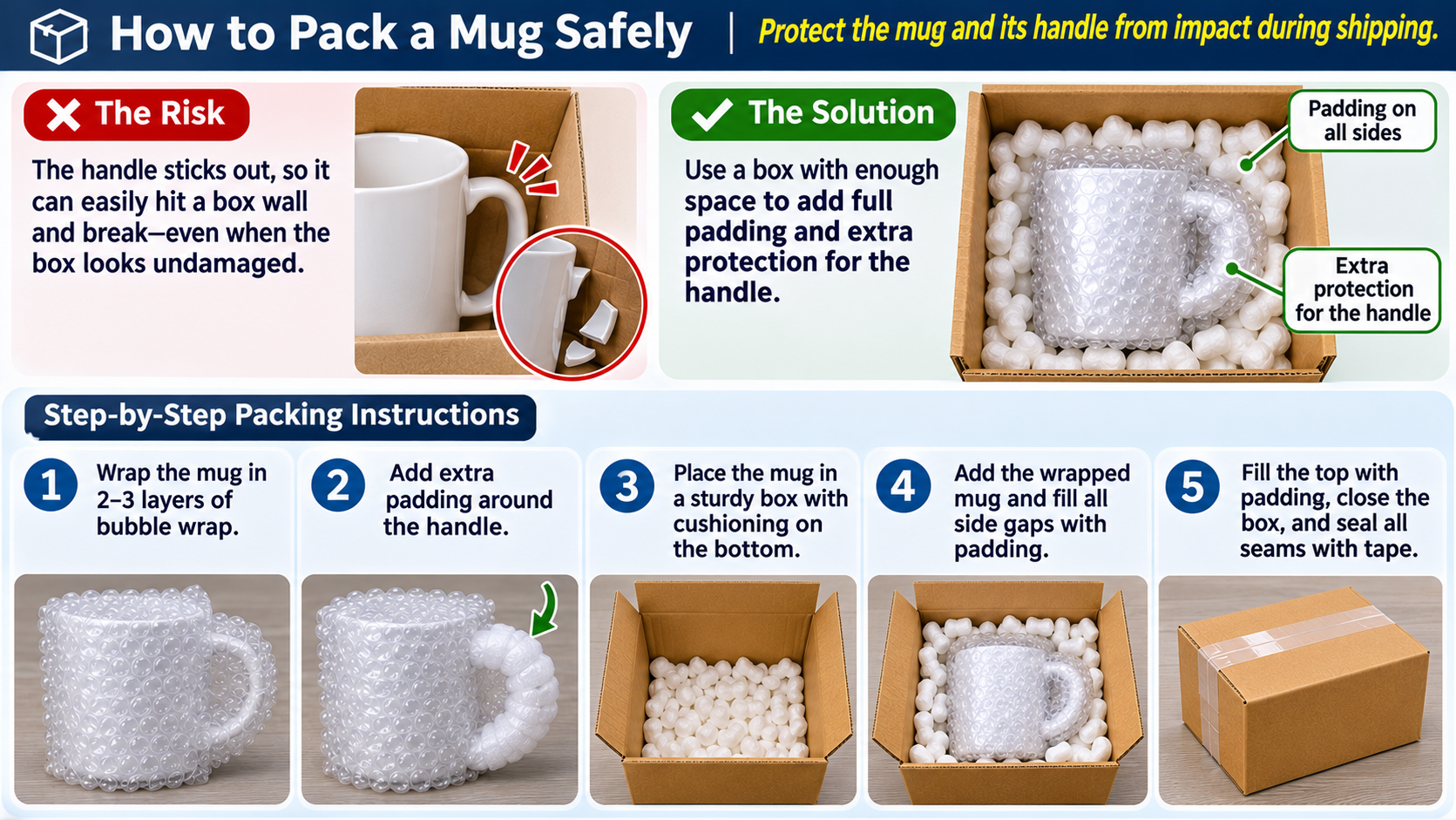
Inspect the mug before sending it. It needs to be clean and free from moisture. Identify the two areas where the handle attaches to the mug. These are particularly susceptible to damage by impact if the handle is struck. Place a small amount of soft material (such as cloth) into the interior area of the handle. Be certain that this material is loosely placed so that it can easily slide out of position without exerting stress to pull on the handle.
Insulate the entire mug using bubble packaging. Ensure that the base, lip, and exterior of the handle are completely covered with wrap. In addition, ensure that there is sufficient padding surrounding the handle. Even if some portion of the handle extends beyond the remainder of the package, apply an additional layer of wrap. Secure the wrap to itself using tape in such a manner that it remains stationary. When placing the wrapped package on its side, it should support its weight solely on the wrapping materials as opposed to being supported by the weight of the handle.
After insulating the mug, measure it to determine how much clearance exists at the widest point of the handle. Compare this measurement to possible mailing packages. Wrap a layer of padding on the bottom of a potential mailing package, then center the insulated mug within that package. Provide adequate padding along each face of the package. If there is insufficient clearance in a particular package so that the exposed portion of the handle contacts a surface of the package, upgrade to a larger mailing package.
Provide filling materials around the insulated mug incrementally. Observe carefully any movement or pressure on the insulation material at or near the area of the handle. Ensure that all of the filling materials remain in their positions and do not apply excessive pressure to the area where the handle meets the mug. Apply an additional layer of material on top of the filled area to serve as an additional barrier to protect the rim and prevent the mug from becoming dislodged from its position within the mailing package when it becomes tipped over.
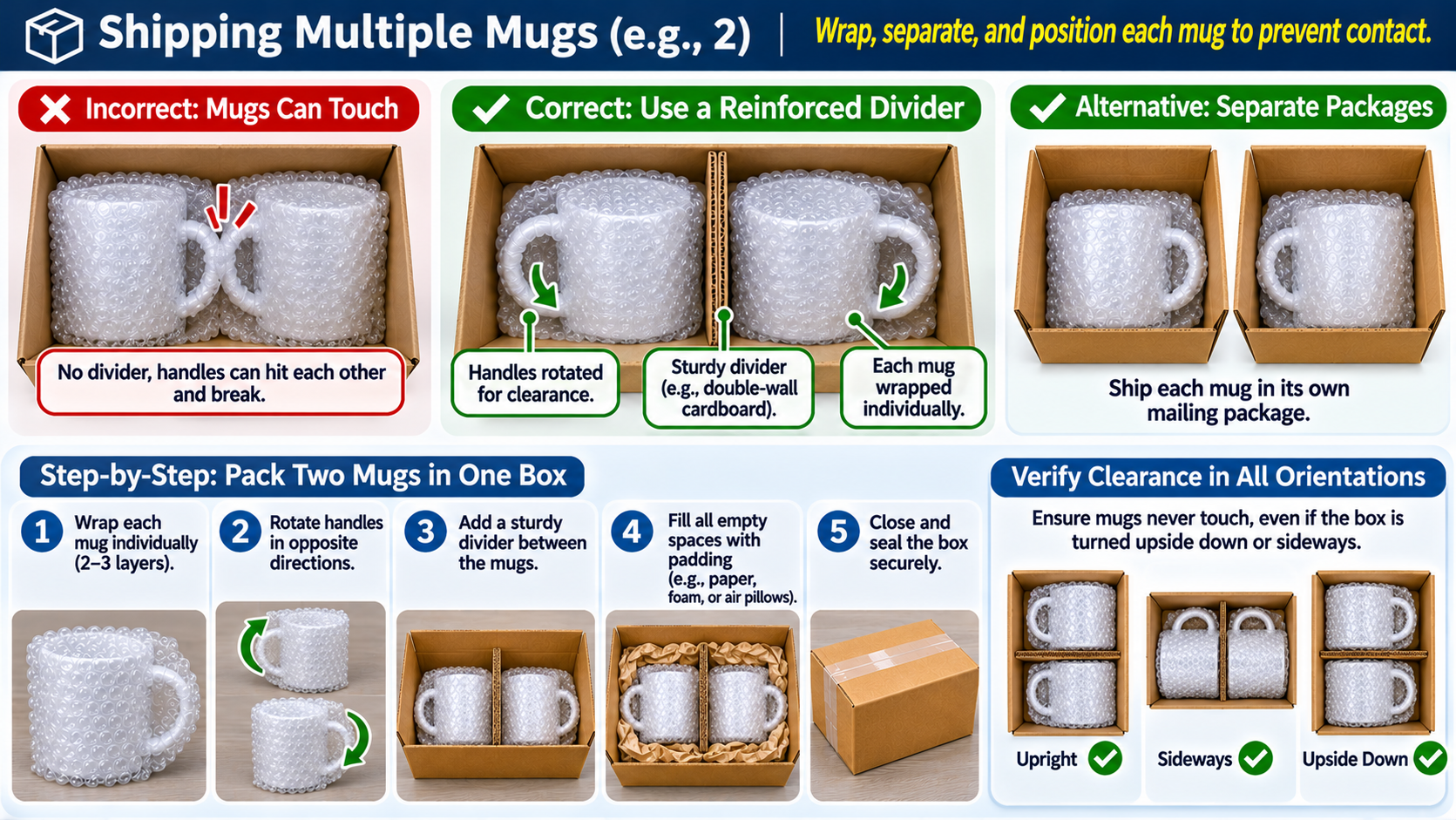
If you wish to ship a quantity of mugs (for example, 2), wrap each individually. Either use an adequately reinforced divider separating each individual mug or create separate pads for each individual mug by placing each in its own mailing package. Rotate each mug’s handle so that there is adequate clearance for a second mug. Verify that no matter what orientation is used for stacking either a single or multiple packages (i.e., upside down or sideways) there will never be contact between any two mugs. Although placing a thin sheet of paper between two mugs would provide sufficient separation to prevent any friction between adjacent mugs during shipment, in practice, this does not always occur.
Fold and secure the flaps of your mailing package and tip it gently back and forth. If you perceive motion, remove any obstruction between the flaps and inspect for voids. If any flaps become bowed upward while sealing, verify whether you have placed excessive padding above or have selected a mailing package that is too shallow. All the flaps should lie flat once sealed.
Send a test sample in an identical configuration as actual shipments prior to purchasing mailing packages in large quantities. Have someone who receives and unpacks samples check for damage to the rim and base of each mug as well as both ends of each handle. Store this information regarding each successful shipping method and dimensions of each successful shipping method so that you can replicate these shipping methods for future orders.