Beginning to understand the impact of running out of packaging materials during a peak volume week (Monday) can cause all orders to grind to a halt. On the flip side, buying too many packaging supplies is just as problematic because excess inventory occupies valuable storage space and consumes working capital. The key to maintaining the proper balance of packaging supplies on-hand is a simple reorder program.
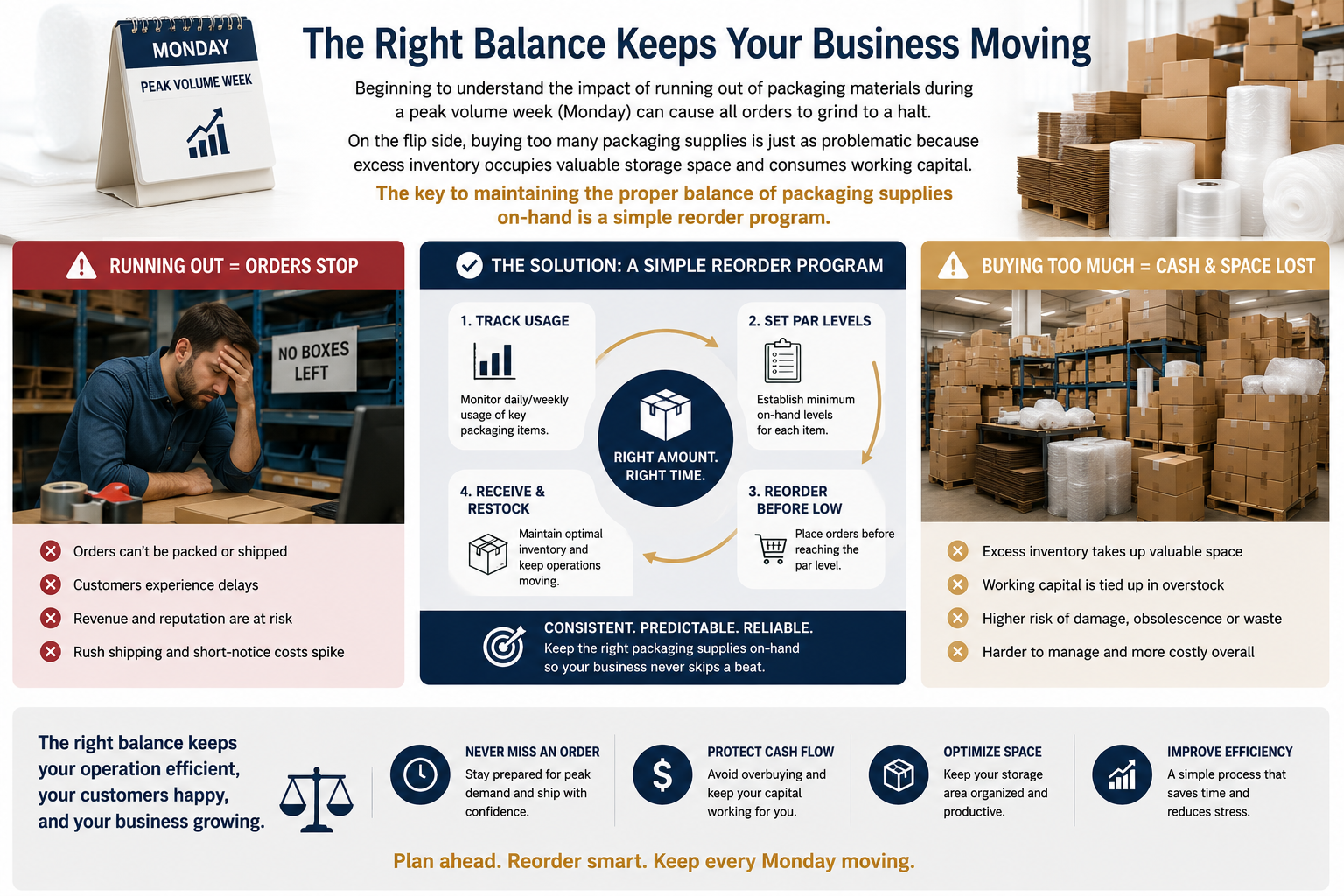
Firstly, watch how your team uses packaging supplies for approximately 28 days. Document the quantity of each type of packaging material (boxes, tape rolls, labels, mailers, and packing paper) at both the beginning and ending of each week. Tracking usage like this provides insight into which packaging materials are being consumed rapidly and those that tend to linger on shelves. There is no reason to assume a high consumption rate based solely on your highest-volume day.
Secondly, determine your average daily consumption. If your team consumed 100 mailers during a 20-day period, your average consumption would be 5 mailers per day. Record this average along with the product name. Continue this process for each packaging supply whose depletion would severely impede operations.
Thirdly, calculate the lead-time for receiving new orders. In most cases, reviewing past deliveries is a good indicator of the typical lead-time associated with purchasing through a particular vendor. For example, if most recent orders have taken an average of 4 days to arrive, consider using this value as part of your reorder program.
Fourthly, multiply the daily usage value by the number of delivery days (lead-time). Using our previous examples, if a company has an average daily usage of 5 mailers and experiences a 4-day lead-time for ordering new supplies, they would require a minimum of 20 additional mailers until their next shipment arrives. As an added measure of protection against unexpected increases in demand due to unusual events such as inclement weather, last-minute promotions or delayed shipments, add a small buffer to the total.
The resulting number represents the maximum allowable quantity on-hand prior to placing another order. Labeling the exact level with a brightly colored marker placed directly on the shelving unit where the packaging supplies are stored is an effective way to visually communicate when to restock. Alternatively, documenting the required reorder point on a clipboard is a low-cost alternative solution to utilizing expensive software programs.
Lastly, give consideration to the few packaging supplies that are utilized in virtually every order. These include but are not limited to; standard size shipping boxes, roll tape and shipping labels. Due to the frequency of use and critical nature of these packaging supplies, it is recommended that you maintain higher levels of inventory stockpiled for immediate availability. Maintaining sufficient backup stock of frequently used packaging supplies will help ensure uninterrupted production and minimize costs spent on unnecessary purchases for products and services that provide greater economic benefits.
When evaluating your current inventory management strategy, also take into account factors related to available storage space. Shipping boxes flat require adequate ventilation to prevent moisture buildup, roll tape requires storage in areas protected from excessive heat exposure and shipping labels must remain clean and unsoiled.
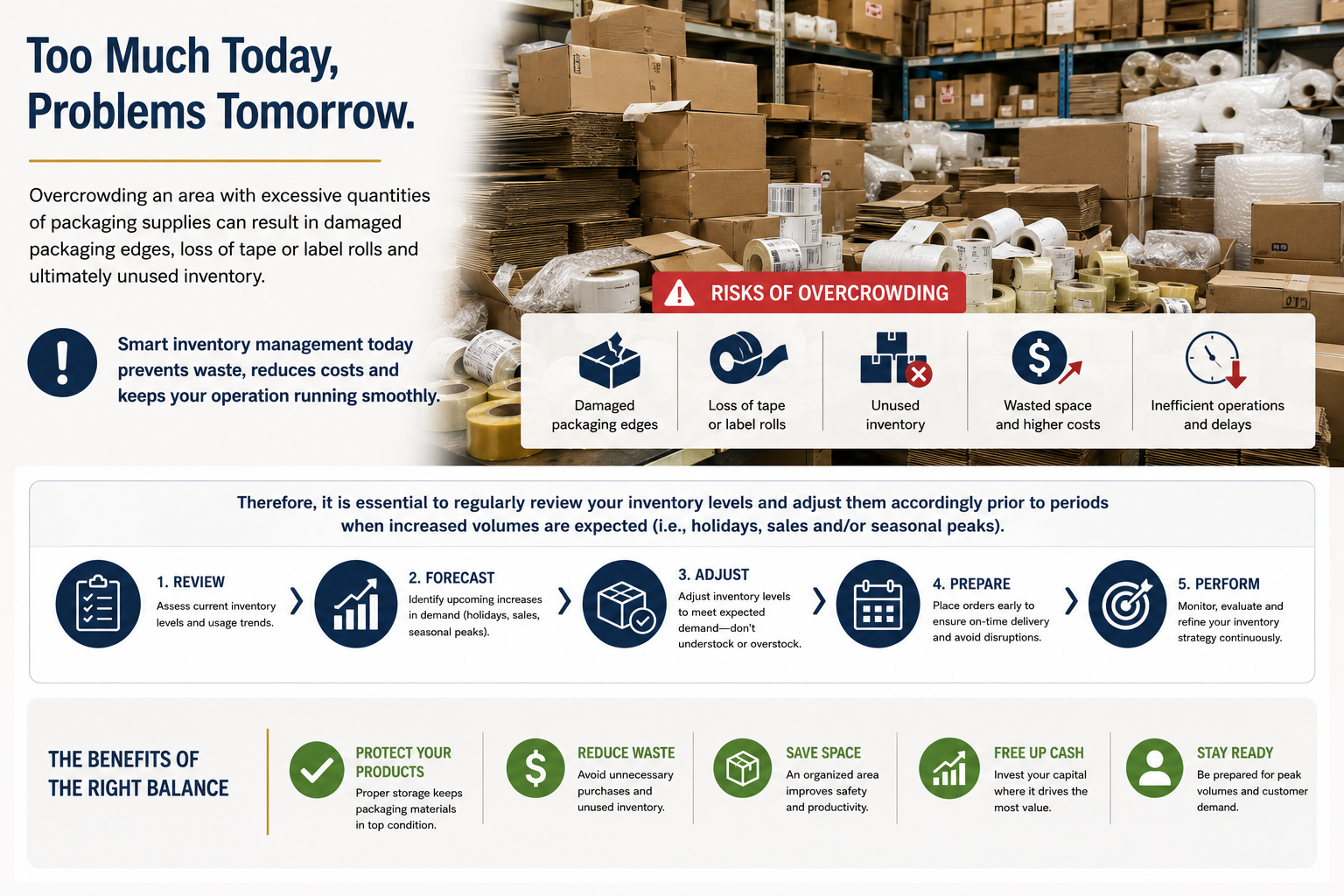
Overcrowding an area with excessive quantities of packaging supplies can result in damaged packaging edges, loss of tape or label rolls and ultimately unused inventory. Therefore, it is essential to regularly review your inventory levels and adjust them accordingly prior to periods when increased volumes are expected (i.e., holidays, sales and/or seasonal peaks).
A simple weekly inventory check allows you to make adjustments prior to potential problems turning into operational disruptions.