A lot of people think packaging supplies are only important for giant warehouses or companies that ship thousands of boxes every day. That sounds true at first, but it really is not. Even a small business can run into expensive problems when the wrong packaging supplies are used. A weak box can split open during shipping. Cheap tape can peel apart in hot weather. Thin mailers can tear before they ever reach the customer’s porch. One small mistake can turn a normal shipment into a refund, a bad review, or a lost customer.
That is why smart businesses spend time learning how to choose the right packaging supplies before problems happen.
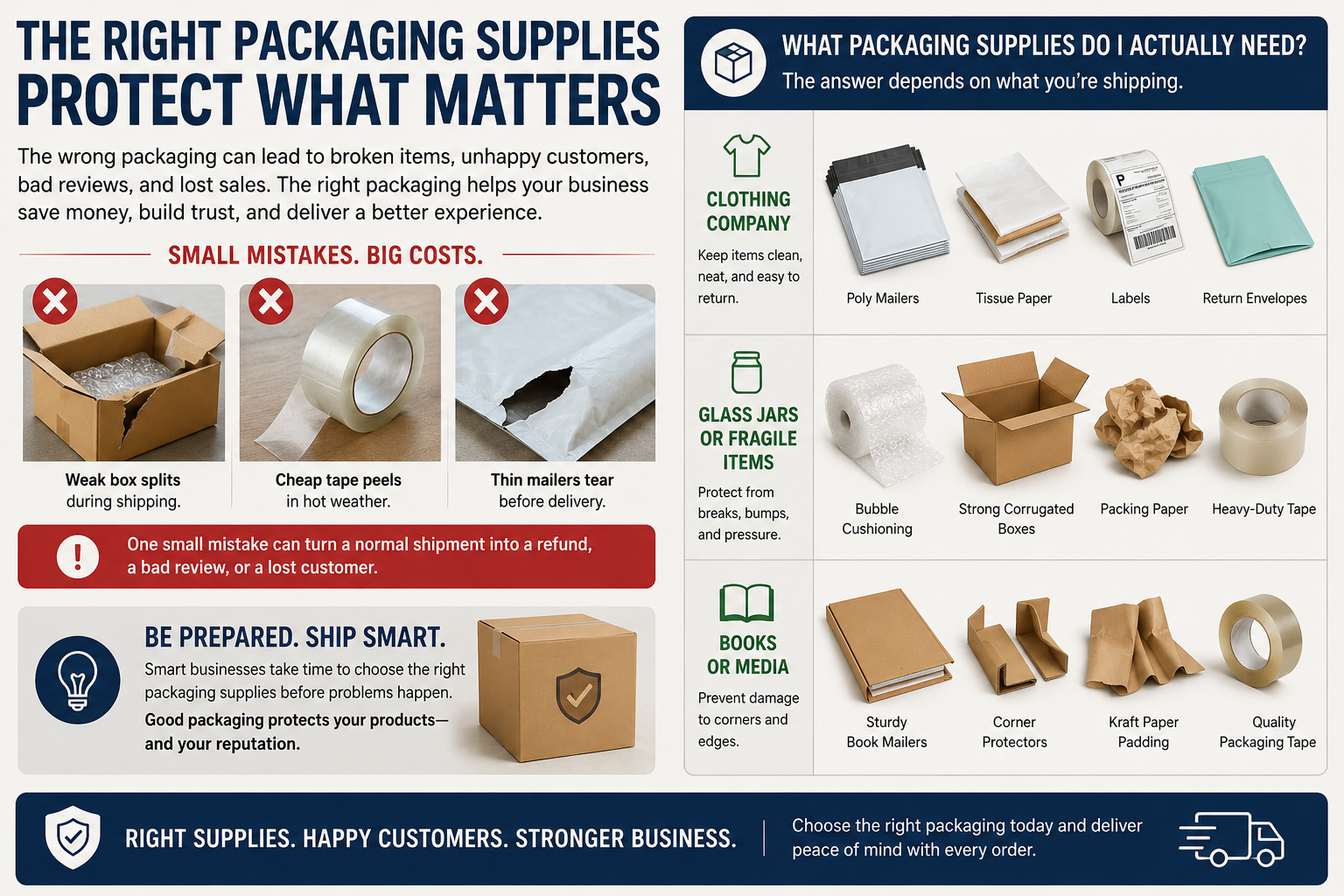
One of the biggest questions people ask is simple. What packaging supplies do I actually need? The answer depends on what is being shipped. A clothing company may need poly mailers, tissue paper, labels, and return envelopes. A business selling glass jars may need bubble cushioning, strong corrugated boxes, packing paper, and heavy-duty tape. Someone shipping books may need sturdy mailers that stop corners from bending during travel.
The mistake many beginners make is trying to buy the cheapest supplies they can find. That usually works for about five minutes until the problems start rolling in. Thin boxes crush easier. Weak tape loses its grip. Poor cushioning lets products bounce around inside the package like shoes in a dryer. Customers notice those things quickly.
People also ask how to save money on packaging supplies without lowering quality. One helpful trick is using the correct box size. Oversized boxes waste space and often require extra filler material. That means higher shipping costs and more supplies used per order. Smaller packaging that still protects the item usually lowers shipping expenses while helping packages look cleaner and more professional.
Another common question is whether eco-friendly packaging supplies are worth using. In many cases, they are. Recyclable boxes, paper tape, and biodegradable mailers are becoming more popular because many customers care about waste and recycling. Businesses that use environmentally friendly packaging can sometimes improve customer trust while also cutting down on unnecessary plastic use.
Storage matters too, even though many people ignore it. Packaging supplies stored in damp garages or hot back rooms can weaken over time. Tape may dry out. Cardboard can soften from moisture. Labels may curl and stop sticking properly. Keeping supplies clean, dry, and organized helps prevent waste and keeps packing stations moving faster.
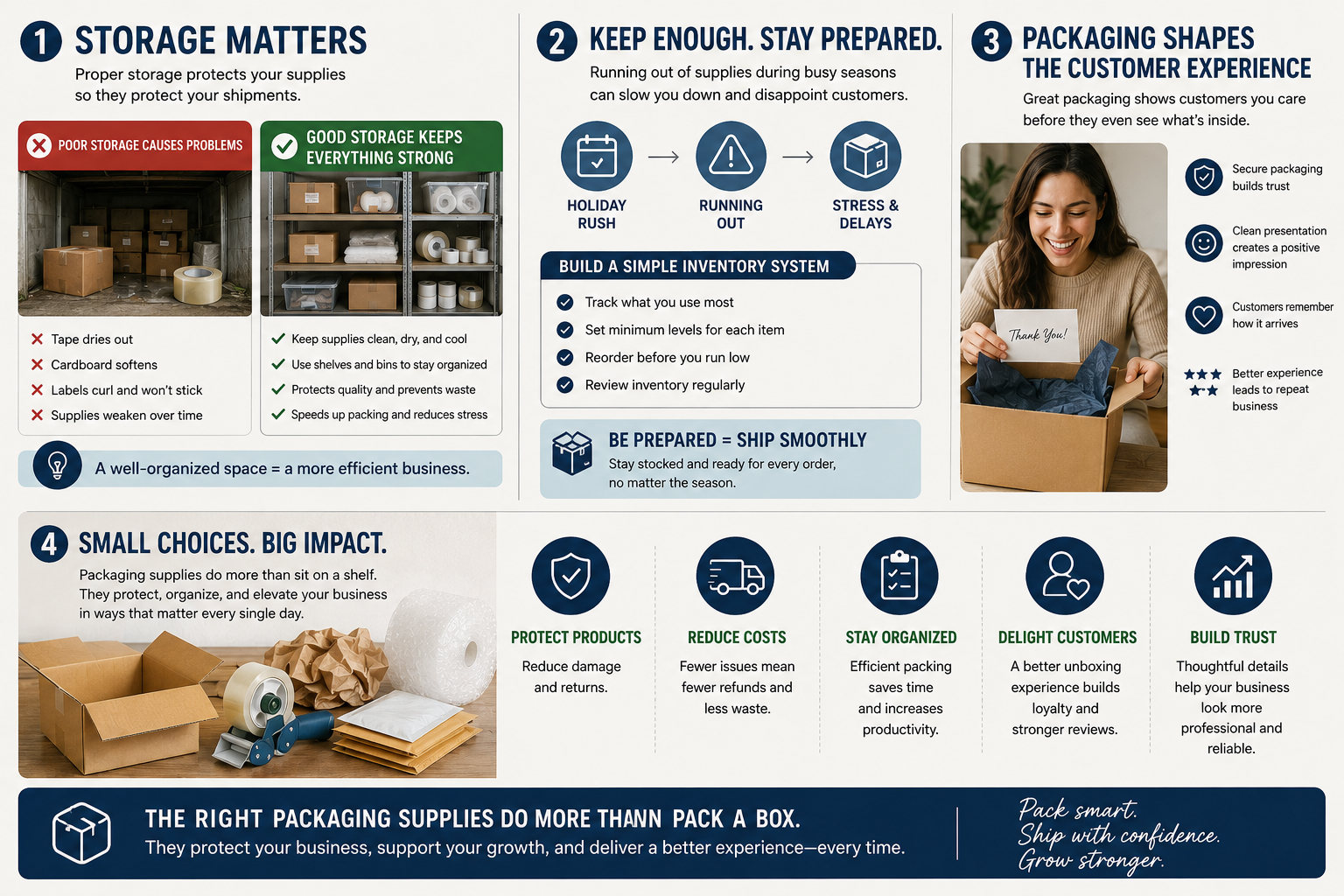
Another thing business owners often wonder is how many supplies they should keep on hand. Running out during busy seasons creates stress fast. Imagine getting a flood of holiday orders only to realize there are no shipping labels left or the last roll of tape is nearly empty. A simple inventory system helps avoid those last-minute disasters.
Good packaging also changes how customers feel when they open an order. A clean box with secure packing materials tells people the business cares about details. That matters more than some companies realize. Customers often remember how an order arrived almost as much as the product itself.
At the end of the day, packaging supplies are not just cardboard, tape, or bubble wrap sitting on a shelf. They protect products, reduce damaged shipments, help businesses stay organized, and create a smoother experience for customers. Small improvements in packaging can quietly save money, prevent headaches, and help a company look more trustworthy every single day.