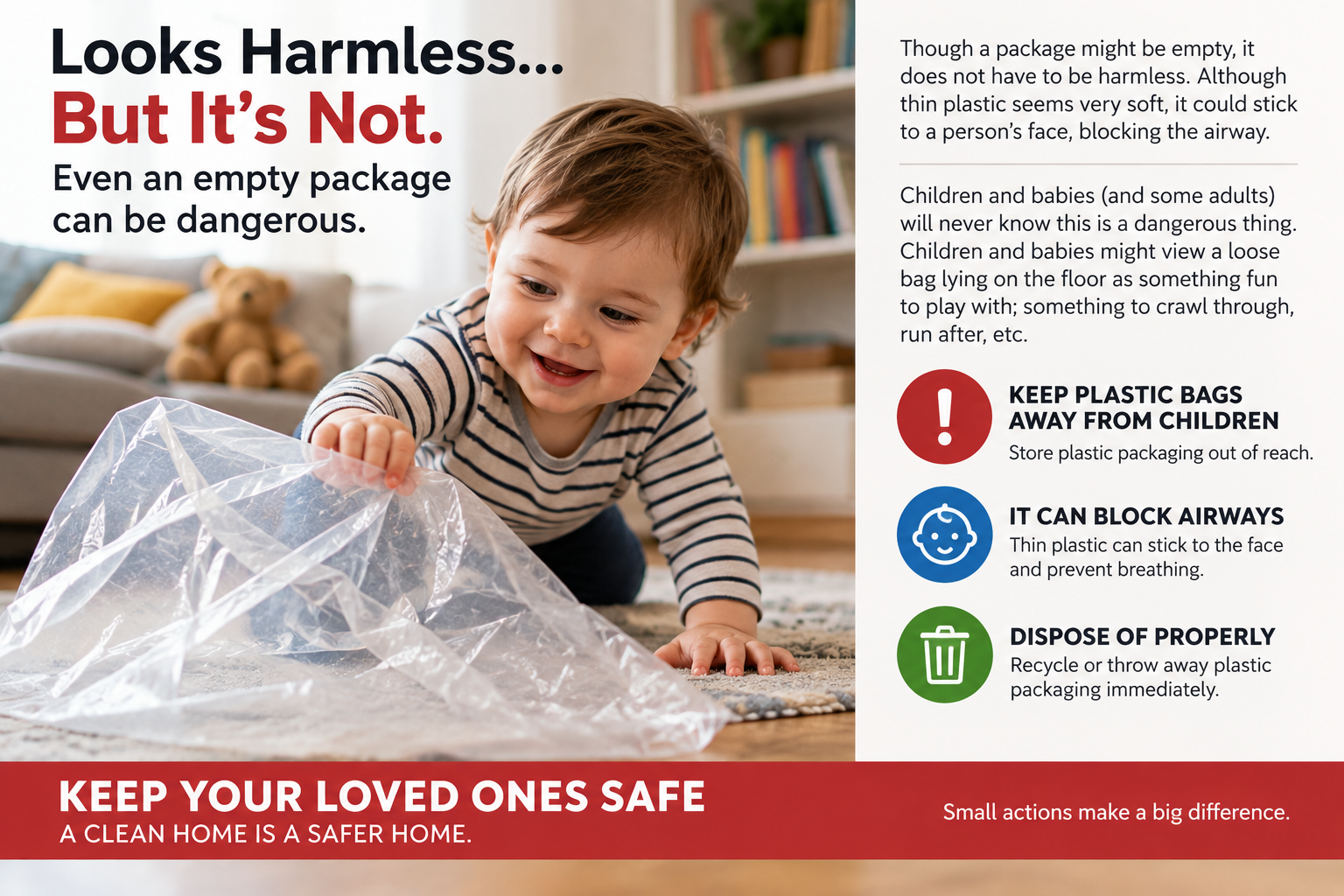
Though a package might be empty, it does not have to be harmless. Although thin plastic seems very soft, it could stick to a person’s face, blocking the airway. Children and babies (and some adults) will never know this is a dangerous thing. Children and babies might view a loose bag lying on the floor as something fun to play with; something to crawl through, run after, etc.
Safety starts BEFORE you start packing your items. Packaging materials need to be stored in a location that is inaccessible to children. Though a shelf might appear to be safe, a bag that hangs may come down by itself, or someone might pull it off the shelf. It is best to store these supplies in a location far from areas where food is prepared/served, pet beds/areas, and crib/baby sleeping areas.
Do not get more poly bags than are necessary for what you are doing. A worker who lays out 50-60 bags across a table may get confused about how many he has laid out, and lose track of one that has slipped onto the floor. Take only the amount you need from the box. When the job is complete put all unused poly bags back into the container.
At the end of each working session you should search under tables, pallets/cartons, shelving units, etc. for lost or misplaced parts.
When using bags that contain a warning (i.e., “Keep Away from Children”) make sure the warning words can easily be read. Do not put warning words behind any type of sticker/adhesive label, or fold an edge of the bag to hide them. If a bag is large enough to completely enclose a baby’s head, the company must research the local laws/rules and/or store regulations regarding the use of such bags. Each state/store may have different rules/laws.
In addition to labeling and storing, there needs to be a method for consumers to safely deal with products once opened. A simple note asking consumers to please keep the bag away from children/pets would suffice. Make sure to write this note in a prominent location so that consumers will see it prior to removing the contents of the bag. Write simply and clearly. Consumers should not have to dig through pages of text looking for the safety information.
Pets too, can become injured when they smell food coming from an open bag. Dogs/Cats may try to get closer to the bag by sticking their noses into openings and then breathe into it tightly closing around their faces. All empty snack bags, food pouches, and product bags should be cut open along one side (not torn apart) before placing them in an enclosed garbage bin.
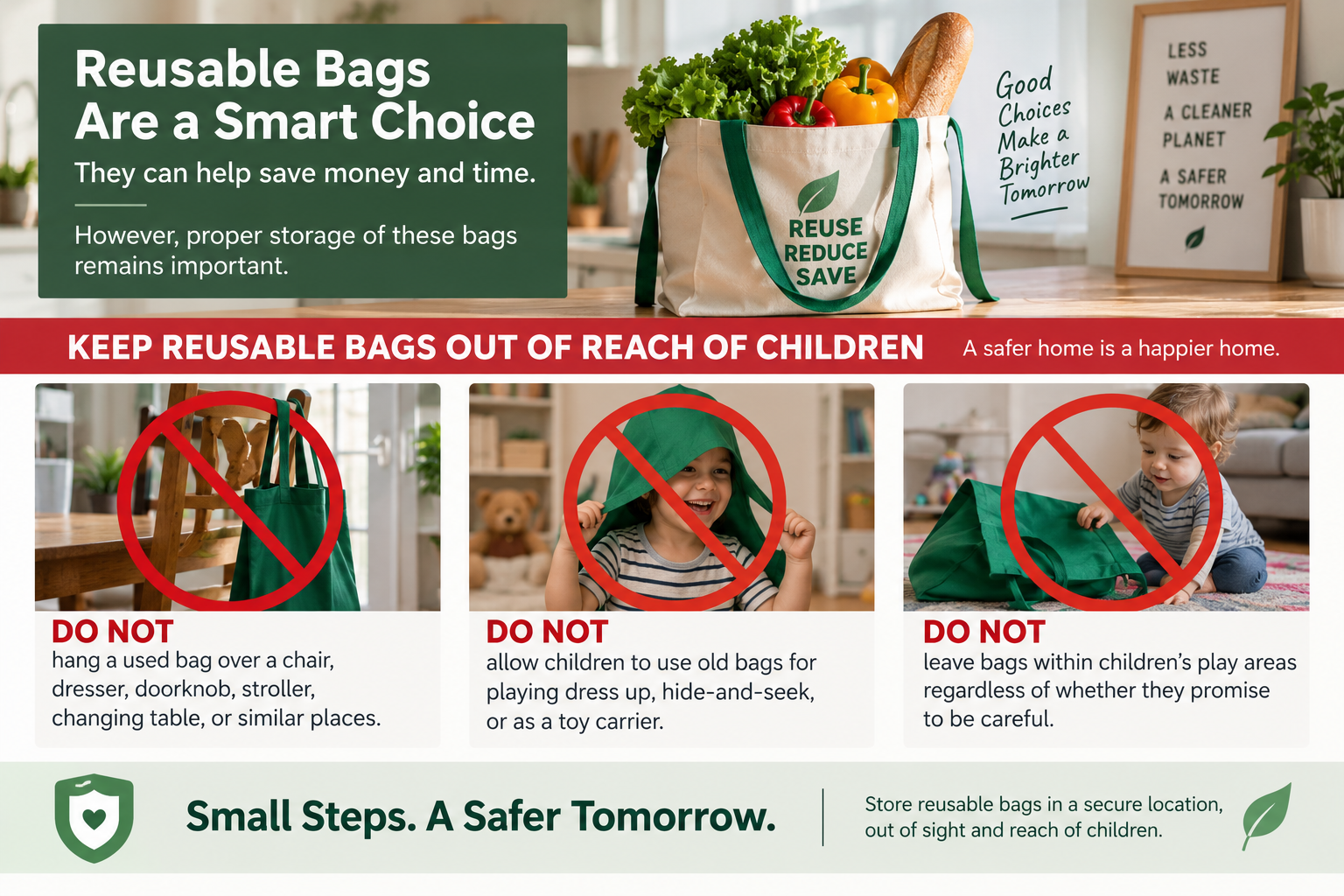
Using a reusable bag can help save money and time, however proper storage of these bags remains important. DO NOT hang a used bag over a chair/dresser/doorknob/stroller/changing table. DO NOT allow children to use old bags for playing dress up, hide-and-seek, or as a toy carrier. Remove the bag from children’s play areas regardless of whether they promise to be careful.
Regularly practicing good habits helps to ensure accidents don’t happen. Use control methods on your packaging materials, display warnings prominently (on the outside), clean up your workspace immediately after completing your tasks, and dispose of packaging materials immediately upon completion.
Reusable packaging bags provide us with several benefits for our businesses, but they are NEVER intended to be toys. Once their job is completed, disposing of them properly is part of that job!