The size that is printed on the inside of a hat indicates the wearer’s head size, however it gives very little information as to what type of box the hat will be shipped in. A brim or crown can add bulk to a lightweight hat. It is necessary to measure the overall shape of the hat before selecting a shipping box.
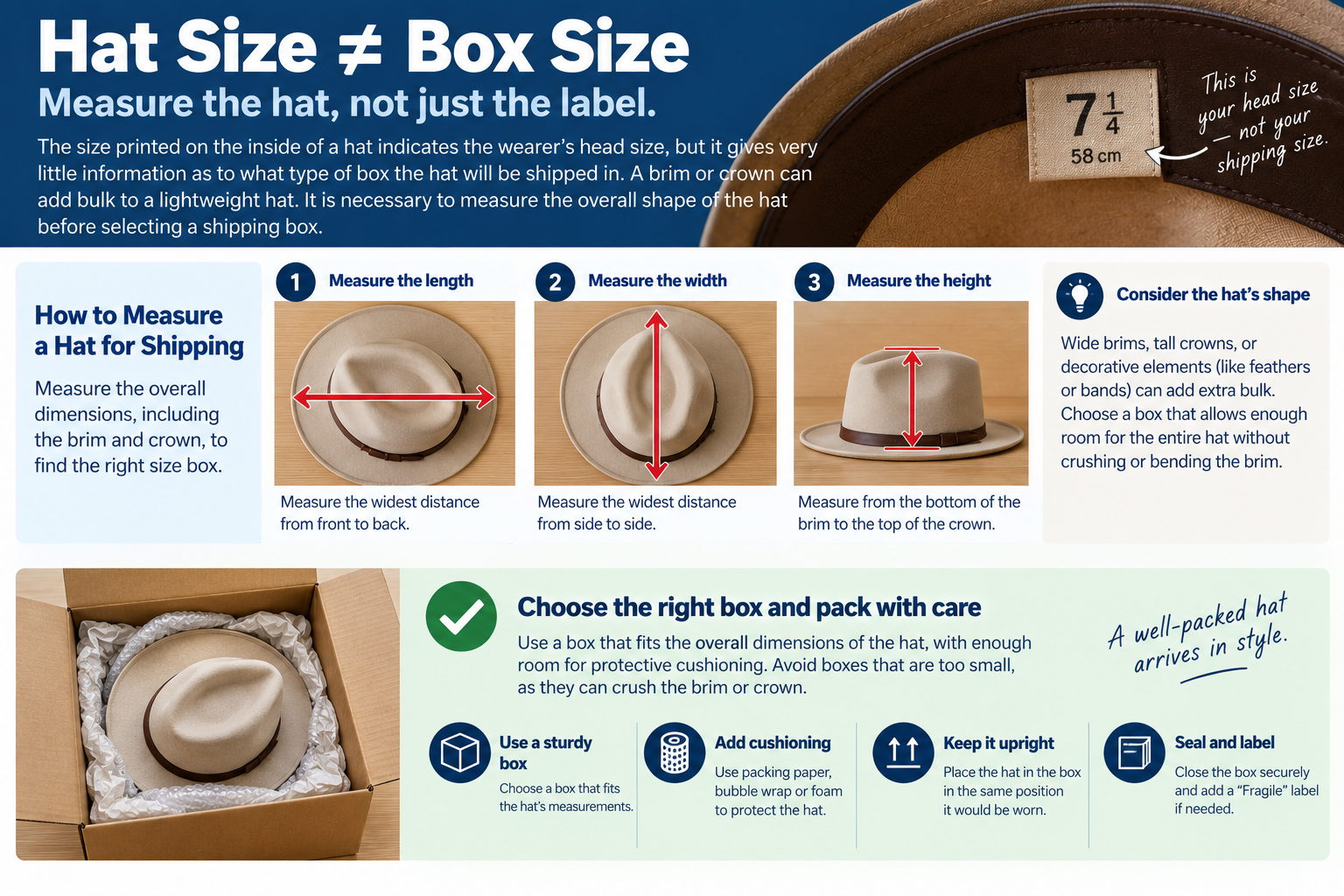
Place the hat down according to the instructions provided by the manufacturer and record measurements of the widest dimensions including any additional length caused by a bow, feather, or other decorative elements extending past the basic shape. Add enough room for any support material needed to maintain the desired configuration during packaging. If the sides of the box are touching both edges of the brim, there is no extra room to protect these areas from damage, regardless of whether the top appears closed.
Consider which components of the hat may flex and which must retain their original shape. For example, a soft cloth hat may provide adequate protection using methods that could cause damage to a stiff felt hat. Never fold the brim or push down the crown unless the manufacturer has indicated this is acceptable.
When selling different types of hats, develop individualized packing documentation for each model so that helpers will not automatically follow procedures developed for previous models.
The interior supports within the cartons should be designed to complement the shape of the hat rather than alter it. Some styles require tissue to aid in filling them softly, whereas other designs require specialized holders to prevent distortion. Consult with both the hat designer/packer or materials supplier regarding placement of weight on the hat. Adding stuffing paper to all gaps will add unwanted force particularly near curved brims and/or delicate trim.
Test your entire assembly prior to ordering packing boxes. Slowly lower the lid and inspect for contact with the hat’s crown. Determine whether the internal support remains stable when lifting the box and if it does not shake excessively when dropped. While this process can identify some obvious issues with fit, an extremely valuable or fragile hat may benefit from consulting with an experienced professional in assessing the design requirements for safe transit.
If you send a hat with a storage container included, evaluate whether the container was intended to be used alone for shipment. A circular-shaped case requires a sturdier exterior carton with sufficient cushioning surrounding it. Place care cards and spares (band) near to where they can easily be found by the customer without disturbing any trim. Avoid having anything free hanging resting directly atop the hat simply due to available space under the lid.
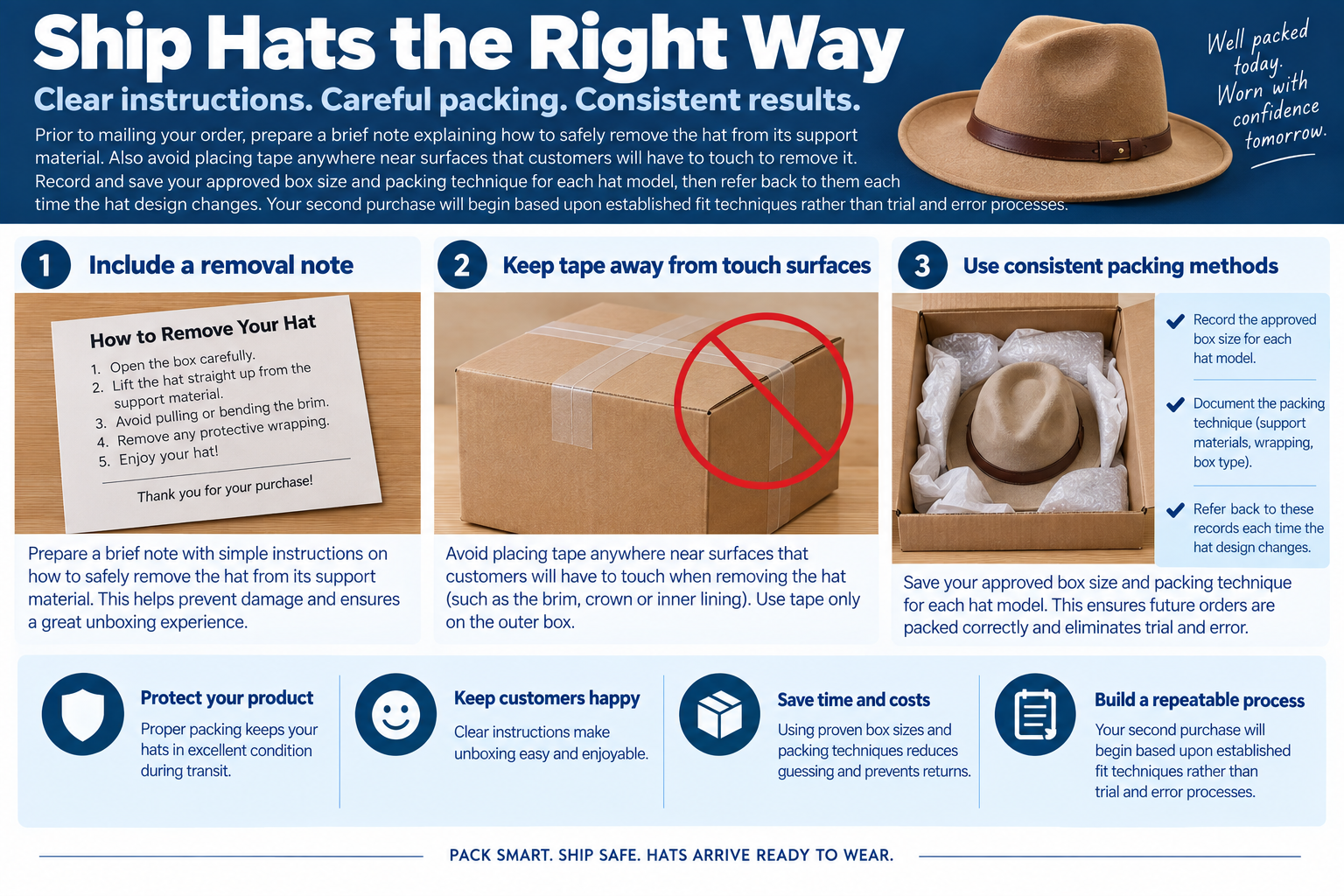
Prior to mailing your order, prepare a brief note explaining how to safely remove the hat from its support material. Also avoid placing tape anywhere near surfaces that customers will have to touch to remove it. Record and save your approved box size and packing technique for each hat model, then refer back to them each time the hat design changes. Your second purchase will begin based upon established fit techniques rather than trial and error processes.