There is something funny about spending hours making great candy, only to toss it into a weak little box that bends like an old pizza carton on a rainy day. A lot of people focus on the candy itself and forget the first thing customers actually touch is the packaging. Before someone tastes one piece of chocolate or caramel, they see the box sitting in front of them.
That small moment matters more than many business owners think.
Candy boxes do more than hold sweets. They help protect candy from getting crushed, melted, or broken during shipping and handling. They also help organize products so stores, bakeries, and candy shops can display everything neatly. When boxes are sturdy and clean, candy instantly looks more valuable.
One common question many people ask is how to choose the right candy box size. The answer depends on the type of candy being packed. Small chocolates usually work better in compact boxes because they keep the candy from sliding around. Bigger treats like chocolate-covered pretzels, popcorn, or candy apples need deeper boxes with more room inside.
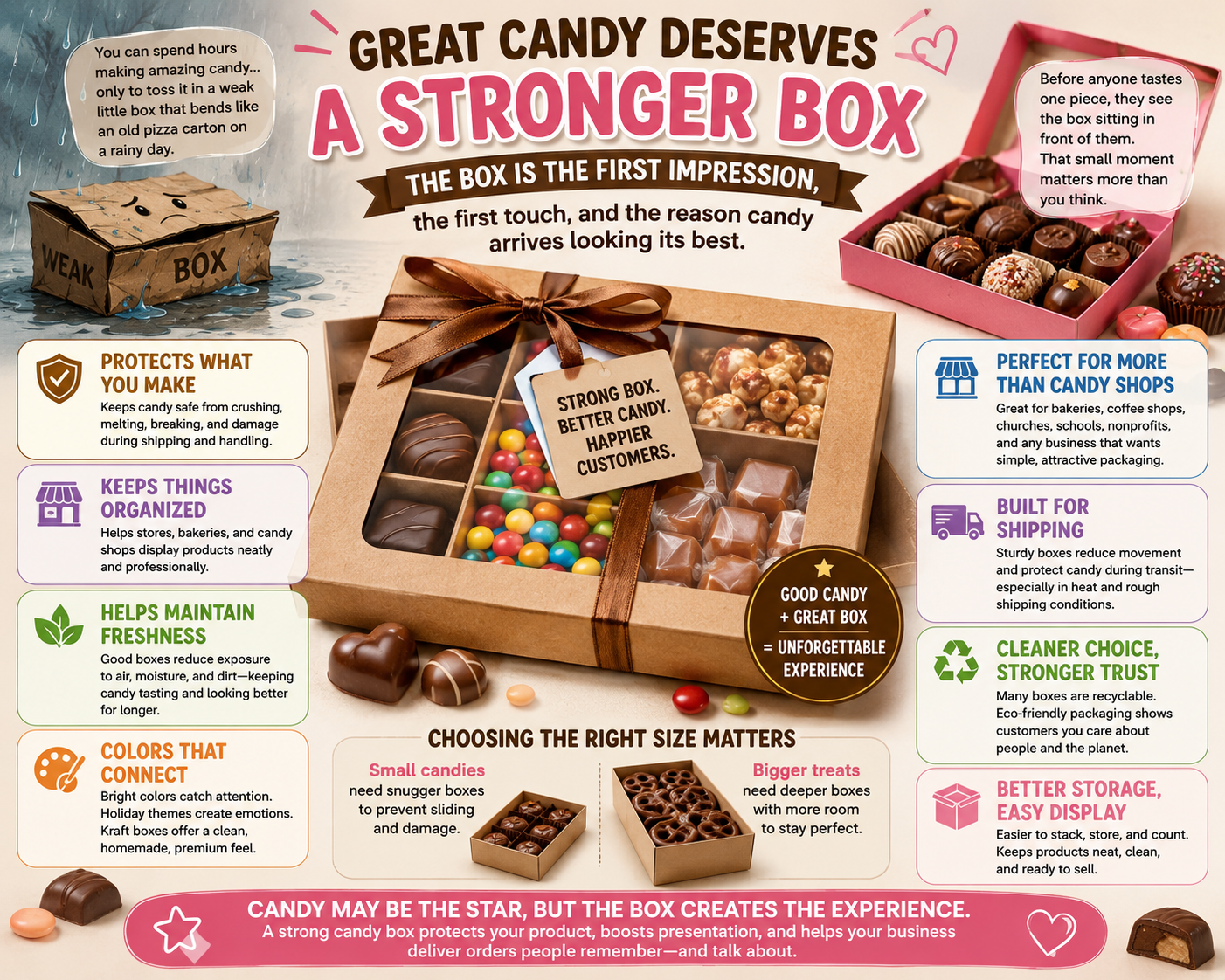
Another thing people often wonder is whether candy boxes help with freshness. In many cases, they do. A good box can help reduce exposure to air, moisture, and outside dirt. This is important because candy can change texture fast when it sits in poor conditions. Nobody wants soft peppermints, sticky gummies, or chocolate that looks cloudy and old.
Color also plays a bigger role than people realize. Bright packaging often catches attention faster in stores or at events. During holidays, many companies use themed candy boxes for Valentine’s Day, Easter, Christmas, or Halloween because people naturally connect colors with seasons and emotions. Even simple kraft-style boxes have become popular because they give candy a homemade and premium look at the same time.
Some people ask if candy boxes are useful for businesses outside candy shops. They absolutely are. Bakeries use them for cookies and fudge. Coffee shops use them for snack packs. Churches, schools, and nonprofits often use them during fundraising events because candy is easy to sell and easy to hand out in organized packaging.
Shipping is another reason strong candy boxes matter. Weak packaging can turn a beautiful order into a melted mess before it even reaches the customer. This becomes even more important during warmer months when heat and rough shipping conditions can damage products quickly. A sturdy box helps reduce movement and keeps candy looking presentable after delivery.
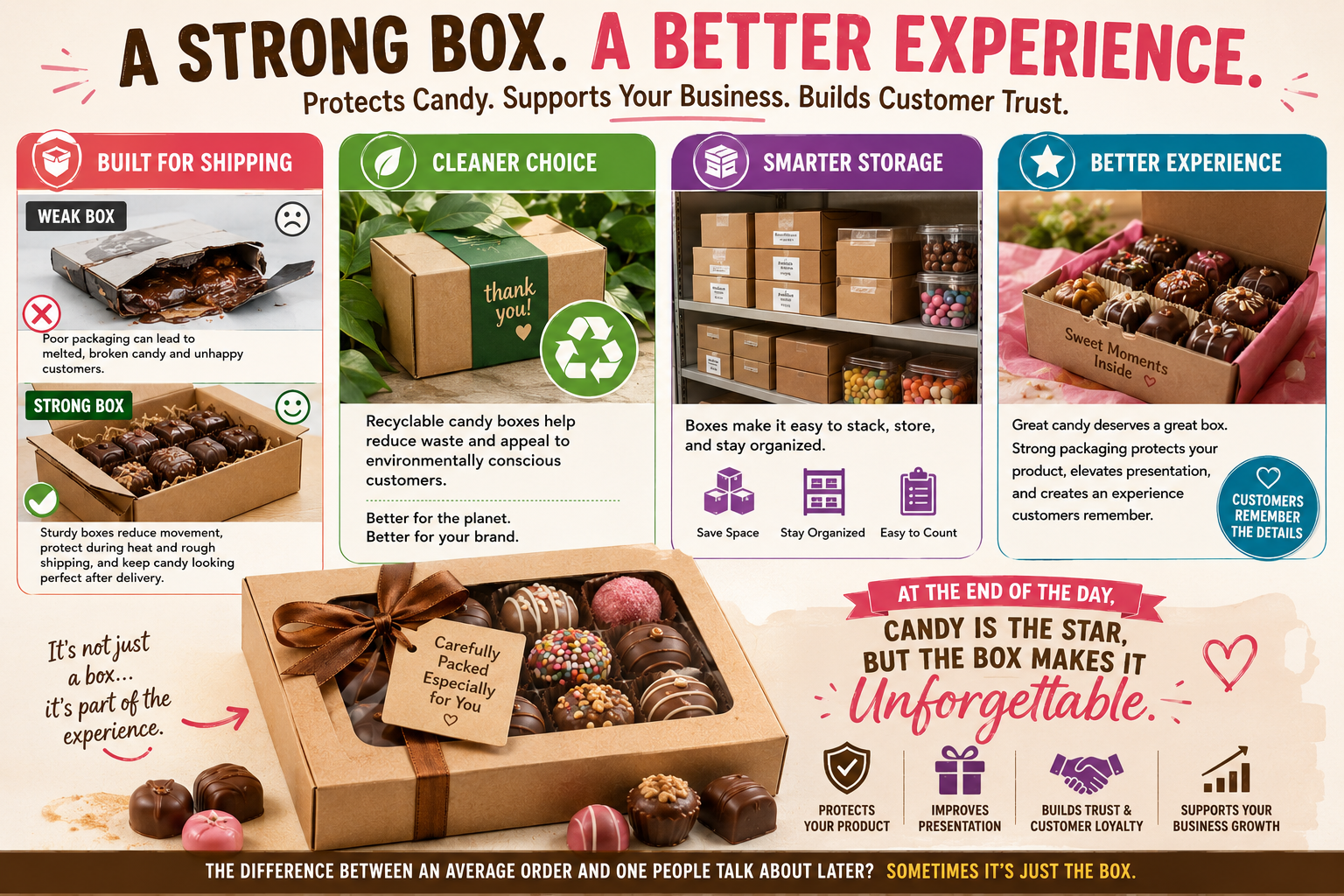
Many shoppers today also care about cleaner packaging materials. Some candy boxes are recyclable, which makes them appealing to people trying to reduce waste. Businesses that use recyclable packaging often build stronger trust with customers who appreciate simple ways to help the environment.
Storage is another hidden benefit people rarely think about. Candy boxes make it easier to stack products neatly without crushing them. This helps stores save space and keep displays organized. Instead of loose products sliding everywhere, boxes help everything stay cleaner and easier to count.
At the end of the day, candy may be the star of the show, but the box helps create the experience people remember. A strong candy box protects the product, improves presentation, and helps businesses avoid problems that come from damaged or messy packaging. Sometimes the difference between an average candy order and one people talk about later comes down to something as simple as the box holding it together.