Tag Archives: Corrugated Boxes

Shipping Boxes Do More Work Than People Think

Shipping boxes are often treated like a simple container, but they do far more than just hold a product.

A box has to protect the item, survive handling, stack properly, and arrive looking acceptable to the customer. When a shipping box fails at any point, the problem usually shows up later as damage, delays, or added cost.

One of the most common mistakes businesses make is using the wrong box for the job. A box that’s too weak may hold the product on a shelf but collapse during transit. A box that’s too large creates empty space that needs filler, which adds cost and weight. Neither option is efficient.
Good shipping boxes are matched to the product they carry. Weight, size, and fragility all matter. When the box fits correctly, the shipment feels solid instead of loose. Less filler is needed, and the box is less likely to shift or crush.

Stacking strength is another overlooked factor. Shipping boxes are rarely shipped alone. They get stacked in trucks, warehouses, and sorting centers. Boxes that can’t support weight from above often fail even if the product inside isn’t heavy. This leads to crushed corners, torn seams, and damaged contents.

Shipping boxes also affect speed. Boxes that fold cleanly and hold their shape make packing faster. Boxes that resist folding or lose their square shape slow the process and frustrate workers. Over time, these small delays increase labor costs.
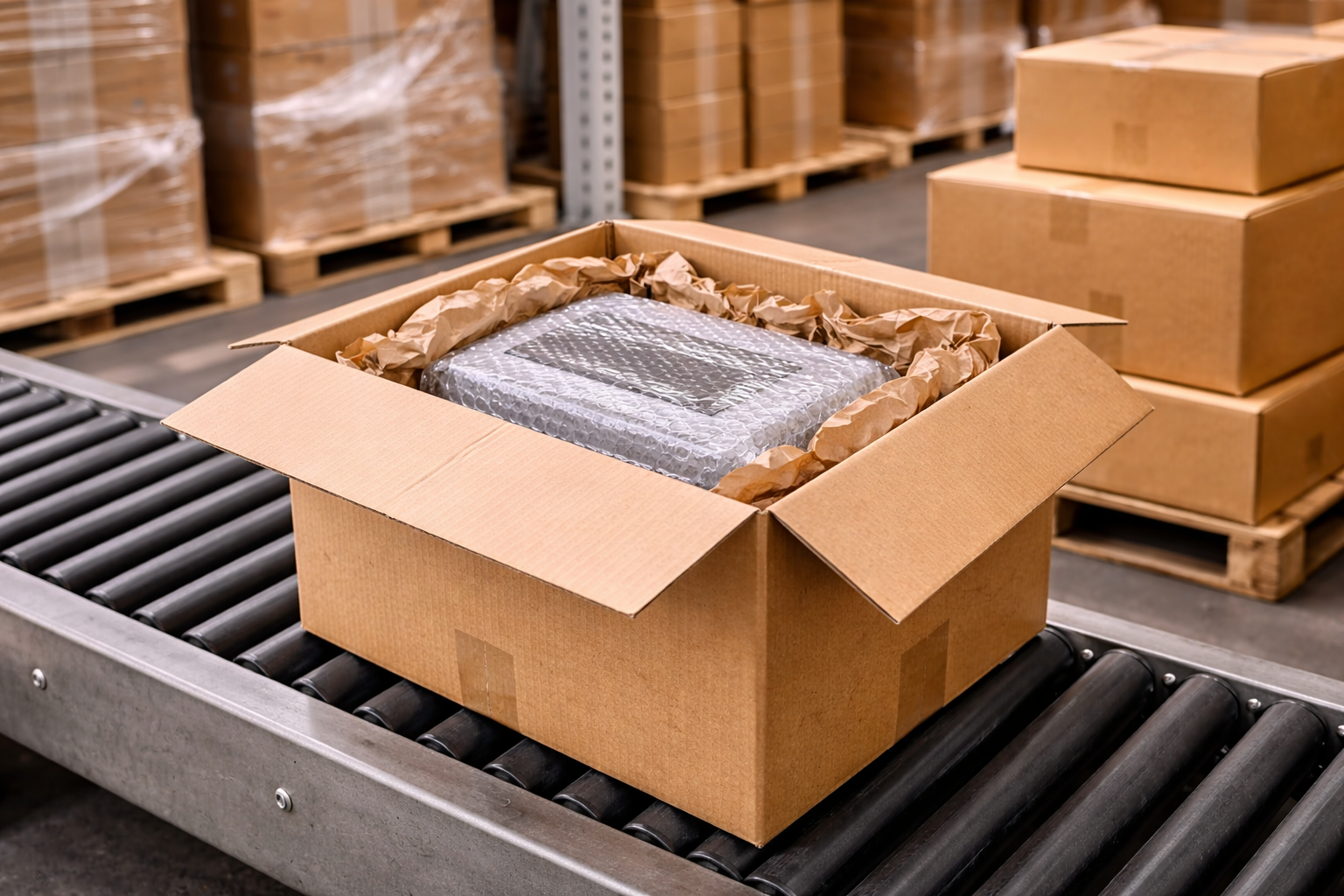
There’s also a cost illusion with boxes. Cheaper boxes can look like a savings, but they often require more tape, more filler, or double boxing to feel secure. When those extra materials and labor are added in, the total cost is usually higher than using the right box from the start.

Damage rates are closely tied to box quality. Even a small increase in damaged shipments can create a chain reaction of refunds, reships, and customer complaints. The cost isn’t just the product. It’s the shipping, the time, and the loss of trust.

Shipping boxes play a role in organization as well. Standard box sizes stack better and take up less space. This keeps storage areas cleaner and makes it easier to restock packing stations. Disorganized box storage leads to grabbing the wrong size out of convenience.

Customers notice boxes more than many businesses expect. A crushed or misshapen box creates a bad first impression, even if the product inside is fine. A clean, sturdy box feels intentional and professional. It sets expectations before the package is even opened.
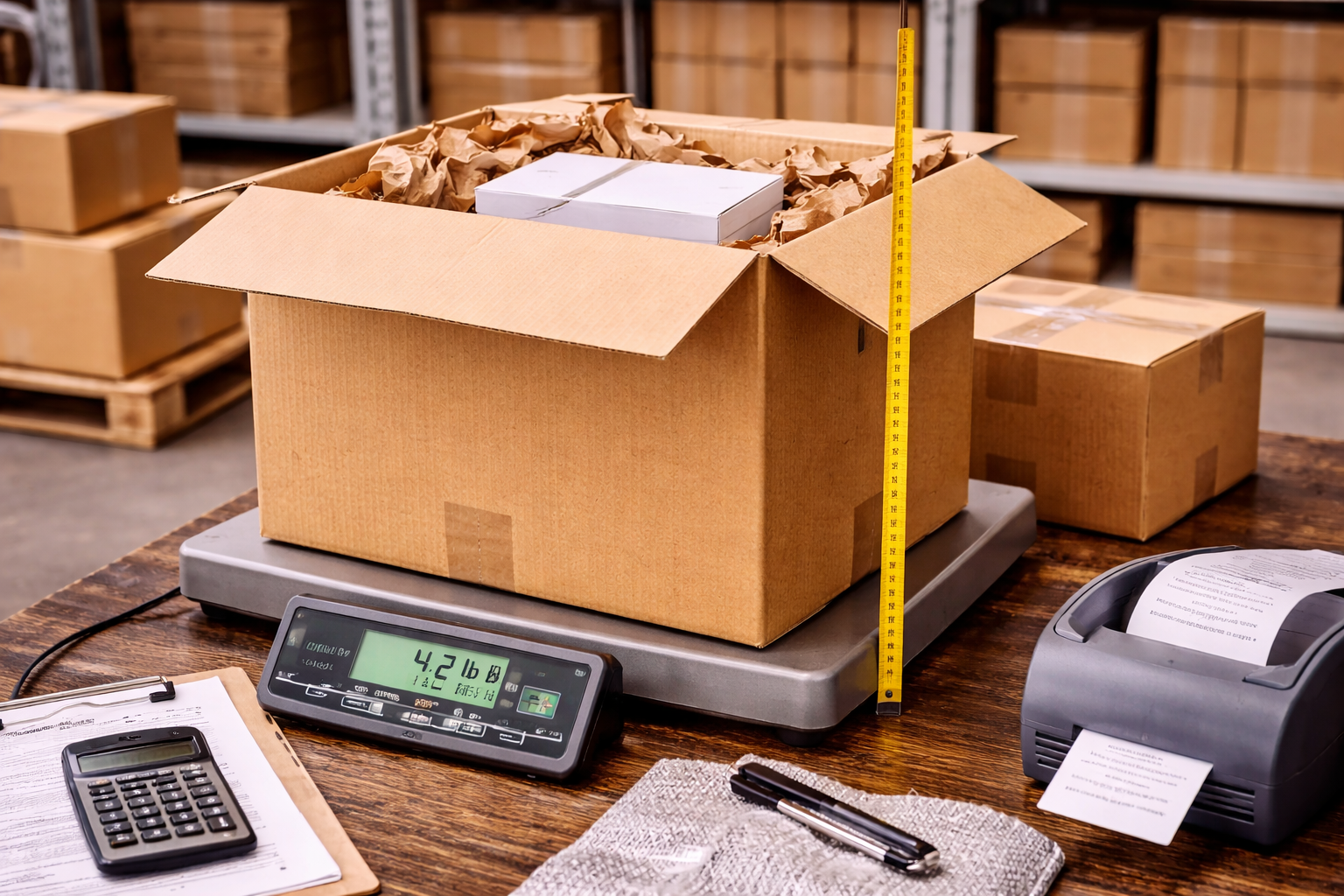
As shipping rates rise, box size matters more than ever. Dimensional pricing means oversized boxes cost more, even if they’re light. Using the right shipping box helps control these charges without changing carriers or service levels.

Shipping boxes are not just packaging. They are part of the shipping system itself. They affect cost, speed, damage rates, and customer perception all at once.

When shipping boxes are chosen carefully and used consistently, everything downstream works better. When they’re treated as an afterthought, problems tend to follow the shipment all the way to the customer’s door.


The Box Is the First Impression Your Brand Can’t Afford to Miss

Before a customer ever touches your product, they touch your box. That first contact—how it feels, how it looks, how it holds up—says more about your brand than any tagline ever could. A well-packed, strong, and sustainable box communicates reliability, care, and quality. A weak one does the opposite. In the world of e-commerce and fulfillment, your shipping box is more than packaging. It’s your handshake, your first impression, and your silent salesperson.

Too often, companies treat boxes as a commodity—just something to hold the real product. But your box is the product until the customer opens it. Think about it: if the box arrives crushed or ripped, your buyer assumes the contents inside are just as neglected. On the other hand, if your shipment shows up crisp, clean, and secure, that experience builds trust before the lid even opens. Every customer interaction begins with that box.

The smartest warehouses and fulfillment centers know that box quality directly affects efficiency and reputation. Cheap boxes fail when stacked, split when sealed, and waste time during packing. Heavy-duty corrugated boxes, especially double-walled or reinforced with recycled fiber, hold their shape, stack cleanly, and resist crushing. That reliability speeds up your workflow—no more taping twice, no more double-boxing, no more product returns because of crushed corners.

Eco-friendly boxes are no longer a premium luxury—they’re a cost saver. Recycled corrugated cardboard performs as well as virgin material, sometimes better, and often costs less over time. Because they’re built with sustainability in mind, they’re also engineered for consistency. That consistency translates into predictability on the warehouse floor: fewer surprises, fewer slowdowns. A good box makes packing smoother, stacking easier, and shipping safer.

There’s a visual story here, too. Customers are paying attention to how their orders arrive. Boxes printed with clean branding or even just a small logo elevate your company from “vendor” to “professional operation.” And when that same box is recyclable or made from recycled material, it sends a signal that your brand values quality and responsibility. It’s the kind of detail that customers remember—and tell others about.

Efficiency also grows when you use the right box sizes. Standardizing your box inventory reduces guesswork for packers and saves space on pallets. It cuts filler waste and improves dimensional weight pricing with carriers. Even the simple act of sizing your boxes smarter can reduce shipping costs and increase throughput across your entire system.

The financial advantage compounds over time. Fewer damaged shipments mean fewer replacements. Fewer filler materials mean lower costs. And when your packaging is cleaner, stronger, and recyclable, customers associate that precision with professionalism. Every good box pays you back in reduced risk, smoother handling, and stronger brand trust.

So the next time you look at your shipping supply order, don’t see “boxes” as just another expense line. See them as an investment in customer experience, efficiency, and reputation. The difference between a cheap box and a quality one isn’t just cardboard—it’s perception, performance, and profit.

The right box does more than hold your product—it holds your promise. When it arrives clean, sturdy, and sustainable, your customer sees the kind of business you are before they ever open the flaps. In a world where first impressions happen on the doorstep, make sure your box says everything you want your brand to stand for.

Why Some Boxes Travel Better Than Others

Not all boxes are created equal. Some arrive looking sharp and sturdy—others look like they fought a losing battle with a forklift. Every business that ships something learns this the hard way: a box is more than just a container. It’s the last thing you touch before the customer touches your product. And what happens between those two moments says a lot about how prepared you were.

Shipping boxes are often the first thing people underestimate. They look simple, right? Four flaps, a bit of tape, job done. But there’s an entire science behind what makes a box survive the trip. Weight, stacking, temperature, and handling all play a part. What happens to a box in a delivery truck isn’t gentle—it’s more like a boot camp. It’s lifted, squeezed, stacked, and sometimes dropped. If the box isn’t built for that, it’s not going to make it home.

A lot of small businesses try to save money by reusing boxes or buying the lightest ones available. It feels smart at first—until a customer sends a photo of something cracked, bent, or broken. The truth is, a weak box doesn’t just fail once. It fails every time it’s reused, because cardboard fibers lose strength with every trip. A used box might look okay, but it’s already tired. And tired boxes don’t survive long routes.

The right shipping box acts like armor. It doesn’t have to be fancy, but it needs to fit the job. Double-wall boxes hold up better for heavy items or long hauls. Smaller, snug-fitting boxes protect delicate things by keeping them from bouncing around. Choosing the right size can be the difference between a smooth delivery and a product that shows up dented.

The shape of the box also matters more than people realize. A box that bulges from overpacking is already under stress before it even leaves the warehouse. Once it’s stacked under other boxes, that pressure multiplies. By the time it reaches its destination, those corners have softened, and the structure is compromised. The same thing happens with boxes that are too big—too much open space lets the contents move, collide, and damage themselves.

Then there’s the invisible part: moisture. Cardboard doesn’t mix well with rain, humidity, or condensation. Even a little moisture can weaken its fibers and cause the box to sag or tear. That’s why a lot of experienced shippers use liners or wraps to keep boxes dry. A simple barrier against water can prevent a shipment from turning into a soggy mess.

Good shipping boxes don’t just carry products—they carry your reputation. When your package arrives clean, strong, and professional, it tells your customer they can trust you. It shows care, not just in what you sell, but in how you send it. That’s something people remember. It’s the quiet kind of branding that happens without a logo.

A well-chosen box doesn’t cost much more than a weak one, but the difference it makes can be enormous. It saves time, refunds, and frustration. It keeps customers coming back because they know what they get from you shows up right.

In the end, a shipping box’s real value isn’t measured by how much it holds—it’s measured by how well it protects what matters. And the best ones? They do their job so well, nobody ever has to think about them.

How to Create Durable Military-Grade Packaging 

Creating packaging for military and civilian assets in hot areas, you need to make sure that it’s strong, and also will handle items that aren’t sensitive. Some of them might be integral to national security, and they might need to be shipped to areas with demanding conditions. 

You need to make sure that the requirements are in place, and to provide these critical assets with support throughout the transportation process. 

Here, we’ll go over each of the requirements for military-grade packaging, including regulations and standards when working with these items. 

The Requirements 

When shipping out military-grade packaging, you need it to withstand extreme temperatures and conditions, be able to handle rough handling, and also may need to be put into long-term storage.

You also might need to have some environmental protection, whether it’s dust, moisture, temperature which are extreme, and UV radiation. Anti-corrosion materials may also want to be used, and moisture barrier options too.

You also want it to be tamper-evident, so that if unauthorized access happens, you notice it right away.

There are plenty of standards that go along with this, and you need to make sure that it fits not just the military compliances, but also the regulatory compliances for overall, including hazardous materials. 

Materials used 

Most of the time, the military-grade packaging comes in different forms. Some of which are pretty apparent, others not so much.

The first is corrugated boxes. They’re the strongest, and will keep shape regardless of where you take this.   it’s great because you can get double and triple-walled boxes, which will help with ensuring that the product is adequately protected on all fronts.

Foam is another. Molded foam is flexible, adhering to the package, and prevents shock.   It’s good for electronic equipment. Rubber forma might be used for hardshell or other types of cases, which need some protection, but doesn’t require a bunch of protection to be molded to the package.

There’s also barrier materials. They can be grease and vapor-proof, but for the most op[art they are waterproof. Some examples are nylon or foil barriers used to protect against grease and vapors, and then there’s creped barriers, which also do the same thing.

When dealing with chemical areas, or areas with highly-volatile compounds, there might be neutral wraps. These are anti-corrosive, and are considered to be neutral chemically. 

Poly or altar barriers are used to create transparency, providing protection while showing what’s inside.

Finally, you’ve got humidity indicators, which can be cards with spots that change colors, and also can tell you if there’s a humidity threshold that’s been reached or [passed.   If that happens, the material might be compromised, so you need to take matters into your own hands. 

You want to ensure that the materials fit each of these factors. With military-grade packaging, the goal is to get it to these hot spots and locations properly secured. Various means of transport might be used, whether air, water, or land travel. Depending on the location, various transit methods might be used.

The overall goal is to be strong, but also secured with the packaging that you have. When you are able to create packaging that stays strong, and offers protective elements, you will be successful.

Determining the location, and the intention of the packaging itself is important. Dealing with this also helps you ensure that the packaging is flexible enough to be sent to new locations, also in a manner that will ultimately protect it all from the different elements, ensuring that the packaging is safe, secured, and useful for all that need it. 

Supplies Needed to Make Any Move Stress Free 

Moves are exciting, and it can give you new chances to build on memories. It’s exciting for those in businesses, and families too, but sometimes things go awry. Between the furniture being damaged, paperwork getting misplaced, and people hurting themselves carrying different items, it’s a stressful experience, and one that’s exhausting.

But there are solutions.  When you prepare beforehand, it helps with making the move far less stressful. Here are some things to have on hand to make the experience rewarding, exciting, and how it should be.

Corrugated Boxes that are High Quality 

This is something that’s great for professionals in both shipping and moving. The boxes do benefit from being corrugated, and it also creates small crimples, secured directly with cardboard layers, creating lightweight, but sturdy boxes, which are perfect for holding different items in when transporting them.

This is also good, because, provided that you don’t overstuff these, they’re great for carrying different objects that are heavy, so it’s a good way to make it easier.

Packaging Peanuts 

These are nothing like the food grade, but they offer some cushion and support. They’re made from foam, or biodegradable materials, offering protection if something gets hit, and it helps to fill out places that are empty. They are somewhat flexible, with a shape that’s unique, allowing everything to hook itself together, and move around when not compressed, so they are reliable.

There are some that are eco friendly too, which offers a far less wasteful type of experience too.

Packaging Tape 

This is another one that’s important, because you want to make sure that the boxes are sealed, and nothing comes undone or loose. This is vital for moves, with so many variants of this, and each of these comes with a different sort of focus.

There is carbon sealing which is great for packing and is lightweight. 

There is cold temperature tape, which you can get for climates that are colder.

There is water activated tape, which is durable, and when water is applied, it creates a strong seal 

Fragile tape. This is tape that’s also good for marking ornaments, glassware, and China as fragile 

There are many different types of tape, all of which are vital for every person’s packaging needs. There is also stronger tape too that you can get for objects that are heavier. If you plan to package a ton of items, you might also want to invest in tape dispensers, in order to save some effort and time as well.

Ratchet Strap 

This is a great type of strapping that’s good for some people. It attaches a secure fastening to the top of the car, or to the roof, which is good for keeping objects in one location when they’re being transported.  While you probably will use a moving van, sometimes you might not, and some don’t like moving companies, so this is an option.

Dollies 

Finally, there are dollies, which is basically a type of item that helps with loading, and creating wheels and handles. These come in a lot of different sizes and shapes, and some are made for different purposes. They can be good for desks and chairs, and are made to be safe, and are hard for people to tip over in certain instances so they’re good for offering manpower when you might not have that otherwise. 

For a lot, having the right moving supplies is vital. That’s why, with this we’re able to create and craft the perfect items for your moving experience to make this even easier for you to handle as well.