Tag Archives: bubble wrap

Why Some Boxes Travel Better Than Others

Not all boxes are created equal. Some arrive looking sharp and sturdy—others look like they fought a losing battle with a forklift. Every business that ships something learns this the hard way: a box is more than just a container. It’s the last thing you touch before the customer touches your product. And what happens between those two moments says a lot about how prepared you were.

Shipping boxes are often the first thing people underestimate. They look simple, right? Four flaps, a bit of tape, job done. But there’s an entire science behind what makes a box survive the trip. Weight, stacking, temperature, and handling all play a part. What happens to a box in a delivery truck isn’t gentle—it’s more like a boot camp. It’s lifted, squeezed, stacked, and sometimes dropped. If the box isn’t built for that, it’s not going to make it home.

A lot of small businesses try to save money by reusing boxes or buying the lightest ones available. It feels smart at first—until a customer sends a photo of something cracked, bent, or broken. The truth is, a weak box doesn’t just fail once. It fails every time it’s reused, because cardboard fibers lose strength with every trip. A used box might look okay, but it’s already tired. And tired boxes don’t survive long routes.

The right shipping box acts like armor. It doesn’t have to be fancy, but it needs to fit the job. Double-wall boxes hold up better for heavy items or long hauls. Smaller, snug-fitting boxes protect delicate things by keeping them from bouncing around. Choosing the right size can be the difference between a smooth delivery and a product that shows up dented.

The shape of the box also matters more than people realize. A box that bulges from overpacking is already under stress before it even leaves the warehouse. Once it’s stacked under other boxes, that pressure multiplies. By the time it reaches its destination, those corners have softened, and the structure is compromised. The same thing happens with boxes that are too big—too much open space lets the contents move, collide, and damage themselves.

Then there’s the invisible part: moisture. Cardboard doesn’t mix well with rain, humidity, or condensation. Even a little moisture can weaken its fibers and cause the box to sag or tear. That’s why a lot of experienced shippers use liners or wraps to keep boxes dry. A simple barrier against water can prevent a shipment from turning into a soggy mess.

Good shipping boxes don’t just carry products—they carry your reputation. When your package arrives clean, strong, and professional, it tells your customer they can trust you. It shows care, not just in what you sell, but in how you send it. That’s something people remember. It’s the quiet kind of branding that happens without a logo.

A well-chosen box doesn’t cost much more than a weak one, but the difference it makes can be enormous. It saves time, refunds, and frustration. It keeps customers coming back because they know what they get from you shows up right.

In the end, a shipping box’s real value isn’t measured by how much it holds—it’s measured by how well it protects what matters. And the best ones? They do their job so well, nobody ever has to think about them.

The Sizes of Bubble Wrap you Need 

Looking for bubble wrap for one’s business?  The right bubble wrap will give your customers satisfaction and create regulars. Not every size is necessary for each product, however. The right size bubble wrap is necessary to get the items from one point to the next. 

The Sizes out there 

There are different sizes for each, all of which include the following”: 

  • 1/8 inch which is good for small items 
  • 3/16th thick, standard size, good for medium sized products 
  • 5/16th thick: a medium sized bubble, ideal for filling the voids and offer more protection 
  • ½ inch thick: a large sized bubble, which is perfect for cushioning medium sized items and filling bigger voids in bags 

How to choose what’s right for you

There are a few ways for you to choose the right size on these. 

The best size for smaller items is an eighth of an inch.  This is because it protects them from being scraped or scratched when shipped. Most tech companies use this for tablets, phones, or other light devices.

However, if they are electronics, you should always make anti-static bags, sheets and the like. This protects them directly during shipping. 

Pink wrap differs from the packaging material types. It does dissipate slowly and creates electrostatic damage. It harms people too, so don’t use that.

For medium-sized products, you want to use the latter two sizes, and try to go for half an inch bubbles.  This is because it helps reduce the impact damage. There is more air captured, and bigger bubbles to create protection against products. 

They’re great for anything that’s medium weight when you’re shipping it. 

For 5/16th inch bubbles, they offer basic cushioning.  They’re good usually for all-around protection, and it helps with adequately absorbing the damage from this.

Combining sizes 

You can combine the sizes of this. Some people use more than one type to ensure safety. Using a 1/8 inch for a screen and then adding a half inch sheet over this to protect damage is great. You should use more than one specific bubble size to ensure that it’s valuable and fragile. 

You may wonder how much you actually need. Overall, you want to make sure that it keeps the items protected. However, shy away from using too much, because that’s seen as wasteful by some people. 

On the other hand, don’t skimp on this either. If you don’t have enough, that does risk damage. To make sure that you have enough, first you want to pack it and then shake the box. You shouldn’t have any sort of movement or item motion within the box. If you use the right kind, this prevents it, so you want to shoot for that.

Bubble packaging is used to help with reducing the shipment and the absorption of impact when dropped or jostled.  You want to make sure that you avoid this common mistake, and make sure that you don’t use too little bubble wrap when it comes to packaging. 

There are a lot of different bubble wrapping options for you to check out. For a lot of people, the right bubble wrap can involve manipulating different kinds. If you’re not sure on the ideal bubble wrap of choice, find the right one based on your needs by contacting a shipping supplier. They can help you with finding the ideal bubble wrapping for your needs, to help you get the right type of bubble wrap that’ll provide you with everything that you need to create the right cushioning for your items. 

Why Less Packaging Is more 

You’ve probably experienced this to some degree. You go to the store, getting a package that’s wrapped in plastic that’s twice the size that it needs to be. 

Overpackaging is something that’s present in a lot of different sectors. While this is a minor occurrence at the surface level, it’s actually terrible for the planet. Here, we’re going to talk about overpackaging, and why you need to reduce this, not just for the environment, but also for your brand as well. 

What Overpackaging is 

Overpackaging is when you literally use too much packaging. This can include plastic, cardboard, bubble wrap, and the like. While the goal is product protection, the result is wasted resources and effort. 

It isn’t good for the environment, but it actually costs a lot more for people that are using this packaging. The customers are the ones that pass on this expense, so it can make products much more expensive for them. 

Why Reducing Overpackaging is needed for sustainability 

The bad impacts of overpackaging aren’t just that customers don’t like it, it actually affects society and the economy.

There are reasons why we’re looking to curtail this, and here they are. 

First, let’s talk about the waste of these resources.  It depletes the resources that we have, which includes paper, plastics, and even the energy that’s used to make this. through the making of this, transit, and the disposal, the excess packaging does lead to a larger production, and more costs in terms of transportation. It also jeopardizes these resources for future generations. That’s why businesses need to make sure that they have the right packaging, and then adopt better, more eco-friendly alternatives. 

Overpackaging also is bad for the environment.  Generating too much packaging actually pollutes the landfills we have, but also our oceans. This in turn harms the wildlife, and thereby damages the ecosystems. This decomposition of the packaging material is also far slower, and it leads to a much larger pollution of the environment, and a higher carbon footprint.  Making of this also takes a lot more water, energy, and even resources, which causes more greenhouse gasses to come out, and climate change too. That’s why we need to curb overpackaging, in order to safeguard the environment. 

The Economics of Overpackaging 

It also causes issues with the economics of society too. When you use too much packaging, you’re spending more, inflating the price not just for you, but your customers too.

An inefficient supply chain because you need more storage also adds to this.

This waste of resources also causes energy prices to skyrocket, and this wastefulness is going to cause the resources to be far less available, and the costs for the cleanup are going to negatively impact everything. 

In conclusion, in order to have a future, we need to stop over packaging. 

How to Fix this 

There are a few ways for you to fix this as a business. 

Some of them include: 

  • Eco friendly packaging that’s compostable, biodegradable, and further recycled to reduce the landfills and burdens 
  • Minimalism packaging to reduce the weight and size, and to eliminate any materials in excess, which will save on the costs of shipping and wastes 
  • Educating consumers by raising awareness of this, in order to show off the importance of packaging. Giving good labeling and design will inform the customers of the environmental perks of this, and the demand for more eco friendly types of alternatives 
  • Government regulations to put a curb on too much packaging, to help with reducing waste and to provide a green future. 

What Paperbubble Is 

Papabubble is a new type of material that’s become super popular around the world, especially in the realm of packaging. For many, this has a wealth of advantages that other kinds of packaging does not simply have. It’s also a great alternative to those that are plastic based as well. 

Comping it To Bubble Wrap 

Initially when you look at these, they look almost the same. There is a reason for this. They both include materials which are layered together on this to protect and transport this. But what’s different about them, is what’s within. 

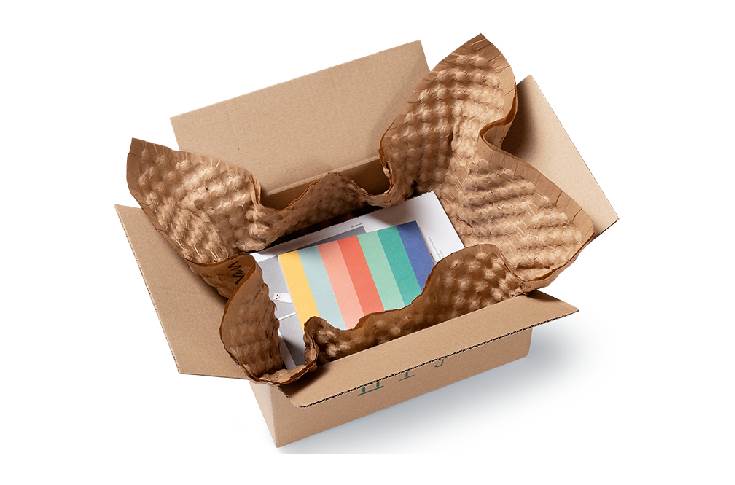
Paper Bubble is made directly from paper that’s recycled, and it utilizes a design that’s a honeycomb style, and it’s a bit flatter than the plastic type of wrapping. This can be used in a lot of situations where regular bubble wrap is not going to cut it. 

The Usage of Paper Bubble 

The usage of this is pretty similar to regular bubble wrap. The main function is basically ensuring that the items which are valuable get some good cushioning. This is great for anything that’s fragile, including chinaware, any glass items, and anything that needs to be handled with care, as it may be broken and damaged by being too rough with them. 

This is actually really good for these items because it basically can do the same thing that normal bubble wrap does, but it’s more eco friendly. 

It also works well as void fill, so if you’re looking to wrap and actually protect items, this is the best way for you to do it. 

The Benefits 

Paper Bubble is something that actually has a ton of advantages that normal bubble wrap doesn’t give it. 

This is great for those who are looking to improve their ability to use their business to their advantage, and for a lot of people, especially those that are choosing to utilize different packaging products, this has a ton of great benefits that can help you. 

First and foremost, it’s actually way more eco friendly. The problem with bubble wrap is well, it’s not very eco friendly. 

This is natural, you can recycle this again and again, and it can reduce the consumption of plastic. If you as a company are looking to be greener, this is the best type of packaging to use. 

It’s also quite compact and small. It can store and handle easily. It’s much smaller than bubble wrap too, so it’s easier to use and then set up. 

Once you’ve interlocked it all together, it also doesn’t stick the same way that regular bubble wrap tends to do. That means, you can actually stack this in ways that allow you to use a lot of it, without the drawbacks of such either. 

Probably one of the best additives that this has, is the interlocking functions, which is great if you want to connect this together. It doesn’t require adhesives either, so you’re not only saving lots of money on the costs of these adhesives, but you’re also saving time too. You just have to push these together and you’re good to go! This is also ideal too for anything that has an oblong or weird shape, as it can be quite easy to work with. 

For a lot of people, Papabubble is the way to get the green alternatives to bubble wrap that are out there. It’s basically the same as bubble wrap, but without the detrimental effects to the environment that it has, so it’s one of the best types of things to use when you’re sending out packages and need something that’ll hold its weight as well.